Ismail Selim Ecirli
 History has left Ukraine united in one state but divided along numerous regional lines that echo the cultural and political boundaries of the past. The line between the parklands of central Ukraine and the southern steppes became a porous border between the predominantly agricultural areas to the north and the urban centers of the mineral-rich steppes to the south.
The frontier of Western and Eastern Christianity, after reaching the Dnieper in the seventeenth and eighteenth centuries, retreated to Galicia and now recalls the border between the Habsburg and Russian empires of the pre–World War I era.
Within the former Habsburg possessions, Galicia differs from the largely Hungarian-ruled Transcarpathia and the former Moldavian province of Bukovyna. Within the former Russian Empire, Volhynia, which was under Polish rule during the interwar period, is different from Podolia, which stayed under Soviet rule for most of the twentieth century.
There is also a difference between the formerly Polish-ruled lands on the Right Bank of the Dnieper and those of the former Cossack Hetmanate on its Left Bank, as well as between the Cossack lands and those colonized largely through the centralized efforts of the Russian Empire in the eighteenth and nineteenth centuries.
The borders of those lands also serve as a line between Ukrainians who are more comfortable speaking Ukrainian and those who prefer Russian in everyday speech.
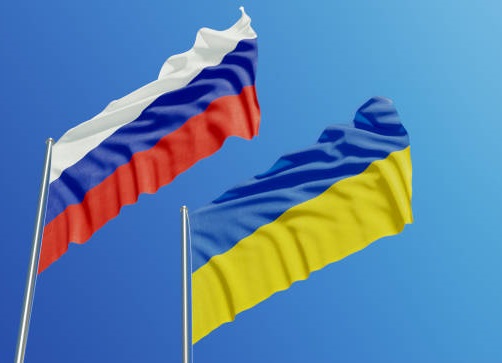
The Russian annexation of the Crimea, the hybrid war in the Donbas, and attempts to destabilize the rest of the country created a new and dangerous situation not only in Ukraine but also in Europe as a whole.
For the first time since the end of World War II, a major European power made war on a weaker neighbor and annexed part of the territory of a sovereign state.
The Russian invasion breached not only the Russo-Ukrainian treaty of 1997 but also the Budapest Memorandum of 1994, which had offered Ukraine security assurances in exchange for giving up its nuclear weapons and acceding to the Nuclear Non-proliferation Treaty as a nonnuclear state.
The unprovoked Russian aggression against Ukraine threatened the foundations of international order—a threat to which the European Union and most of the world were not prepared to respond but one that demands appropriate counteraction. Whatever the outcome of the current Ukraine Crisis, on its resolution depends not only the future of Ukraine but also that of relations between Europe’s east and west—Russia and the European Union—and thus the future of Europe as a whole.