 Dushanbe Water Process Monitoring Desk from Tajikistan + APP
Federal Minister for Climate Change and Environmental Coordination Dr. Musadik Malik on Tuesday warned that efforts to undermine international water-sharing agreements could jeopardize the rights of downstream nations, accusing India of attempting to politicize shared water resources in violation of long-standing international commitments.
Addressing the Fourth High-Level International Conference on the International Decade for Action “Water for Sustainable Development” in Dushanbe, Malik said unilateral actions affecting transboundary rivers could create serious global challenges related to water security, food production and climate resilience.
“Water aggression is unacceptable,” Malik said, stressing that no country should be allowed to use water as a weapon or suspend international agreements unilaterally while depriving other nations of their lawful water rights.
The minister urged India to respect the 1960 ‘Indus Waters Treaty’ and honor international mediation mechanisms, warning that any attempt to place the treaty in abeyance would set a dangerous precedent for downstream countries around the world.
Malik expressed concern over what he described as the decline of multilateralism in global affairs, saying cooperative international frameworks are increasingly being replaced by unilateral approaches.
He warned that upstream countries could exploit this trend to pressure vulnerable downstream states by restricting access to shared water resources.
Calling access to clean water a fundamental human right, Malik said farmers and rural communities in developing nations are particularly vulnerable to disruptions in water supply.
He also highlighted Pakistan’s growing climate challenges, saying the country remains among the nation’s most severely affected by global warming. Recurrent floods and extreme weather events, he said, have devastated infrastructure, damaged agricultural lands and disrupted livelihoods across Pakistan.
The minister warned that increasingly frequent “super floods” are intensifying economic pressure on the country and contributing to food security concerns through declining agricultural productivity.
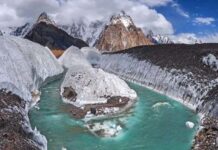
During the conference, Malik also emphasized the urgent need for regional cooperation on glacial melt and ecosystem preservation. He noted that both Pakistan and Tajikistan host nearly 13,000 glaciers each and have lost approximately 1,000 glaciers because of rising global temperatures.
He called for stronger cross-border coordination to monitor shrinking glaciers and protect shared ecosystems, while also engaging in discussions on regional climate and conservation protocols, including cooperation on wildlife protection initiatives such as conservation.
The Dushanbe conference is widely viewed as a preparatory forum for the upcoming United Nations Water Conference, where governments are expected to address growing concerns over climate change, transboundary water governance and global water security.
Malik concluded by urging stronger international commitment to the enforcement of global water-sharing agreements, saying compliance with trans boundary water treaties remains one of the major unresolved challenges facing the international community.