ECO Monitoring Desk Islamabad
Hamid Ghanbari, Deputy Director of Economic Diplomacy at the Ministry of Foreign Affairs of the Islamic Republic of Iran
Our region is at a critical juncture in its history. International developments, changes in economic and geopolitical equations, and increasing security challenges have created conditions that, more than ever, remind us of the need to strengthen cooperation among the countries of the region. The Islamic Republic of Iran believes that the future of this region cannot be built on the basis of erosive competition or dependence on external arrangements.
What can lead to stability and sustainable development is strengthening cooperation among neighbors, mutual respect, trust-building, and utilizing the capacities that the countries of the region possess. The Economic Cooperation Organization (ECO) is one of the important platforms for realizing such an approach, and the Islamic Republic of Iran is also pursuing active participation in this organization with the same view.
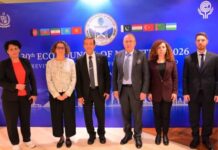
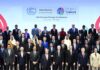
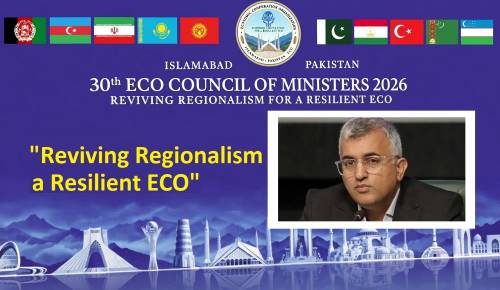
The 30th ECO Council of Foreign Ministers meeting in Islamabad is an appropriate opportunity to once again emphasize the importance of regional convergence. Regional cooperation for member countries does not only mean increasing economic exchanges; it is also directly related to their strategic interests, including strengthening economic independence, ensuring security, and consolidating peace and stability. This meeting is also an opportunity to examine existing obstacles and find new ways to expand cooperation among members.
ECO; Great potential, shared responsibilities
The Economic Cooperation Organization has a history of nearly six decades. The organization was formed in 1964 with the participation of Iran, Pakistan, and Turkey under the title of “Regional Cooperation for Development (RCD)” and continued its activities under the name ECO in 1985. The accession of seven more countries in 1992 expanded its scope of activities and turned ECO into a regional organization with ten members, an area of about eight million square kilometers, and a population of more than half a billion people.
These figures not only indicate the geographical and demographic extent of ECO; but also indicate a significant economic potential that has not yet been fully utilized. The member countries have vast energy resources, fertile agricultural lands, industrial capabilities, important transit locations and markets that can complement each other.
The location of these countries on the East-West and North-South communication routes has also provided a position that, if coordinated and cooperated more, will allow them to play an effective role in regional and international trade, transportation, energy and communications.
The economic dimensions of this capacity are also significant. The total population of the member countries in 2025 was about 545 million people and their GDP exceeded 3 trillion dollars. Although these countries accommodate more than 6.6 percent of the world’s population, their share of world trade is close to 2 percent. These figures show that there is a significant gap between the region’s demographic and economic capacities and its position in world trade.
Bridging this gap is one of the most important reasons that highlights the need to strengthen economic cooperation within the ECO framework.
The reality is that the level of trade between member states is still not commensurate with the existing capacities. Customs and trade barriers, infrastructure deficiencies, banking and financial constraints, and difficulties in facilitating trade continue to prevent the full exploitation of regional opportunities. Therefore, merely agreeing on common goals is not enough. What is important is to transform these agreements into concrete and implementable programs; programs whose effects are visible in the economic and social life of the people of the member states.
In my opinion, several issues should be prioritized for ECO’s activities in the coming years : increasing trade between member states, developing transport and transit corridors, expanding cooperation in the energy sector, facilitating banking and financial exchanges, attracting investment, and strengthening scientific, technological, and cultural ties between the nations of the region.
Among these priorities, the issue of transport and transit holds a special place. The geographical location of the member states has enabled ECO to become an important link between the markets of East Asia, Central Asia, West Asia and Europe. Of course, this capacity cannot be realized solely by relying on geographical location. Coordination in transit policies, joint investment in infrastructure and facilitating the crossing of goods and passengers across borders are the main prerequisites for achieving such a goal.
The energy sector is also one of the areas that can link the common interests of the member states. The fact that ECO members have diverse capacities in the fields of gas, electricity and renewable energies has provided a good opportunity for the development of bilateral and multilateral cooperation.
The establishment and development of energy transmission and exchange networks , in addition to helping to ensure energy security, can strengthen the basis for economic growth and sustainable development in the region.
In this context, the development of ECO’s 2035 Vision Document is of particular importance. This document should be able to provide a clear picture of the future direction of the organization and identify priorities that all members should play a role in implementing.
We expect that the new vision will not be limited to merely stating general goals and will pave the way for a move from fragmented cooperation to a coherent and sustainable model of regional integration. The Islamic Republic of Iran is also ready to actively participate in this process and cooperate in formulating and implementing programs that will ensure the common interests of the members.
Hosting the 18th ECO Summit in the Islamic Republic of Iran in December 2026 will also be a valuable opportunity to review the achievements of the organization and chart its future course. We hope that with the active participation of member countries and the presentation of their views and suggestions, constructive, this summit can become a turning point in the development of economic and political cooperation in the region.
Pakistan; Iran’s neighbor, partner and strategic friend
The holding of the ECO Council of Ministers meeting in Islamabad, in addition to its multilateral importance, is also an opportunity to emphasize Pakistan’s position in the foreign policy of the Islamic Republic of Iran.
Iran-Pakistan relations cannot be defined solely within the framework of the usual relations between two neighboring countries. The historical, civilizational, cultural and religious ties between the two nations have a long history and have formed extensive contacts between them over the years. These commonalities are a valuable asset for the development of relations between the two countries in the current situation and in the years to come.
Iran has always attached special importance to its relations with Pakistan. From our point of view, the stability and security of each of the two countries is directly related to the national interests of the other country. The common borders, economic and trade capacities, people-to-people contacts and geopolitical position of the two countries have provided numerous grounds for expanding cooperation; Potentials that seem to have not yet been fully utilized.
Developing economic and trade relations should be one of the main axes of relations between Tehran and Islamabad. Increasing bilateral trade, developing border markets, completing transportation infrastructure, facilitating the activities of businessmen, and strengthening ties between the private sectors of Iran and Pakistan can help increase the volume of trade exchanges between the two countries. Cooperation in the field of energy and connecting infrastructure networks are also other areas that have the potential to create long-term and mutual benefits for Tehran and Islamabad.
Along with economic issues, border and security cooperation are also of particular importance. Iran and Pakistan share about 909 kilometers of common border. If the necessary infrastructure is provided and effective cooperation mechanisms exist, this border can become a path for the development of trade, people-to-people contacts, and economic cooperation, rather than just a geographical area. Of course, achieving this goal requires simultaneous attention to security issues and the economic and social needs of the border areas.
The Islamic Republic of Iran believes that sustainable security in the border areas can be achieved through close cooperation, mutual trust, and respect for the national sovereignty of the two countries.
Countering common threats is important, but along with that, attention should also be paid to factors such as economic development, creating job opportunities, and improving the living conditions of the people in the border areas. Our view is that the borders of Iran and Pakistan should become centers for friendship, trade, and people-to-people contacts.
In recent months, Pakistan’s role in facilitating dialogue and diplomatic efforts between the Islamic Republic of Iran and the United States of America has also shown another dimension of this country’s importance in regional equations.
We welcome Pakistan’s diplomatic efforts to provide a platform for dialogue and reduce tensions. Islamabad’s hosting of the Iran-US talks, its facilitating role in the formation of the Islamabad Memorandum of Understanding, and its pursuit of the path of negotiations, reflect Pakistan’s diplomatic capacity and the importance of its active presence in regional developments.
The position of the Islamic Republic of Iran in this regard has always been clear: complex international disputes cannot be resolved by war, military aggression, and economic pressure. Experience has shown that achieving lasting solutions requires diplomacy, mutual respect, attention to the legitimate concerns of the parties, and adherence to commitments.
The role of regional countries in resolving regional issues, in addition to reducing the political and security costs of crises, provides more opportunities for the formation of arrangements based on cooperation, mutual respect, and shared responsibility. For this reason, strengthening the role of regional countries in diplomatic processes must be part of our common approach to regional and international issues.
Regional Integration; From Necessity to Opportunity
What links Iran-Pakistan relations with multilateral cooperation within the ECO framework is the shared belief in the importance of neighborliness and the necessity of regional cooperation. The countries of the region have significant capacities and can rely on these capacities to pursue the path of economic development and sustainable security at a lower cost and more efficiently. What is important in this regard is to strengthen the mechanisms that enable continuous cooperation and practical use of these capacities.
In today’s world, economic, environmental, security and geopolitical issues are so intertwined that no country can face them all alone. Therefore, strengthening regional and multilateral institutions is no longer just a political choice, but a necessity to protect the national and collective interests of countries. ECO can play an important role in this regard; of course, provided that the agreements and political will of the member countries are transformed into effective implementation plans and cooperation.
The Islamic Republic of Iran, believing in the neighborhood policy and the necessity of expanding cooperation with the countries of the region, is ready to take on an active and responsible role in this direction. Developing relations with Pakistan is an important part of this policy. The existing capacities between the two countries, from trade and energy to transportation, border security and people-to-people contacts, far exceed the current level of relations and can be further exploited with political will and joint planning.
The Islamabad summit can be seen as an opportunity to reaffirm this shared vision; a vision that is based on friendship between nations, expanding economic cooperation, supporting diplomatic solutions and building a more stable region. Realizing such a vision requires that the countries of the region, instead of focusing solely on limitations and differences, also explore opportunities for cooperation, also take them seriously and take practical steps to use them.
Iran and Pakistan, relying on their history and common ties and looking to the future, can make an effective contribution to achieving this goal along with other ECO member countries. We believe that the future of the region must be built with the participation and cooperation of the countries of the region themselves; a cooperation that begins with neighborhood, is strengthened by mutual trust, and results in economic and political convergence.