 Mahrukh Khan
for Islamabad Strategic Studies Institute
As the war in Afghanistan comes to an end, the US withdraws its forces along with its heavy investments with a cost of more than US$2 trillion[1] with little to show for it and without any productive outcome. The Afghan endgame has once again placed the Pakistan-US relations in a paradox, however, with a twist as the withdrawal has brought Kabul to the brink of a civil war as the Taliban progress to take over the capital. Afghanistan has descended into a country in chaos and with the larger populous in fear of their lives. This unfortunate reality of magnanimous consequences for the region, especially for Pakistan may once again take the mode of conversation between Islamabad and Washington.
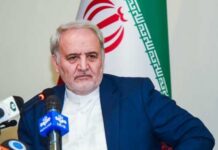
Pakistan’s National Security Advisor (NSA), Moeed Yusuf, concluded his visit to the US where he met his counterpart, Jake Sullivan, in Washington. The visit came as a follow-up to the meeting that was held in Geneva between the national security advisors; Moeed Yusuf and Jake Sullivan. The NSA tweeted a positive follow-up meeting with Jake Sullivan in Washington as both took stock of progress made since the Geneva meeting. Issues of bilateral, regional and global interest dominated the mood of the meeting while consultations on regional connectivity and other areas of cooperation were made.
Both sides further agreed to sustain the momentum in bilateral ties and the need for a negotiated political settlement and reduction of violence in Afghanistan. On the Afghan front, Pakistan has repeatedly refused to provide its land to the US to maintain a lookout in Afghanistan.
The NSA visit is a step towards the continuation of engagement between Pakistan and the US and to make way for a broad-based relationship. It was agreed upon that the nature of relations between both the capitals should not fall victim to history and will not be issue-based. It was also acknowledged that the mode of relationship will cover all gambits while Afghanistan remains the urgent most agenda.
During his talk at the United States Institute of Peace (USIP), NSA Yusuf clearly stated that both Islamabad and Washington does not want the relationship to develop through the lens of a third country whether India, China or Afghanistan. The same disposition was reiterated by the US Secretary of Defense, Lloyd Austin, during his call to Pakistan Army Chief, General Qamar Javed Bajwa.
Austin expressed the US’s interest in continuing to improve its relationship with Pakistan and further build upon multiple shared interests of both the capitals in the region. The NSA’s visit to the US is seen as a significant development as it falls after a series of incidents and events including Pakistani Prime Minister, Imran Khan’s remarks at the HBO interview where he discredited the provision of any bases and use of land to the US in Pakistan remarking it as ‘Absolutely Not.’
The remark was followed by a statement made by the US Assistant Secretary of Defense for Indo-Pacific Affairs, David F. Helvey, had who during his Senate Armed Services Committee hearing stated that Pakistan has allowed the US to have over-flight and access to be able to support our military presence in Afghanistan. The NSA meeting also coincided with the Secretary of State, Antony Blinken’s first official visit to India.[8]
The hasty US departure has turned out to be a morale boost to the Taliban; they did not waste any time fulfilling their goals for power. President Biden has never been in favour of prolonged wars his views were clear right from the start during presidential debates when he stated his interest to end the forever wars in Afghanistan.
Biden has vehemently defended his decision to withdraw and not regretting his decision, arguing that the US “did not go to Afghanistan to nation-build” and that “staying would have meant US troops taking casualties.”[ He stood by his rushed approach, insisting that speed is safety; the US withdrawal took place by the beginning of July, earlier than the decided date in September 2021.
From complex attacks in military and cities to targeted assassinations, a shift in tactics has been observed showcasing that the Taliban have not changed their ideology but there their strategy. Despite these massive investments and two decades of war in Afghanistan, the US has not been able to achieve its main objectives and its hasty withdrawal has paved paths for the Taliban to make sweeping advancements without a pause or hindrance. The speed and ease of the Taliban’s effective takeover of the provinces, as well as the capital, represent a massive psychological blow to not just the Afghan government but the US as well.
The US withdrawal before solving the question of power-sharing in Kabul has failed to mark an end to the war in Afghanistan, instead, it has plunged the country into further conflict and crisis further encouraging regional countries to get involved in proxies.
With the hard-bitten reality unfolding in Afghanistan, it is ever more important for Pakistan and the US to emphasise the need for a reinvigorated proportion of ties as well as prod the existing relationship between the two capitals that has been fraught with the ghosts of the past. Furthermore, the political conversation on the ground needs to be dynamic to patch up the barrenness between Islamabad and Washington which has persisted throughout the relationship.
Moreover, the regional landscape that has dominated the Pakistan-US relationship for the last two decades is shifting significantly. Pakistan wants to engage and recalibrate its policy outlook from geo-political to geo-economics while emphasising the economic benefit by leveraging Pakistan geographical position as opposed to purely security dominated.
Similarly, Washington’s focus on increased competition with Beijing and focus on issues related to climate change — coupled with Islamabad’s desire to shift its focus to geo-economic — offer budding criteria for the Pakistan-US relationship. Both countries have vested interests in the outcome of the Afghan situation; as they closely monitoring the Kabul conundrum. The US has not yet taken any definitive stance on the situation in Afghanistan for it has neither shunned nor recognised the Taliban government leaving space for flexible future posture.