 Tazeen Akhtar
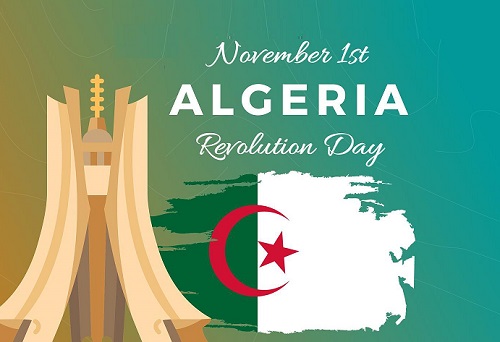
 The People’s Democratic Republic of Algeria is celebrating 70th anniversary of national day on 01 Nov 2024 commemorating the martyrs of the war of independence and reaffirming the national determination to protect and strengthen the sovereignty and independence of the homeland. The night of November 1, 1954 was a turning point in this regard when the first bullets were fired and a fierce war began that lasted nearly 7 years. Great epics were made, despite the lack of equipment, numbers and weakness of armament.
The Algerian War of Independence began in November 1954 and ended in 1962. The war was very brutal and long, and was the most recent major turning point in Algeria’s history. It ultimately united Algerians and raised the value of independence and the philosophy of anticolonialism into the national consciousness. Abusive tactics of the French Army remains a controversial subject in France to this day.
In the early morning hours (12:00 am) of 1 November 1954, the National Liberation Army (L’armée de Libération Nationale—FLN) launched attacks throughout Algeria in the opening salvo of a war of independence. An important watershed in this war was the massacre of civilians near the town of Philippeville in August 1955. More than 12,000 Muslims perished in an orgy of bloodletting by the armed forces and police. After Philippeville, all-out war began in Algeria. The FLN fought largely using guerrilla tactics whilst the French counter-insurgency tactics often included severe reprisals and repression.
Algeria, Third Economy on the Continent Africa, Strategic Location,Huge Economic Potential
1.5 Million Algerians are estimated to have died during the war, and more than 2 million, out of a total Muslim population of 9 or 10 million, were made into refugees or forcibly relocated into government-controlled camps. Much of the countryside and agriculture was devastated, along with the modern economy, which had been dominated by urban European settlers.
The French occupation forces committed gruesome human rights violations against the innocent Algerian civilians during the war for independence that was the basic right of the Algerian people. Many women were raped and killed by the French soldiers.
Algerian women also fought shoulder to shoulder with the men in their fight for freedom. Drif and Saâdi were two the most prominent in the history. They were arrested and sentenced to twenty years hard labor in the Barbarossa prison.
Eventually, protracted negotiations led to a cease-fire signed by France and the FLN on March 19, 1962, at Evian, France. The Evian accords also provided for continuing economic, financial, technical, and cultural relations, along with interim administrative arrangements until a referendum on self-determination could be held. Algeria celebrates March 19 as Day of Victory.
Algeria had opted for independence in a referendum on July 1, 1962. French President Charles De Gaulle pronounced Algeria an independent country on 3 July.The decision was published in the official journal the following day, and Algerian leaders declared 5 July, the anniversary of the French arrival in Algiers, to be Independence Day.
Algeria of today is the largest country in Africa and the Arab and Mediterranean regions with an area estimated at 2,381,741 km2, it is in the middle of the world, linking North Africa to Europe across the Mediterranean. Algeria is the gateway to Africa with roads and other communication means with other countries of the North Africa.
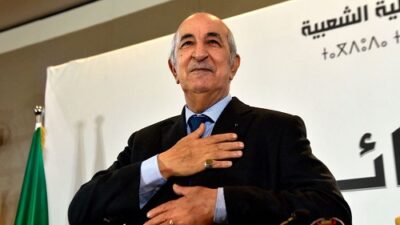
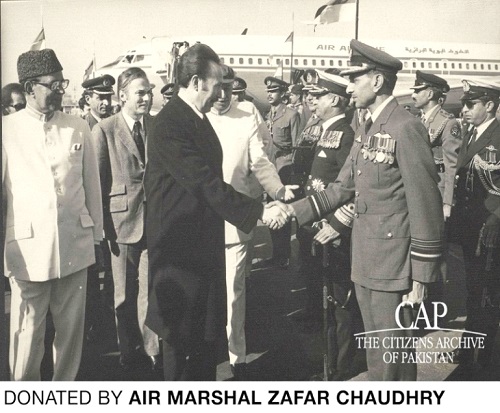 Pakistan and Algeria have a long-standing relations distinguished by solidarity, cooperation and continuous coordination in various organizations to which both countries belong; the United Nations, the Organization of Islamic Cooperation, the Non-Aligned Movement and Group of 77. PM Zulfkar Ali Bhutto Received Houari Boumediene Algerian President at the Islamic Summit in Lahore (1974)