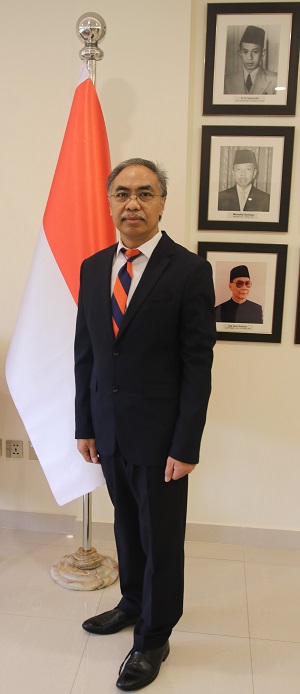
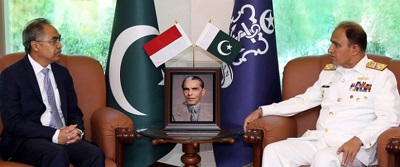
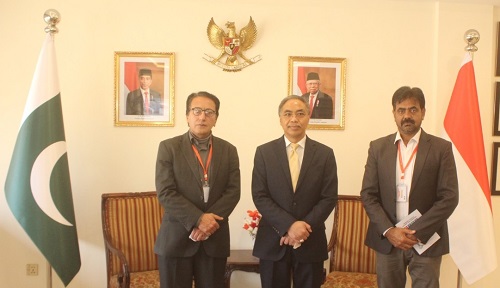
Senior Journalists’ Team Visited Indonesia Embassy Islamabad to Meet and interview H.E Adam Mulawarman Tugio, the Ambassador of Republic of Indonesia on 27 Jan 2022. They included Editor Pakistan in the World Mr. Tazeen Akhtar and Deputy Editor of Urdu Daily Azkaar Mr. Raja Liaqat. Focus remained on how to enhance the bilateral relations to their maximum potential.
Ambassador discussed the Venues of working together that are central for rapid rise in mutual cooperation.
” Ministerial Standing Committee on Scientific and Technological Cooperation of the OIC (COMSTECH) will send scholars of 25 Muslim Countries including Pakistan to Indonesia. Islamic Development Bank will support this project.” Ambassador shared.
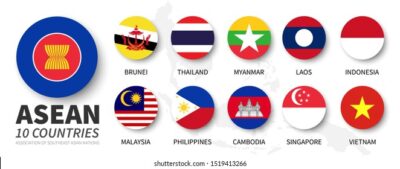
“Indonesia is keen to develop cooperation in Pharmaceutical Sector. Textile, Automobile, Education and Tourism are very important sectors for enhancing level of bilateral cooperation. Indonesia can support Pakistan to enter into ASEAN, a promising region.” H.E continued.
H.E Adam M. Tugio said ” Pakistani tourists can find five star living in very low prices in Indonesia. Our country has 34 provinces and every one has separate culture and tourist attractions. In a region, the natives preserve their dead and bring them back when they want like at marriages or other festivals.”
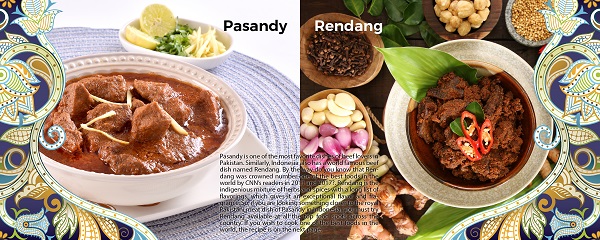
Both sides agreed to organize joint events to spread information about Indonesia. Spouse of Ambassador cooked special tasty dishes for the visiting journalists.
The Embassy will host cultural events in coming days at Specially prepared Lawn with a proper stage and spacious place for sitting of guests in open air.
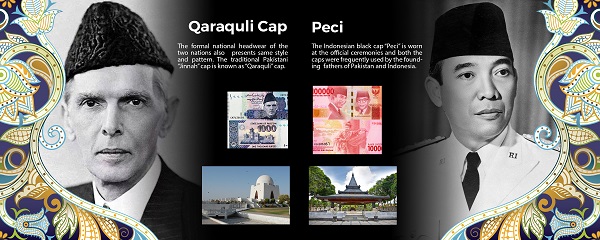
Indonesian Batik art and Pakistani Truck Art have similarities. The Ambassador recently visited Lahore, the hub of culture and heritage, to promote Indonesian culture at Punjab University and other places.
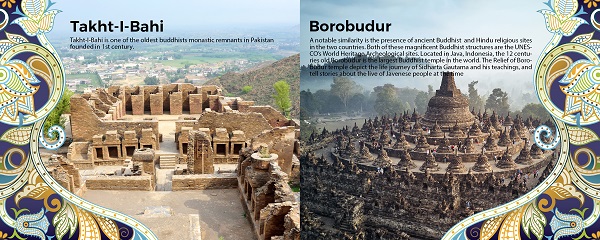
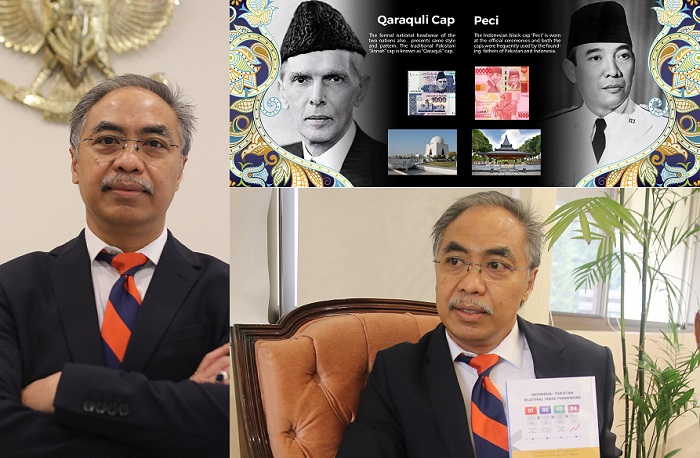
Indonesia Embassy has printed a book with love for Pakistan. Its title is ” Cultural Beauty & Nature’s Wonders – Captivating Images of Indonesia-Pakistan Similarities”. The book consists of commonalities of both nations in history, nationalism, culture, civilization, land scape etc. The book tells itself that it has been produced with hard work and heart. The book will go a long way in building bridges and bringing both people closer to each other.
A very beautiful calendar of year 2022 is also based on the same theme of similarities. The selection of images, short articles, design and printing of the calendar speaks a lot about the skills of the producers.
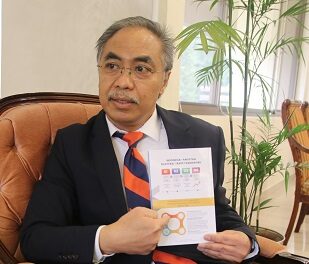
The team was presented with a pamphlet as well that enlightens the reader about the economy of Indonesia in 10 minutes.
Editor Tazeen Akhtar appreciated the efforts of the Ambassador and suggested that Indonesia can start admissions in MBBS to invite Pakistani Students. Thousands of them cant get admission in Pakistan and move to China, Central Asia and Russia.
Faisalabad is the city where the cooperation in Textile can take leap forward. Indonesian Language has many common words that are used in Pakistan as well. That is another big connection to be utilized. Indonesia can attract large number of tourists from Pakistan if direct flight is available.
Here is the interview :
Q- What is present Pak Indonesia trade volume? Is it satisfactory?
A- I would say that the current Pak-Indonesia trade volume, which is around USD. 2.6 billion falls short of expectations given the two countries have the resources and potential to raise it considerably. Moreover, the two countries have a big population, and thriving middle class with a strategic location in their respective regions, making them geo-economy hubs for the respective region. These factors provide lucrative opportunities for business expansion and enhanced trade activities, which must be utilized by both sides. With the development of sustainable trade cooperation within the IP-PTA framework, currently the two countries are moving towards a broader trade agreement namely Trade in Goods Agreement (TIGA) to expand the scope of win-win trade cooperation between the two countries.
Q- What you suggest to increase bilateral trade between two biggest countries of the world?
A- I believe that we need concerted efforts to engage the business communities of both sides for exploring the new areas of cooperation in diversifies fields. The ongoing CPEC project, Gwadar deep seaport and infrastructure developments in Pakistan are quite attractive for the Indonesian investors. Likewise, South East Asian region is predicted to be the next future economic hub, where Indonesia alone is a trillion dollars economy.
We are ready to facilitate the Pakistani trade community to develop linkages in the ASEAN region and utilize the benefits of existing goodwill for long term business plans. The participation in expos, business forums, dissemination of trade information, and connectivity among the chambers of commerce can also significantly contribute to increase the bilateral trade volume.
Q- Which sectors you prefer to give the trade level a meaningful boost according to the potential of both countries?
A- In fact, there are some sectors which can provide a meaningful boost to bilateral trade. Tourism, housing and construction, agriculture, telecommunication, IT, healthcare industry and automobile sector can all benefit investors. On both sides, these are progressive and expanding industries that offer lot of incentives.
Q- What is the possibility of joint ventures between the companies of both countries? Which industries can move forward in this regard from both sides?
A- We need to materialize the possibilities of joint ventures in the sectors which I have already mentioned. The sharing of expertise and technology would be very beneficial for both the countries as it would create employment opportunities and boost economic activities.
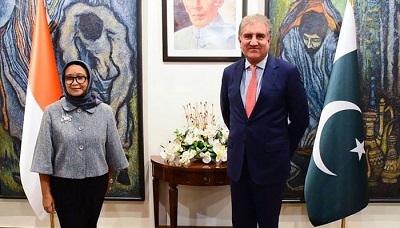
Q- Madam Foreign Minister visited Pakistan for OIC in Dec 2021. Any more such visits can be expected on both sides?
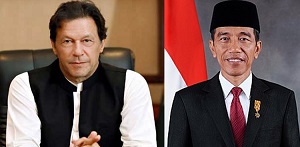
A- During the last few years, the visit of the Indonesian President Mr. Joko Widodo to Pakistan in 2018 was a top-level interaction between the two countries. The Indonesian President had in-depth exchanges of views on bilateral relations and expressed firm commitment to increase the level of bilateral friendly cooperation.
The recent visit of Foreign Minister for the OIC meeting was the continuation of our commitment to always stand for the cause of humanity and to support our brethren in distress. More high-level visits from both sides were planned but the pandemic forced them to be rescheduled.
Q- PM Imran Khan is torch bearer of New Pakistan. Similarly Indonesia is going to be new. What both countries have to share with each other in “NEW” connection?
A- Prime Minister Imran Khan’s concept of Naya Pakistan is one that I like much. This vision provides hope for a better future to the educated youth and promises growth opportunities.
The concept of a New Pakistan has instilled in the people a new spirit of change as an agent of change, bringing reforms, accountability, transparency, and the rule of law through strengthening democratic institutions.
Indonesia is also forging forward with a new reform agenda aimed at bolstering democracy, the economy, civil society, and public sector development. Both countries, in my opinion, are steadily shifting toward more socio-economic improvement.
Q- We have many commonalities from culture to religion. These two are the strongest bonds but still people do not know much about each other and have very rare direct connections. Why is that? How we can change it?
A- Indonesia and Pakistan enjoy unique similarities and interesting history of close friendly bonds, which has roots in the religion. Today internet and social media have minimized the distances in this globalized world with easy access to required information. We are utilizing these wonderful modern tools to bridge the gaps and
develop connectivity through digital platform promotions, webinar, E-meetings, virtual expos, promotional videos to foster our friendly bonds and to create interest to know more about each other.
Indonesia and Pakistan share a lot in common; whether it is religious tourism sites or variety of cuisine; trendy lifestyle and culture; creative art and crafts; the similarities are numerous and unique. In this regard, the Embassy also launched a book on cultural similarities in September 2021, which received a very encouraging response from our friends in Pakistan.
Q- Both countries are situated at very important locations of Indian Ocean that are the hubs of sea trade between the world. How this commonality can be exploited in the favor of both nations?
A- Without a doubt, the Indian Ocean holds great importance for Indonesia and Pakistan as a major global economic maritime sea trade route. Both the countries are also the member of Indian Ocean Rim Association (IORA) situated at this vital trade route.
It is also an important route of oil and gas supply chains and imports/exports that connects various regions. We can utilize the existing bilateral trade opportunities as well as connectivity with other neighbours located in the Indian Ocean for raising the trade volume to reach new destinations. The cooperation becomes more relevant when we see that Asia is going to be the focus of global trade in the changing economic scenario.
Q- Indonesia is partner in BRI and at the same time has equal relations with USA and China. Pakistan has CPEC but has to face difficulty in maintaining a balance in relationship with USA and China. How do you see that and would you like to comment on this phenomenon?
A- I believe that every country has its own scenario and strategies to maintain balanced cordial relations. I admire the efforts of Pakistan for establishing good working relationship with neighbours and other countries across the globe. CPEC is an important development project for Pakistan, which is moving ahead steadily despite challenges due to pragmatic policies of Pakistan.
Q- Indonesia has good relations with all three wings of Pakistan Armed Forces. Both countries were members of defence pact in the past. Is there any possibility of some new defence agreement?
A- Indonesia and Pakistan signed the Defence Cooperation Agreement (DCA) in 2010, which provided opportunities for collaboration, exchange of information and sharing of the experiences and technical assistance and training. Since then, the scope of defence cooperation has certainly widened among our armed forces supported by the visits of services chiefs.
At the moment, we are using DCA as a base for more meaningful engagements. In this regard, the first Indonesia-Pakistan Security Dialogue will also be held soon. We will continue to focus in addressing issues of mutual concern, including issues of global and regional security, terrorism, narcotics, maritime security, and human trafficking.
Q- What are prospects of Pakistan in ASEAN block and how Indonesia can help Pakistan?
A- Indonesia values Pakistan’s ASEAN Sectoral Dialogue Partnership and supports Pakistan’s efforts to achieve a Full Dialogue Partnership with ASEAN. Indonesia similarly holds Pakistan’s ‘Vision East Asia’ policy and geo-economic vision in high regard.
I think that implementing these measures would help to deepen Pakistan’s ties with ASEAN in all aspects of cooperation. Pakistan’s total bilateral trade with ASEAN of over $7 billion suggests that there is huge scope for Islamabad to scale up its economic engagement with ASEAN through its member-states.
ASEAN nations as combined together are the fifth largest economy in the world and Pakistan’s collaboration with ASEAN region chiefly in the areas of trade & investment, education, human resources development and tourism could bring huge economic benefits to Pakistan.
I expect that now that the Plan of Action has been established, the two parties will be in a better position to maximize the available prospects to their full potential among others by focusing on the low-hanging fruit first.
I would also want to underline the need of using think tanks on both sides to conduct collaborative research with stakeholders to assist identify areas of collaboration and recommend strategies to successfully boost ASEAN-Pakistan bilateral trade cooperation.
Q- How Pakistan can exploit Gandhara and Buddhist heritage to attract ASEAN countries?
A- Pakistan was one of the countries where tourism, cultural heritage, archaeological monuments, and religious sites were all blessings. Pakistan’s distinctive environment, rich cultural legacy, and breathtaking natural beauty drew millions of visitors from all over the world, particularly from Southeast Asia and East Asia.
For Buddhists across the world, the Buddhist sites of Pakistan were incredibly significant and sacred, and they were a treasure mine of human cultural legacy. Around 240 million Muslims,140 million Buddhists, 130 million Christians, and seven million Hindus live in ASEAN.
In my opinion, Pakistan might benefit much from cultural heritage and religious tourism, not only in terms of economics but also in terms of goodwill and cultural exchange, thanks to its magnificent old cultural heritage locations.
Q- Both countries have huge population of young people. That is a challenge as well as opportunity. What cooperation both can extend to each other in education and vocational training?
A- I am glad to share that as the largest economy in Southeast Asia, Indonesia has charted impressive economic growth and is home to a massive young population that is excited to embrace emerging technologies. With the advent of some of Indonesia’s largest tech unicorns going public, the island country is gathering significant importance and influence as a hub for start-ups and talents. Indonesia’s digital economy is set to surpass $100 billion over the next few years.
This signifies a huge chunk of the country’s $1 trillion GDP. The e-Commerce and services market is worth over $309 billion in the region and doesn’t show any signs of slowing down.
Over the next few years, huge economic growth is forecast, shifting towards a more consumer driven society. The fourth-largest country in the world, Indonesia is at the apex of it all, and its youth are propelling it forward.
Pakistan’s digital footprint was also rapidly increasing and with the country’s large young population it is only going to get bigger.
Therefore, it is inevitable that the young population becomes our strength to develop our economies and societies.
Indonesia and Pakistan with huge demographic advantage of young and talented generation or millennial should develop networking and through creativity and initiatives should think outside the box on creating new employment and business opportunities, including through start-ups, small and medium enterprises.
I earnestly hope that these sectors become our top opportunities and priorities in the future and together we strive to enable our youth to fully participate in transforming our economies into those that can compete globally.
Q- What opportunities Indonesia can offer to Pakistan students in Education? Especially in Medical and Technical Education?
A- Due to its immense potential for developing bilateral engagement, education is one of the major sectors on which the Embassy plans to focus its efforts.
The Indonesian government offers Pakistani students full-fledged undergraduate and postgraduate scholarships in fields such as engineering, nursing, agriculture, pharmacology, veterinary sciences, social sciences, computer sciences, business administration, music, fine arts, and many others through the KNB Scholarship.
I am pleased to inform that the KNB scholarship has inspired a lot of interest among Pakistani students who wish to pursue higher education programmes in Indonesia, with seven of them ranking among the top 1,000 universities in the world according to the QS
World University Rankings 2020. Furthermore, more Indonesian schools are currently awarding scholarships for master and doctoral programs taught in English that has also attracted Pakistani students, contributing to an overall rise in Pakistani student numbers in Indonesia.
Q- Tourism is big industry of Indonesia. Pakistan is striving for promotion of international Tourism. How both countries can work together here?
A- Given its unique culture, tradition, and natural beauty, Pakistan has enormous potential for international tourism, in my opinion. It’s encouraging to see Pakistan attempting to build its tourist sector quickly through a comprehensive and well coordinated master plan and by luring international investment into the proposed exclusive and cutting-edge tourism zones.
Indonesia is eager to take part in the “Pakistan World Tourism Forum” which Pakistan has announced in order to promote the country’s tourism sector growth and to carry out its comprehensive foreign investment strategy in the tourism industry. With a combined population of over half a billion people, tourism is a huge opportunity for the two countries to capitalise on.
It will be my sincere attempt to help form a functional joint working group made up of tourist industry professionals and stakeholders from both sides. This working group should define a shared agenda and make proposals for strengthening collaboration and partnership in all ways possible to enable our nations achieve the desired greater benefit.
Q- Can a Pakistani tourist get Indonesian visa easily?
A- Tourists from Pakistan can easily obtain an Indonesian visa. Tourists merely need to meet a few simple standards and get their visa issued within days. The Embassy has authorised local companies to provide Visa Drop Box facilities in most parts of the country for the convenience of visa applicants and tourists. Tourists may now apply for an Indonesian visa without hassle from their home town or even their own house.
The granting of visas for recreational purposes is presently suspended owing to the COVID 19 pandemic.
Q- How both countries can establish direct connectivity whether it is in the sea and or in the air? Is it possible?
A- Direct air operations between the two nations are very much possible and necessary. Direct flight operations will lower travel costs, shorten travel times, and increase bilateral commerce and tourist numbers to where they should be. In reality, one of Indonesia’s most well-known private airlines has undertaken talks with Pakistan’s aviation authorities and made some early progress toward launching service from the three Pakistani cities of Karachi, Lahore, and Islamabad. Because of the pandemic, the plan was put on hold, but it is expected to restart as soon as the global health situation improves.
Q- How Indonesia looks at the markets of Central Asia and beyond? Pakistan can the gateway to that region for your country?
A- Pakistan has the potential to develop as a centre of economic activity and regional connectivity due to its strategic location at the crossroads of South Asia, Central Asia, and the Middle East.
Indonesia welcomes Pakistan’s efforts to enhance regional connectivity and development including through China-Pakistan Economic Corridor (CPEC). Mega project such as CPEC has immense potential to attract diverse investment opportunities and promote industrial, financial and agricultural cooperation.
In the context of the emerging opportunities in Pakistan and the region, Indonesia views Pakistan as its diverse investment and joint ventures destination for its key exports to the Central Asian and Middle East regions. Increasingly improved security conditions, pro-investor policies, a large population, big consumer market
and talented millennial have also made Pakistan a promising investment destination for Indonesia.
Q- What lessons SAARC members can learn from ASEAN?
A- ASEAN is a multi-civilizational club of unparalleled diversity. It has helped its members overcome the unresolved and seemingly insurmountable conflict and distrust that roiled the region in 1967. ASEAN has full paradox for success as members have border disputes, ethnic concerns, frictions and other problems at the time it was created.
Yet, it has achieved remarkable economic growth and raised its people out of abject poverty—combined, ASEAN’s GDP is now the fifth largest in the world. It has taken a position of geopolitical weakness and turned it into a strength.
In the fifty years since the establishment of the Association, its 623 million people have witnessed remarkable progress.
ASEAN has brought peace and prosperity to a troubled region, generated inter-civilizational harmony in the most diverse corner of the planet, and brought hope to many people. In an era when globalization and technological advancements are bringing once-distant civilizations closer together, ASEAN is a living laboratory which proves that the clash of civilizations can be avoided.
By transforming one of the planet’s most conflict-ridden and poverty stricken regions in the 1960s into one of its most peaceful and prosperous regions, it is clear that ASEAN has delivered a true miracle.

 Tazeen Akhtar