It seems that the Republic of Kazakhstan has now achieved the real goal of “Fair and
Just Kazakhstan’ after the successful holding of snap parliamentary and local elections
which were held on March 19, 2023. Ironically, even OSEC has highly appreciated
overall arrangement of these elections in Kazakhstan which is commendable.
Definitely, political stakes were high for the incumbent government but still there was no
incident of pre & post political/electoral rigging in the country which is highly
appreciable. It vividly reflected its firm belief in true democracy where people have free
will and ballots were preferred over bullets.
There was not a single incident of any administrative preferential treatment towards any
particular political party or candidate. All contesting political parties had equal access to
media and Instagram was the most favorite social media link during these elections.
Moreover, all political parties were equally treated in print and electronic media
coverage which disseminated true color of Kazakhstan’s liberal democracy which is
indeed a good omen for its future political maturity, stability and sustainability. Hopefully,
the ruling party Amanat will secure majority in these elections.
The Central Election Commission of Kazakhstan and its regional offices did a
remarkable job for holding a fair, free, transparent and internationally recognized
elections in the country which has now further enhanced its massive drive of political
diversity, existence of opposition parties, liberal democracy, listening state, impartiality
of the governmental administration and last but not least, checks & balances, separation of power and people’s centric governance in the country.
The majority of the international election observers and media also termed these
elections unique, interactive, positive, productive, participatory and progressive leading
the country towards greater social harmony, political stability, economic sustainability
and constitutional consensus in the days to come.
According to its CEC more than 12 million people were eligible to vote in these
elections. 10,233 polling stations were operating in 17 regions and three cities of
national significance i.e. Astana, Almaty, and Shymkent. Polling stations in Kazakhstan
and abroad were opened at 7 a.m. and were close at 8 p.m. local time. Kazakh citizens
abroad cast their votes in 77 polling stations in 62 countries around the globe. In
Pakistan Kazakhstan’s embassy also held polling station in Islamabad.
Interestingly, seven political parties i.e. Amanat, Aq Jol Democratic Party, Auyl People’s
Democratic Patriotic Party, Baytaq, National Social Democratic Party, People’s Party of
Kazakhstan, and Respublica. Baytaq and Respublica rigorously participated in the
democratically held elections. Moreover, two new parties were able to participate due
to simplified party registration rules.
There were 281 candidates from party lists and hundreds of candidates in single
mandate constituencies, a novelty in this election and a sign of unprecedented political
activity among citizens. In addition to 435 candidates in single-mandate constituencies,
including 359 self-nominated candidates.
The average age of the candidates was approximately 49 years. Women comprise
19.54 percent (85 candidates) of the registered candidates.
The CEC accredited 793 observers from 41 foreign countries including Pakistan and 12
international organizations. There were more than 230 foreign journalists accredited to
cover the election.
Critical analysis of the recently elections revealed that snap elections for the
Kazakhstan lower house of the federal Parliament (Majilis) and local councils
(maslikhats) were held March 19, 2023 in which a total of 3,749 deputies of maslikhats
have been elected, 130 in regional councils and 617 in city councils.
Frankly speaking, the 2023 snap legislative elections were test President Toqaev’s
structural and political reforms in the aftermath of last year’s referendum and
presidential election and the extent to which they could facilitate the creation of a “New
Kazakhstan”.
Interestingly, Kazakhstan’s elections were unique in many ways, including the
participation of two new political parties (the Green Party and the Respublika Party).
Two new political parties participated in the elections, which determined the members of
the lower house of parliament (Mazhilis) and regional representative bodies
(Maslikhats).
In this regard, significant changes have been introduced in the electoral system in
comparison to previous elections following constitutional amendments last year. A
proportional-majoritarian model a new electoral value addition was used for the first time
since 2004, where 30 per cent of Mazhilis members were elected in single-member
districts.
The threshold for political parties to gain seats in parliament has been further lowered
from seven to five per cent. Furthermore, a 30 per cent quota for women, youth, and
persons with special needs in party lists, both prior to the election and in the distribution
of mandates have become iconic electoral achievements in Kazakhstan.
Seven political parties competed in the election, including two new parties that abled to
participate due to simplified party registration rules. A total of 281 candidates from
seven party lists are vying for seats in the Mazhilis.
It seems that most recently elections are the most competitive legislative election in
Kazakhstan’s modern history and it is a giant step in building a Just and Fair
Kazakhstan. It vividly reflects Kazakhstan’s political wisdom and journey towards
greater participatory democracy.
Undoubtedly, the mixed majority-proportional model has ensured that the entire spectrum of views and opinions of voters has been covered and included in the massive politicization and democratization at the gross root levels.
Hopefully, it finalizes its political and constitutional transition from a super-presidential
system towards the normative presidential system under a unique model which is
politically innovative, interactive, integrated, coordinated and people’s centric. It will
further strengthen new political structure i.e. a strong President, an influential
parliament, and an accountable government in the country.
To ensure full transparency and fairness, the election was monitored by the Central
Election Commission (CEC), and 793 observers from 12 international organizations and
61 countries, including the mission of the OSCE Office for Democratic Institutions and
Human Rights (ODIHR). The CEC took all measures to conduct the election in strict
compliance with the current legislation, and ensure openness, transparency, and
democratic procedures of voting.
The incumbent government’s political party namely Amanat party won 53.9 percent of
the vote in a snap parliamentary election, giving President Kassym-Jomart Tokayev a
clear mandate to reform the nation in line with his social justice objectives.
President Tokayev first proposed holding elections to the Mazhilis and maslikhats in his
Address to the Nation on September 1, 2022. He dissolved the parliament chamber and
terminated the powers of the maslikhats on January 19, 2023 when he announced the
date of the vote. This legislative election constitutes the final stage in the political
renewal cycle initiated by President Tokayev in March 2022.
A constitutional referendum was held on June 5, 2022, continued with the presidential election on November 20 last year and a Senate election on January 14 this year.
The previous legislative election in Kazakhstan took place in January 2021. Five parties
participated in that election, with three parties gaining seats in the Mazhilis the ruling
Amanat party (previously Nur Otan), Aq Jol, and the People’s Party.
Hopefully, the rigorous participation of seven political parties in competitive elections will
further contribute to strengthening the multi-party system by increasing the plurality and
influence of opposition politics, an objective that the country has been working toward
for the past several years.
In addition, an "against all" option was specifically included on the ballots, which gave the electorate the opportunity to express their disapproval of all candidates should they
wish to do so.
It is good omen that according to exit polls Sunday from Kazakhstan's early
parliamentary and local council elections showed that six of the seven political parties
competing for elections surpassed the threshold needed to be admitted to the lower
house of the legislature.
Hopefully, within 10 days, Kazakhstan’s Central Election Commission will declare the
election's final results. The turnout was 54.19 percent.
To conclude, it seems that successful holding of these elections would further
strengthen Kazakhstan President Kassym-Jomart Tokayev’s massive structural reforms
journey allowing him to start implementing his plan to reform the country and ensuring a
fairer distribution of national resources.
Most recently, parliamentary elections in Kazakhstan marked the last step for the
country’s complete reformation based on modernisation and democratization gradually
but surely inching towards the new path promoted by Kazakh President Kassym-Jomart
Tokayev. It would beginning of new era in good governance, corporate restructuring,
people’s friendly policies, pragmatic national and foreign policies and last but not least,
political stability.
It would further foster Tokayev’s progressive economic reforms to achieve a balanced
regional economic development. It would accelerate economic agenda of further
eradication of poverty, generation of new jobs and immense social development in
terms of provision of basic necessities of life, protection of basic human rights and last
but not least, complete elimination of social and ethnic isolation, political marginalization
and economic comprise in the country.
It would further strengthen democracy at gross-root level, the systematic start of
decentralization of the political system and beginning of financial independency in the
country.
In March 2022, Kazakhstan president proposed numerous constitutional reforms aimed
at changing the entire state model and form of government in the country by limiting the
powers of the president, strengthening the role of Parliament, expanding the
participation of citizens in political processes and further strengthening the protection of
human rights. In this connection, most recently held elections have further transformed
its political system, administrative outlook and economic system.
It seems that Republic of Kazakhstan under the leadership of Tokayev has started a
new journey of massive politicization and democratization in the country. It guarantees a
qualitative life for all the citizens and communities alike. It upholds true spirits of social
justice and role of the law in which there will be no more scope and place for any kind of
political elite, economic & corporate cronies, concentration of wealth and last but not
least, exploitation of national resources by any elite alliance in the country.
The Republic of Kazakhstan has now a new democratic system which is meant for the
people, by the people and of the people.
The author is Executive Director: The Center for South Asia & International Studies (CSAIS) Islamabad, Regional Expert: Kazakhstan & CIS

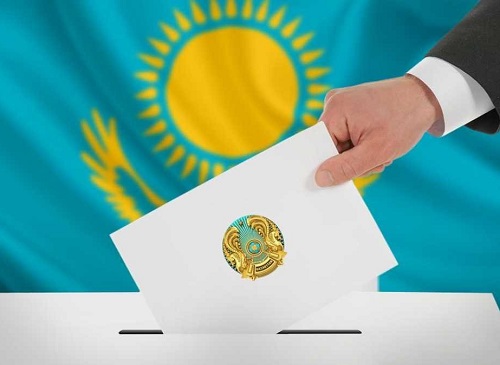 Dr Mehmood Ul Hassan Khan