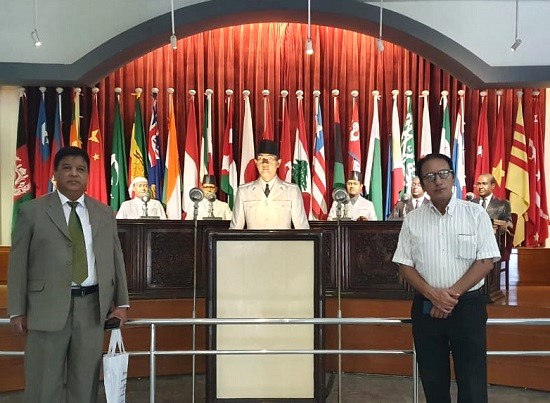
 Asia Africa Museum takes the Visitors to 1955 when the historical Conference was Hosted here
It was Culmination of Indonesian Foreign Policy only 10 Years after Independence
Pakistan’s Representation at the theme park of the Conference is Needed
Tazeen Akhtar
 Indonesia’s impression in my mind was not Jakarta but it was Bandugn always and the reason behind that was the Bandung Conference in April 1955 that played the transforming role in the destiny of colonized nations to empower and guide them for their independence, encourage the struggling nations for their rights and discouraging the occupant nations to stop them from their further designs of new colonies in the world.
It was then that Asian and African nations envisioned a new world order, unifying the myth of decolonization and a renewed ethos of self determination. It was, in short, the first milestone achieved by the Asian and African nations in the way forward to get rid of the curse of colonialism. The conference evolved 10 fundamental principles in promoting world peace and international cooperation.
Foreign Minister of the Republic of Indonesia, Ms Retno Lestari Priansari Marsudi refreshed the comity of nations about the principles of Bandung Conference at the General Debate of the 78th Session of the UN General Assembly New York on 23 September 2023 for shared and common values of human rights, UN Charter, Sovereignty, Territorial Integrity, Equality of all races, peaceful settlements of disputes, Promotion of Mutual interests and cooperation.
These are the 10 Principles that were set for the world to observe by newly independent states in 1955 in the historical Bandung Conference hosted by Indonesia. Thus Indonesia pioneered 7 decades ago for the equality and peace in the world, Indonesia again takes initiative to sensitize the global fraternity to do the needful in today’s highest volatile world for stability and safety of mankind.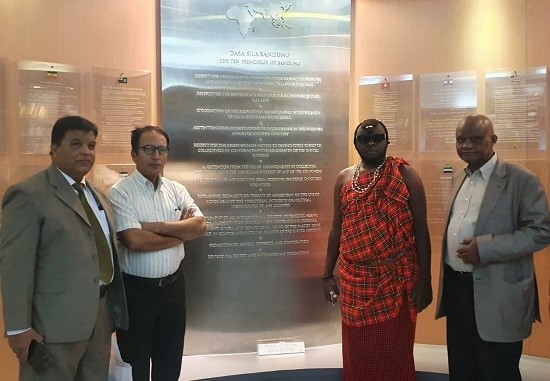
The conference was Co-sponsored by Indonesia, India, Burma (present-day Myanmar), Ceylon (present-day Sri Lanka), and Pakistan, the 29 invited diplomatic delegations met from April 18 to 24 to address the pressing issues facing their continents during the early Cold War period. A number of well-known leaders attended, including Jawaharlal Nehru of India, Zhou Enlai of China, Gamal Abdel Nasser of Egypt, and Sukarno of host country Indonesia. The remaining delegates represented countries from Japan and Jordan to Egypt and Ethiopia, as well as Sudan and the Gold Coast (Ghana). The last two secured their independence in 1956 and 1957, respectively.
I studied about the Bandung Conference in my early classes in the middle section and I had never imagined that one day I would visit the city of Bandung, Memorial Museum of the Conference and a thematic park there. It was only thanks to the support of the Embassy of Indonesia in Islamabad that I was there in Oct 2023.
The Bandung Conference in 1955 proved to be the second most important forum of the nations after the establishment of the United Nations in 1945. This conference is still relevant in the international dynamics as the nations of the world are organizing themselves in different blocks inspite their biggest common block is already present in the shape of UNO. It is only because UNO failed in many cases and could not provide equal rights of existence, sovereignty, peace and development that were the central aims of the Bandung Conference.
The conference stated its strong determination to oppose colonialism or neocolonialism by any nation.Non-Aligned Movement (NAM) was the new international forum that emerged from this conference and that is working even today to maintain the principles of Bandung Conference.
The Conference was held in Bandung on 18 to 24 April 1955 with newly liberated 27 Asian and 6 African countries leaders successfully only 10 years after the independence of Indonesia expressing the resolve of Indonesian people to stand for the rights of colonized nations and promote peace in the world. It was the culmination of the most successful Indonesian foreign policy.
In this background, our visit to the venue of the conference was a lifetime experience. African Journalists from Tanzania were also part of visiting delegation. The venue is now a Museum of Asia Africa Conference. The incharg of the museum Ms Noviasari Rustam received us with warm welcome and briefed about the history of establishment of the museum and the facilities it provides to revisit the conference with audio-visual archives and other records saved here for future generations.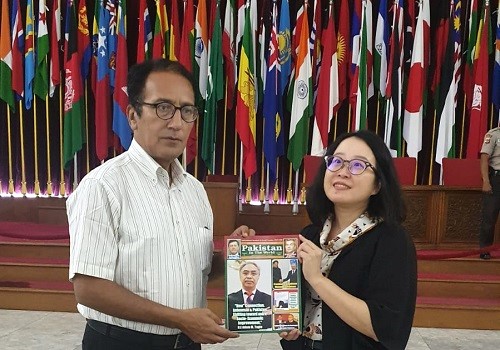
She shared that the purpose of the museum is to save, collect, protect, manage, and present for the public, all of the information related to the Asian-African Conference, its background and its development, which have connection with social culture and the role of the Asian African nations, especially Indonesia in the international life and political arena.
The museum also collects, manages and presents for the public all the books, magazines, newspapers, other publications, and documents containing details and information of the activities, role, and social culture of the Asian African nations and developing countries in the international life and political platform.
Ms Noviasari Rustam apprised us that the museum also facilitates researchers relating with Asia, Africa, and developing countries for education and scientific purposes for Indonesian people and youth, for the youth of Asian-African Countries in general, as well as providing inputs for the government to conduct its foreign policy.
To support efforts in developing national culture, and education of the young generation, as well as promoting tourism.
ABSENCE OF PAKISTAN IN THEME PARK