-
UNOPS Pakistan in partnership with the provincial governments of Sindh, Punjab and KP, strengthened efforts to increase technical capacity to design, construct and manage climate resilient housing, through research and development, training and communication on passive techniques improving the building performance.
-
Pakistan is experiencing rapid urbanization and growth in construction, the vast majority of which is housing. The population living in urban areas has increased from over 37% in 2020 to 60% in 2050, and will also increase in absolute terms as the national population grows from 225 million in 2021 to a projected 310 million in 2050.
 Islamabad: The United Nations Office for Project Services (UNOPS) has launched GHAR: Green Housing Affordable Resilient – an initiative aimed to enhance the technical capacity of the relevant Government institutes at different provinces of Pakistan and renowned academia to design, construct and manage climate resilient housing, through research and development, interactive dialogue between institutes and academia, training and communication on passive techniques improving the building performance.
There are three components of UNOPS Pakistan’s work under climate resilient housing: communication, training and demonstration strategies. All these components are required to achieve progress in implementation of green building codes for climate resilient, sustainable and inclusive housing.
Under GHAR, UNOPS held over 8 seminars in engineering universities in Islamabad, Sindh, Punjab and KP to orient 1,086 students and over 556 professionals from different institutes about green infrastructure.
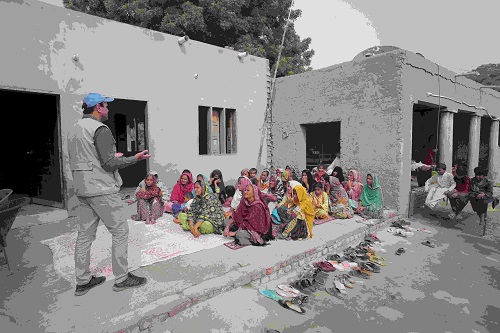
Special training sessions for over 190 government officials of Planning and Development (P&D) Department and Urban Planning Units of Sindh, Punjab and KP were also conducted. As part of the initiative, UNOPS also trained over 100 semi-skilled masons in Sindh on the importance of climate resilient housing in the aftermath of devastating floods of 2022. The training focuses on climate resilient building methods with practical exercises about site selection, building layouts, quality checks and design.
Ms Jennifer Ankhrom-Khan, UNOPS Country Manager for Pakistan said:
“Guidance in Green Building Codes is helpful for engineers, architects & quantity surveyors, but is more effective when communicated through training on how to apply green building principles in design & construction exercises and examples.
The training sessions conducted by UNOPS will surely enhance the technical capacity of the government officials and semi-skilled masons. This initiative is part of our commitment to support the Government of Pakistan in achieving the Sustainable Development Goals.”
The initiative is supporting the Sustainable Development Goals: 9 Industry, Innovation and Infrastructure; 11 Sustainable Cities and Communities, and 13 Climate Action. It is also aligned with the Pakistan Government’s Vision 2025 and the United Nations Sustainable Development Cooperation Framework for Pakistan 2023-2027.
THE UNITED STATES HELPS IMPROVE WATER AND SANITATION SERVICES IN KP AND SINDH