 Mujeeb Ali / Research Associate ISSI
Azerbaijan is hosting the annual UN Climate Change Conference (COP 29), from November 11 to 22. This year, the conference will focus on ensuring that developing countries have access to climate action financing. COP 29 will also be a significant milestone for transparency related to the Paris Agreement, where all parties are expected to submit their first Biennial Enhanced Transparency Reports (BTRs) by December 2024.
The COP provides a significant opportunity for Pakistan to secure the finance for its sustainable development and climate resilience.
COP 29 Financing Agenda and Opportunities for Pakistan
· At COP 29, climate financing discussions will be based on important issues. Negotiations will deal with the New Collective Quantified Fund (NCQF), which aims to set new targets for post-2025 climate action support.
· The proposed Climate Finance Action Fund will collect voluntary contributions from fossil-fuel-rich producing countries and companies to address finance gaps.
· Article 6 of the Paris Agreement will also be discussed to improve carbon market standards and the effectiveness of lowering emissions through sustainable investments.
· Apart from climate finance, debates will also cover other important issues like land degradation, plastic waste, food security, agriculture, and health.
“TIME TO ACT NOW ON CLIMATE ACTION” : Pakistani Representative at COP29 opening
Coordinator to PM on climate change and environmental coordination, Miss Romina Alam considers COP 29, a vital opportunity for Pakistan to secure climate finance, especially for resilience and adaptation initiatives in affected areas. The country will focus on promoting its National Adaptation Plan, addressing loss and damage due to climate change impacts, and finalizing its carbon market policy to attract foreign investment for sustainable projects.
Effective climate diplomacy, technology transfer, advocating for climate justice, and strengthening global cooperation are some goals that Pakistan aims to present at COP 29.
Pakistan can benefit from the climate finance agenda at COP 29 by engaging in discussions on NCQF, the Climate Action Finance Fund, and carbon markets. These funding opportunities could open opportunities for green investment, helping the country to enhance its adaptation and resilience capabilities.
In addition, Pakistan can show its commitment to climate change and highlight its vulnerability to interact with international cooperation for sustainable development goals. Also, discussions with other nations on renewable energy projects and bilateral climate-resilient projects could enhance its credibility and standing.
Pakistani Prime Minister’s visit to Baku, Azerbaijan to attend COP29
Pakistan’s Climate Change Challenges and the Importance of Climate Financing
Despite being responsible for just 0.9% of global greenhouse gas emissions, Pakistan is highly affected by climate change impacts. The country faces variations in weather patterns, extreme heatwaves, urban flooding, droughts, glacial lake outbursts, increased forest fires, and migration of plant and animal species, which harms our ecosystem.
Also, rising sea levels and stronger storms could result in coastal flooding which causes the loss of coastal habitats like mangroves, which are important nurseries for numerous fish species. In addition, rising air pollution due to crop burning, transport, and industry emissions contribute to the smog that causes huge losses to aviation, human lives in accidents, and reduced mobility, due to poor visibility and poses serious health problems to the population.
Climate-induced migration is also a major challenge, which leads to increased pressure on city areas that results in the overloading of infrastructure and resources that causes social tensions and conflicts over limited resources.
For a developing country, climate financing is a crucial need for the country’s sustainable development. Pakistan requires significant financing to implement its adaptation and mitigation policies in affected areas that can help to enhance resilience and reduce vulnerability against climate change. Climate financing can facilitate investments in different sectors like renewable energy, sustainable agriculture, water management, and disaster risk management.
According to the World Bank, Pakistan needs a huge investment of US $348 billion (10.7% of cumulative GDP) in the next 7 years to address the climate change challenge. US $152 billion (44%) will be used for adaptation and resilience while US $ 196 billion (56%) for decarbonisation. As a developing country with a struggling economy, it is difficult for Pakistan to fight alone against climate change.
Therefore, as a participant in the United Nations Framework Convention on Climate Change (UNFCCC) and a World Bank member, Pakistan is eligible for financial and technological support. To get an appropriate share from these institutions, Pakistan needs to create a favourable environment to attract foreign funding opportunities. 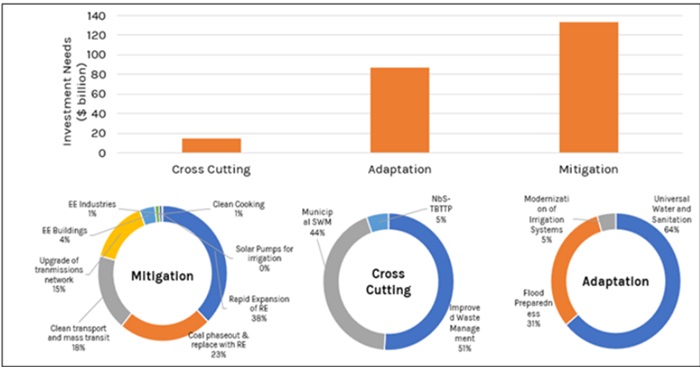
Figure 1: Climate financing needs for Pakistan
Unfortunately, Pakistan struggles to secure financial support from many international sources, including carbon markets, climate insurance, and green alliances. Many grants, concessional loans, and technical aids, such as Loss and Damage Funds, remain as pledges with zero impact.
The Geneva Donor Conference held in January 2023, pledged $9 billion to support the (4RF) Framework (Resilient, Recovery, Rehabilitation, and Reconstruction), but not much progress has been made yet on the pledges. Meanwhile, other South Asian countries with the same climate challenges, like Bangladesh, are receiving significantly more funding—$374 million from the Green Climate Fund, nearly three times the amount Pakistan has received.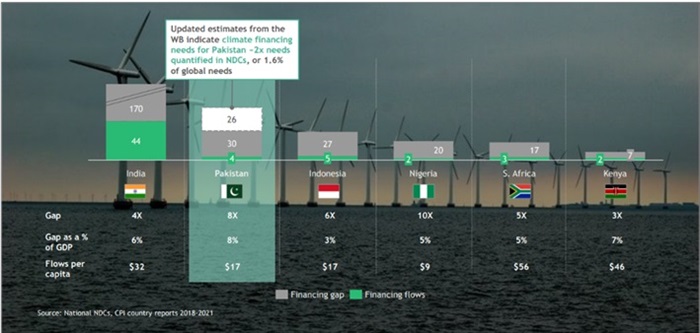
Figure 2: Annual climate financing needs compared with international financing flows by country.
Key Challenges in Climate Financing Accessibility
Some of the major challenges contributing to the provision of insufficient financial resources are given below.
· Political and Economic Instability
Uncertainty regarding political continuity, the irregular framework of policies, and struggling economies create hindrances to potential investment in Pakistan as it discourages investors from committing funds for long-term climate finance projects in the country.
· Political Influence
Pakistan faces a challenge in accessing climate finance due to major powers’ political influence, which shapes global funding priorities. Every major power wants to maintain its influence because donors compete with each other, which often dictates the flow of funds for vulnerable countries.
· Lack of Evidence-Based Data Collection
Another major barrier to climate finance is the lack of capacity to collect and analyze climate change data. Without authentic data, assessing vulnerabilities, checking progress, and total loss is difficult. This gap also makes it difficult for policymakers to make strong funding proposals and allocate available resources effectively.
· Weak Governance
Pakistan is facing problems of weak governance, mismanagement, lack of transparency, and bureaucratic hurdles. These challenges collectively affect the flow of international funding for climate actions.
· Insufficient Bankable Projects
The lack of well-prepared, bankable projects creates hurdles in the country’s ability to attract foreign investment. Many proposed projects do not have comprehensive planning, which makes them less attractive to donors.
· Lack of Community Engagement
The climate change issue in Pakistan is mainly discussed at a higher level, including governments, private sectors, and institutions. This ignores the fact that grassroots-level communities often have inappropriate knowledge about climate change. Their voices are important for effective responses to climate change challenges. This dis-connectivity makes it difficult for local people to access climate funds for adaptation and tackling climate change.
The 29th session of the Conference of the Parties (COP29) on Climate Change Kicks Off in Beautiful BAKU of Azerbaijan
Recommendations
To secure climate finance for sustainable development at COP 29, Pakistan needs to
1) Engage with potential donors in COP 29 to understand their needs and make project proposals accordingly.
2) Pakistan should highlight its progress in combating climate issues and showcase local initiatives such as the “Ten Billion Tree Tsunami” project and electric buses in major cities. It will attract the donors to give funds.
3) Government officials must participate in high-level discussions on climate financing to advocate Pakistan’s needs.
4) Collaborate with other countries, INGOs, and Multilateral Development Banks (MDBs) for shared knowledge and resources in climate finance projects.
5) There is a need to target international media and influencers at this conference, where Pakistan can present its case and demands for climate justice.
6) Most importantly, Pakistan should coordinate with the Vulnerable Twenty (V20) group of countries whose focus is on promoting huge investments in climate resilience projects.
Conclusion
Pakistan has a vital opportunity at COP 29, where it can highlight its need for climate finance and secure international collaboration for sustainable development. Pakistan can enhance its resilience against climate change through coordination with relevant stakeholders, focusing on key investment areas.
This conference will not only shape Pakistan’s climate future but also highlight global efforts to address the climate change problem. A collaborative way is important to ensure that climate financing leads to meaningful actions that allow for Pakistan’s sustainable future.
Pakistan in the World – April / May 2024