 Hamza Ayaz
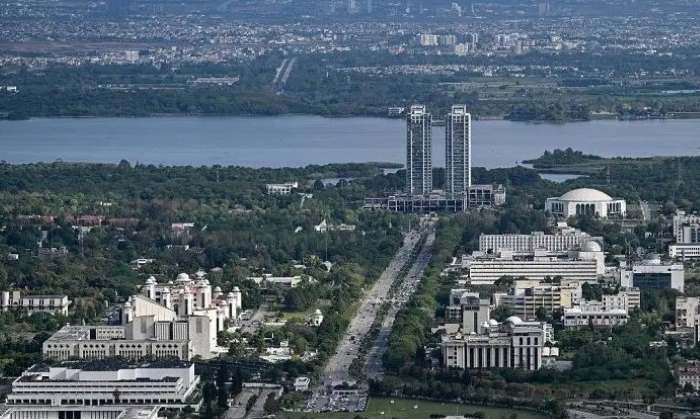
The recent move to evacuate One Constitution Avenue in Islamabad’s Red Zone following a court order has reignited a long-standing controversy. What may appear to be a real estate dispute is, in reality, a deeper reflection of governance failures, regulatory manipulation, and the persistent question: is the rule of law applied equally in Pakistan?
The Origins: A Strategic Project with Uneven Terms
The story begins in 2005, ahead of an important OIC summit, when Pakistan sought to develop world-class hospitality infrastructure in the capital. The Capital Development Authority (CDA) decided to lease two prime plots: one for a five-star hotel at Constitution Avenue, and another for what would become the Centaurus Mall.
Surprisingly, despite being located in the highly sensitive Red Zone, the Constitution Avenue plot was leased at Rs. 75,000 per square yard. In contrast, the Centaurus site—arguably less prime—was leased at Rs. 190,000 per square yard. For a 13.5-acre plot, this translated into a staggering difference of approximately Rs. 7.5 billion. The pricing disparity raises immediate concerns about transparency and fairness in public asset allocation.
From Five-Star Hotel to Luxury Apartments
The lease was awarded to a consortium led by Hafeez Pasha (Bismillah Textiles), alongside Mian Imran (Nadra Textiles) and Khawaja Saad Rafique. Notably, renowned hotelier Sadruddin Hashwani also bid for the project but withdrew, reportedly finding the deal commercially nonviable under its stated terms.
However, the project soon deviated from its original purpose.A key associate of the lead investor was appointed as Director Legal at CDA. Shortly after, the lease agreement was modified to allow the construction of residential apartments instead of a five-star hotel.
This shift fundamentally altered the nature—and profitability—of the project.
Legal Challenges and Regulatory Silence
When the change came to light, stakeholders from the hotel industry raised objections, and legal proceedings were initiated. CDA issued notices, and the developer claimed compliance with the original hotel plan. Yet, construction of residential units continued.
The situation points to either regulatory failure or institutional complicity. If a state authority cannot enforce its own agreements, it undermines public trust and governance credibility.
Financial Irregularities and Massive Profits
Equally concerning are the financial aspects of the project. Reports suggest that the developer secured billions in loans from the Bank of Punjab, allegedly at zero markup. At the same time, lease payments remained incomplete.
A 2019 court ruling indicated outstanding dues of approximately Rs. 14.5 billion. Despite this, the project proceeded, and luxury apartments were sold in the open market.
Prices reportedly ranged from:
- Around $500,000 (Rs. 13.5 crore) for two-bedroom units
- Between Rs. 75 crore to Rs. 100 crore for three-bedroom units
With a total of 263 apartments, estimated revenues crossed thousands of crores—raising serious questions about legality and oversight.
The Role of Pakistan’s Elite
Perhaps the most controversial dimension of this case is the alleged involvement of influential figures. Claims have surfaced that politicians, judges, bureaucrats, and media personalities acquired apartments in the building—some at discounted rates or even as gifts.
If verified, such involvement represents a profound conflict of interest. When individuals responsible for governance, law enforcement, or public accountability benefit from questionable projects, the entire system risks losing legitimacy.
Investigations and Political Pressure
There are also reports that certain police officers attempted to investigate the case but later faced inquiries themselves. This reversal underscores the challenges faced by officials attempting to act against powerful interests.
It highlights a recurring issue: accountability mechanisms often falter when they intersect with elite networks.
The Current Crackdown: A Turning Point?
The recent enforcement action to vacate the building signals a shift. Authorities appear to be taking corrective steps, but the real test lies ahead.
Will this case lead to comprehensive accountability, or will it remain a symbolic gesture?
What Needs to Happen Next
For meaningful reform, several actions are essential:
- Full public disclosure of all apartment owners
- Identification of individuals who received preferential or free allocations
- Transparent audit of tax declarations related to these properties
- Strict enforcement of law without discrimination
If smaller, middle-class residential projects can be demolished for violations, then similar standards must apply across the board.
The One Constitution Avenue case is not just about a single project—it is about the integrity of Pakistan’s governance framework.
Selective accountability erodes public trust. Equal application of the law restores it.
This moment offers an opportunity: to reinforce the rule of law, to challenge entrenched privilege, and to demonstrate that no individual or institution is above accountability.
Whether that opportunity is seized remains to be seen.
Courtesy Balochistan Pulse