 Middle East Monitoring Desk Islamabad
Finally the same is happening what was feared about so called Peace Deal between US and Iran and the world is watching renewed fighting in Hormuz while Pakistani and Qatari mediation is seeing it standing bewildered what to do now. Pakistan, especially has recieved huge applause from around the world and trumpeted it inside the land as a great achievement of the incumbent system of civil and military.
In the worst exchange of fire between the US and Iran since the two nations signed an interim deal in June, US Central Command (Centcom) said on Tuesday it had launched “powerful” strikes in response to attacks on three oil tankers in the Strait of Hormuz, hitting more than 80 targets including air defence systems, coastal radar and fast boats.
Tehran has repeatedly declared that only its approved route through the Strait of Hormuz is safe, and it is suspected of attacking other ships that have used another route close to the Omani shore.
What Iranian side shared about US Strikes
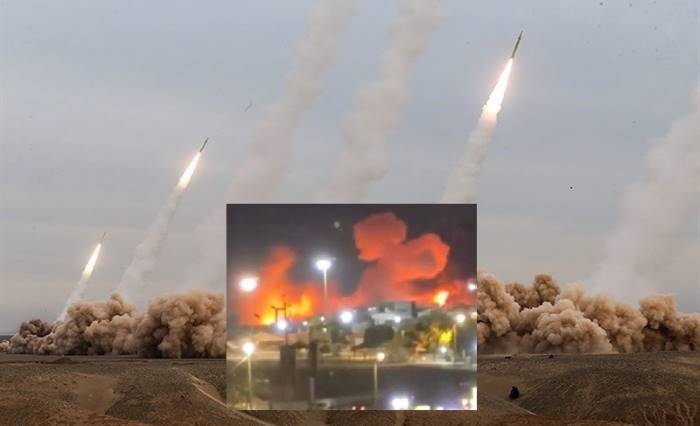
The US forces carried out airstrikes on parts of Iran’s Hormozgan, Bushehr, and Khuzestan provinces early Wednesday, resulting in the martyrdom of an IRGC Navy serviceman. Iranian media reported that several explosions were heard near Sirik County and Qeshm Island in Hormozgan Province. An IRIB correspondent said enemy projectiles injured several people at Sirik’s fishing and commercial port. A provincial ports and maritime official also reported black smoke rising behind the fish market in Bandar Abbas, saying it resulted from enemy projectiles hitting the fishing pier and setting several local fishing boats on fire.
Vessels Hit by Iran
A Qatari LNG tanker and a Saudi crude tanker has been damaged due to Iranian attacks near the Strait of Hormuz, prompting the White House to revoke a license it granted Iran to sell oil.The US Navy-led Joint Maritime Information Center (JMIC) raised the threat level to transit the strait to “severe” from “substantial” on Tuesday following the attacks, citing deliberate hostile action likely under current conditions, the first time the threat level has been set at that severe status since June 15.
The Saudi-flagged Wedyan supertanker was also damaged off Oman’s coast while transiting the strait. Saudi Arabia’s foreign ministry condemned the attacks, saying it holds Iran fully responsible for the damage to the Wedyan, which is owned and managed by Saudi shipping firm Bahri.
Iranian Stance
The spokesman of Ministry of Foreign Affairs has not confirmed that Iran hit the vessels but warned that some commercial vessels have been sailing through routes not coordinated with Iran while switching off or manipulating their ‘Automatic Identification System (AIS)’ signals to conceal their movements. He said such practices increase the risk of collisions, create environmental hazards, undermine maritime security, and hinder Iran’s efforts to ensure the safe navigation of vessels through the Strait of Hormuz.
On Wednesday, Iran said it had targeted US military sites in Bahrain and Kuwait in retaliation to the US attacks.
Oil prices ticked up following the strikes, with a barrel of Brent crude rising by more than 3% to $76 (£56.88).
Nato chief Mark Rutte described the American strikes on Iran as “absolutely necessary”, speaking at the military alliance’s summit in Ankara, Turkey. Rutte said, arguing that Iran was “basically violating the ceasefire” given what “happened yesterday with ships being attacked”.
The US also said it had revoked its temporary suspension of sanctions on Iranian oil sales. Iran’s speaker Mohammad Bagher Ghalibaf accused the US of breaching their (MoU) on this issue, and others, including the attacks in southern Iran and “violating Iranian adjustments in the Strait”.
Kuwait has also responded to the Iranian strikes on its country, lambasting the “repeated attacks”.
The Islamic Revolution Guards Corps (IRGC) released footage of its missile and drone strikes on US military bases in Bahrain and Kuwait.
The footage released on Wednesday shows the IRGC Navy and Aerospace Force launching a joint missile and drone operation against US military positions after American strikes targeted locations on Iran’s southern coasts.
The IRGC said in a statement “In the initial response to this aggression, the naval and aerospace forces of the IRGC, through joint missile and drone operations, destroyed 85 major US military installations in Port Salman, (the US) Fifth Naval Base in Bahrain, and Kuwait’s Ali Salem Airbase, and shot down an enemy MQ-9 drone that attempted to interfere in the operation.”
Qatar’s Accusation
“The targeting of the Qatari tanker ‘Al Rekayyat’ as it passed near the Strait of Hormuz constitutes an unacceptable assault on the security and safety of international navigation and global energy supplies, and a grave and blatant violation of international law, particularly the rules guaranteeing freedom of maritime navigation and safe passage through international waterways,” Qatari foreign ministry spokesman Majed Al Ansari wrote on X.
Iran rejects Qatar’s Statement
Foreign Ministry Spokesperson Esmaeil Baqaei on Tuesday expressed regret over the accusation by Qatar’s Foreign Ministry, describing it as questionable, unacceptable, and contrary to the spirit of good-neighborliness.
Referring to Clause 5 of the June 18, 2026 Memorandum of Understanding on the termination of the war, Baqaei said the Islamic Republic is fully committed to its obligations regarding the future administration of the Strait of Hormuz and the provision of maritime services.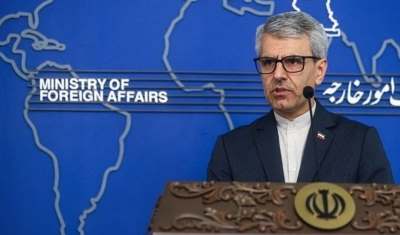
He added that Iran expects regional countries—particularly Qatar, which as a mediator is fully familiar with the provisions of the agreement—as well as shipping companies, to avoid any actions that run counter to the memorandum.
In a statement issued on Wednesday, the Foreign Ministry said the US Treasury Department’s decision to revoke the temporary suspension of sanctions on Iran’s oil sales constituted “a flagrant violation of Clause 10 of the Memorandum of Understanding on the Termination of the War, dated June 18, 2026.”
The statement held the US government responsible for the consequences of this breach of commitments.
The ministry said that fewer than 20 days after the signing of the Islamabad Memorandum of Understanding, Washington’s decision to revoke the general license issued on June 21 “is yet another sign of the bad faith, instability, and unreliability of the US ruling establishment.”
“It comes despite the fact that over the past 20 days, the United States, either directly or through the actions of the Zionist regime against Lebanon, has repeatedly committed both minor and major violations of various provisions of the Memorandum of Understanding,” it added.
Warning about the consequences of Washington’s repeated breaches of the agreement, the Foreign Ministry said, “The Islamic Republic of Iran will take any measures it deems necessary to safeguard its national interests and national security.”
Talks on reaching a permanent deal have been on pause with funeral proceedings taking place for the late Ayatollah Ali Khamenei, killed on the first day of US-Israeli strikes on Iran.Ceremonies are taking place in Iraq on Wednesday, with the final rites and burial set for Mashhad in north-east Iran on Thursday. It is not clear when talks will resume after this latest round of strikes.