Abay Kunanbaev – Ray of Hope & Light for Kazakhstan Nation after Independence from USSR

0
2155

Tazeen Akhtar / 25 Sep 2020

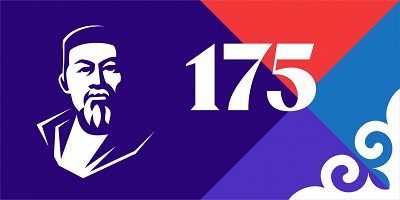
The nations extract guidance from their intellectuals who lead their countrymen through their articles, verses, ideas and character. The Poets, Philosophers, Reformists have set directions for their people always everywhere in this world and it is by virtue of their vision that the nations not only stood tall in the comity of nations but in some cases they changed the geography of the planet by creating new states. In Pakistan’s case , Allama Iqbal, our national poet dreamed a separate peace of land for the Muslims of Indian Sub-Continent and in Kazakhstan’s case , Abay Kunanbaev led his people to become a nation with clarity of destination. After independence from USSR, the Kazakh people knew what is their new rules of life and where they have to get light from. It was thanks to the work of Abay Kunanbaev, whose 175th birth anniversary is being celebrated in Kazakhstan and all over the world wherever a Kazakh citizens lives.The Kazakh nation did not have to wander in the dark after leaving the soviet ideology. They already had a ray of hope and light in the shape of the work of Abay Kunanbaev that showed them the path towards their destination, the national well being and prosperity.

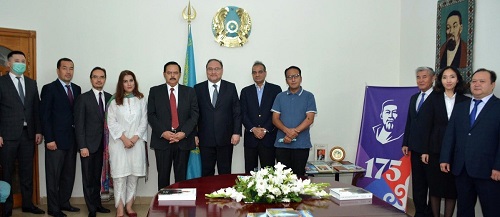
As part of the celebration of the 175th anniversary of the poet Abay Kunanbayev, the “Abay Center” was opened at the Embassy of the Republic of Kazakhstan to the Islamic Republic of Pakistan on 25th Sep 2020. The Center will be accessible to the broadest circles of the population of Pakistan, first of all, students of educational institutions, journalists, scientists and experts who are interested in the work of the great son of the Kazakh people, his legacy and role in the formation of modern Kazakh society.

During the opening of the Center, Ambassador of Kazakhstan Akan Rakhmetullin noted that the head of state K.Tokayev attaches special importance to the celebration of the anniversary of the great poet, the preservation of his spiritual heritage, because, of course, modern Kazakhstan society should develop in accordance with the spiritual guidelines of Abai, which remain relevant and in demand centuries later.

In addition, A. Rakhmetullin acquainted the participants of the ceremony with the main ideas and provisions of the President’s address to the people of Kazakhstan and his speech during the political debate of the 75th session of the UN General Assembly.

Participants of the event, including representatives of the expert and media community of Pakistan, noted the special role of the philosopher and educator Abai in the formation of the worldview of not only Kazakhstanis, but also the peoples of the entire region of Central and South Asia and in a much broader context.

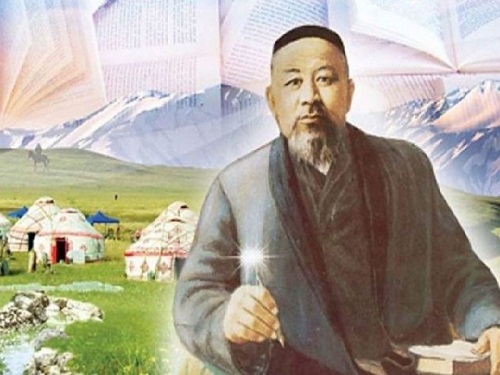
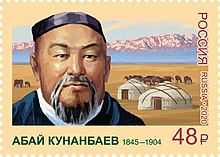
Abay Kunanbaev was born in 1845 at the bottom of the Chingiz Mountain in the today’s Abai district (former Karkaraly) located in Eastern Kazakhstan region (formerly, the Semipalatinsk region).He died in 1904.

He was a well-known Kazakh poet, a great thinker, composer, philosopher, the founder of written Kazakh literature, and its first classic.

The heritage he left his nation is rich in songs and poems, translations and prose.He translated the works of Schiller, Goethe, and Byron into Kazakh language.

«Kara Sozder» [Book of Words] (prose) created by the great thinker constitute an ethnic philosophical work. This creation of his is an exploration of Kazakh national life in the second half of the 19th century. He influenced social affairs in the country where he lived.

He also participated in the governing of the country and played a certain role in trying to solve complicated problems justly.

The name of Abai is known worldwide just as Shakespeare, Goethe, and Pushkin are well-known in many countries, because his great words became a spiritual patrimony of not only one nation, but of the entire humankind.

Abay’s main contribution to Kazakh culture and folklore lies in his poetry, which expresses great nationalism and grew out of Kazakh folk culture. Before him, most Kazakh poetry was oral, echoing the nomadic habits of the people of the Kazakh steppes. During Abay’s lifetime, however, a number of important socio-political and socio-economic changes occurred. Russian influence continued to grow in Kazakhstan, resulting in greater educational possibilities as well as exposure to a number of different philosophies, whether Russian, Western or Asian. Abay Kunanbaev steeped himself in the cultural and philosophical history of these newly opened geographies. In this sense, Abay’s creative poetry affected the philosophical thinking of educated Kazakhs.The people see him as their inspiration and spiritual predecessor.

Contemporary Kazakh images of Abay generally depict him in full traditional dress holding a dombra (the Kazakh national instrument). Today, Kazakhs revere Abay as one of the first folk heroes to enter into the national consciousness of his people. Almaty State University is named after Abay, so is one of the main avenues in the city of Almaty. There are also public schools with his name.The Kazakh city of Abay is named after him.

A film on the life of Abay was made by Kazakhfilm in 1995, titled Abai. He is also the subject of two novels by Mukhtar Auezov, another Kazakhstani writer.

Note; Some information about  Abay Kunanbaev has been used from  Adebiportal.kz

LEAVE A REPLY

Please enter your comment!
Please enter your name here