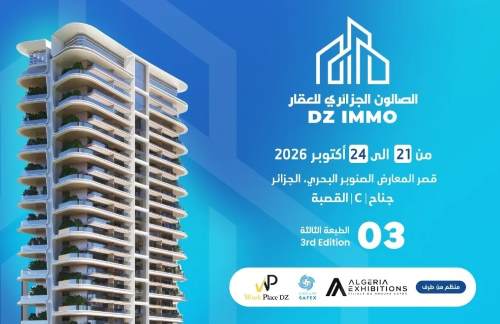
 Islamabad : An international exhibition in Algeria about Real Estate on 21 – 24 Oct 2026 can be a potential plateform for joint ventures between Algerian and Pakistani real estate sector that is always number one sector in Pakistani economic landscape.
Algerian Real Estate Exhibition DZ IMMO , is a professional economic event dedicated to stakeholders in Algeria’s real estate sector. It provides a privileged platform for meeting, exchange, and promotion of activities, products, and services related to real estate, housing, construction, and
Exhibition Objectives
The exhibition aims to encourage interaction between sector operators, promote projects, products, and services related to real estate and housing, strengthen professional exchanges, and contribute to the development and revitalization of the national real estate market.
What You Will Find at the Exhibition
DZ IMMO brings together real estate developers, agencies, investors, sector operators, service companies, financing institutions, construction and development stakeholders, as well as suppliers of equipment and technological solutions dedicated to housing.
Algeria’s real estate market is largely driven by rapid population growth and a persistent housing deficit. The sector is transitioning, with the government encouraging more private investment in commercial land while international demand grows for premium office spaces in hubs like Bab Ezzouar and residential properties in Algiers.
Algeria to host International Transport and Logistics Fair (LOGISTICAL 2026) in Nov 2026
The Algerian real estate landscape features several unique characteristics and emerging trends:
1. Market Dynamics & The Housing Gap
Despite massive government housing campaigns, a significant structural deficit remains. Demand is fueled by a young, growing demographic. In major cities like Algiers, Oran, and Constantine, property prices are highly localized and heterogeneous. Differences in pricing depend heavily on specific streets, building age, number of facades, and proximity to central business districts.
2. Commercial Real Estate and Offices
There is an undersupply of high-quality, purpose-built office space in Algiers’ traditional Central Business District (CBD), which often lacks adequate parking and modern amenities. As a result, corporate occupiers—many of whom are international—are shifting toward peripheral business districts like Bab Ezzouar, where developers offer international-standard specifications and tax breaks.
3. Investment and Regulatory Changes
Historically, the real estate and investment sectors were heavily restricted by Algeria’s “51/49” rule, which required local majority ownership for foreign investments. However, recent legal frameworks (such as Law No. 23-17) have significantly reformed the allocation and commercialization of state-owned land. The government is now allowing the conversion of certain commercial usufruct rights into full ownership for investors, making it easier to engage in long-term commercial or tourist-residence developments.
4. Property Finding and Sourcing
Unlike in many Western markets where properties are listed openly with uniform pricing, the market in Algeria relies heavily on informal networks, local real estate agents, and social media platforms. Platforms like Facebook Marketplace are widely used to source and filter available apartments (e.g., T2, T3) and homes. Sellers often leave out photos or exact addresses on public listings to maintain privacy, meaning direct negotiation and on-site visits are essential steps in the purchasing process.