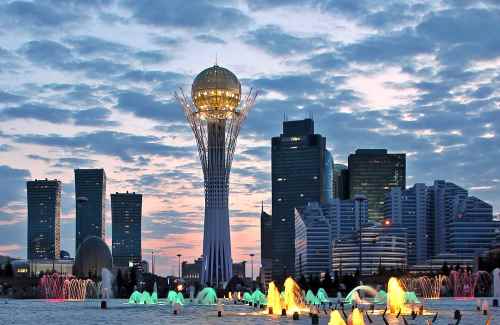
” City that Dreams with Us ” Special Report on Special Occasion of an Amazing City of a Beautiful Country of Wonderful People !
Here we are sharing an article by Aida Haidar for Astana Times on the topic, for our readers
ASTANA – City that Dreams with Us
When we think of Astana, the first thing that comes to mind is high-level visits of politicians and international summits. It’s a city of strategy, diplomacy, and national ambition. But beneath that polished, political surface lies something quieter — yet just as powerful: a city that creates space for dreams.
As Astana celebrates its birthday on July 6, we take a closer look at the people who shape the city’s creative soul — artists, thinkers, and quiet visionaries who prove that this capital is more than glass and steel.
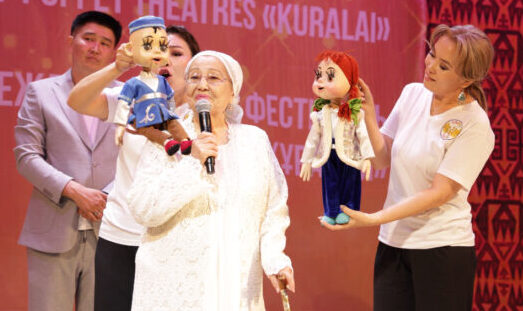
Meet Kuralay Yeshmuratova. An eye witness of construction of Astana
She is not only the artistic director of the Puppet Theater under the Astana akimat (city administration), but she is also a pioneer. The first professional puppet theater director in Kazakhstan, an honored artist, and professor, she carries the wisdom of decades in art and education within her.
Born in 1945, she still speaks with the curiosity and passion of someone who sees the world through the eyes of a child. For her, puppets are not just toys, but companions and teachers.
This year, she turns 80. For the last 15 of those years, Astana has been her home. When I asked her whether she feels the city has changed, she didn’t speak of buildings or roads.
Children are her true audience, and she speaks of them not as future adults, but as complete humans, filled with intuition, depth, and complexity.
“Children today are overloaded with information. Parents and schools don’t have time to filter it for them. So they absorb both the good and the bad and sort through it themselves. Often, they pick up the wrong things because those are shinier, closer to them. The good tends to stay in the background. That’s why I think the most important thing is to understand today’s children — how they think, what they think,” she said.
“From the moment a child first comes to the theater, even at age two, they see beauty. How we present that beauty will determine if they come back. And why do they come back? Because they liked what they saw. What we show them is an effort to cleanse the clutter of everyday life, and they remember it. It lodges in their subconscious, and someday, at 20 or even 50, that subconscious will whisper to them the right thing to do. Puppet theater is the beginning of everything,” she said.
Yeshmuratova’s own beginnings were in a world with few such opportunities. But the spark was passed to her in small, loving rituals.
“People had no time for puppets. But my grandmother, oh, how I loved her. She was a craftswoman. She embroidered, knitted, and even made dolls. She would make little people out of baursaks. Normally, you don’t play with bread, but it was her way to keep us entertained,” she said.
“That’s how our dolls became our friends. As we grew older, we would confide in our dolls. If we broke something, got into trouble, we told the doll. From an early age, I believed dolls were alive. They listened. That’s why they say children and dolls are inseparable — in every culture, in every country,” she said.
When I asked if she feels the city itself inspires her and what she thinks of the weather in Astana, her answer was as poetic as it is profound.
“I think Astana’s wind is a gift from above. A kind of angel that observes everything. The wind sees everything. It knows what people are doing, what’s happening in their hearts. At night, when we think, when our minds wander, the wind knows. Thought is alive. Even if you don’t speak it aloud, it exists. Just because we don’t know something doesn’t mean it doesn’t exist. Like God — we don’t see him, but he exists. The wind is the same: invisible, but powerful. It clears, it cleanses, it gets angry, and it calms. It is a living being,” she said.
Yeshmuratova believes Astana demands more effort to find and make beauty, and that this challenge itself cultivates creativity.
“In Almaty, the atmosphere and climate naturally invite creativity. It’s part of the culture. In Astana, you have to make more effort to see and create beauty,” she added.
What about AI? I asked how it might be shaping children’s imagination.
“AI was created by people, right? It’s an achievement of our time, and children will inevitably be drawn to it. But the human soul will still need a way to express itself. The soul is huge; it doesn’t fit in our chest. Children have that same vast inner world. A child’s soul is often bigger than the child. Every day, every moment, it absorbs more and more. And they will seek expression,” she said.
However, she warned of the danger of children growing up more isolated due to phones and screens.
“Children are little people. They have everything — a soul, a heart, consciousness and subconsciousness.
They just haven’t learned to express it yet. So it’s our responsibility to help them. To guide them,” she concluded. Through her work, Kuralay Yeshmuratova has done just that. In a city of wind and ambition, she builds a quiet world of meaning, where a child can whisper to a puppet and be heard.