 04th International Conference on the International Decade for Action , “Water for Sustainable Development, 2018–2028”
Tajikistan with UN hosts Decision Makers, Stake Holders, Experts to Accelerate Implementation of Global Water Commitments
Dushanbe Declaration highlights $130 Billion annual funding deficit required to meet basic global clean water and safe sanitation
Tazeen Akhtar
The Fourth High-Level International Conference on the International Decade for Action, “Water for Sustainable Development, 2018–2028”, in Dushanbe,on 25-28 May 2026 jointly organized by the government of Tajikistan and the United Nations, aimed to accelerate implementation of global water commitments and Sustainable Development Goals.
The Conference wrapped up with the definitive signing of the Dushanbe Declaration. The declaration acts as a vital foundation for the 2026 UN Water Conference occurring in Senegal and the UAE.The document highlighted a massive annual funding hole of $130 Billion annual deficit, required to meet basic global clean water and safe sanitation standards, particularly emphasizing developing countries.
Countries committed to merging separate clean water frameworks natively into unified climate resilience policies and clean energy plans.The declaration pushed for a unified framework to share regional data and promote collaborative water diplomacy across borders.
 President Emomali Rahmon
The leader of the Tajik nation attended and delivered an opening address in which he emphasized that, within the framework of the Dushanbe Water Process, Tajikistan continues its efforts to create an inclusive and transparent international platform.
He emphasized that, within the framework of the Dushanbe Water Process, Tajikistan continues its efforts to create an inclusive and transparent international platform.
He proposed “Dushanbe Framework for Water Issues” that could strengthen current processes in the water sector and create a favorable basis for coordinating and consolidating joint efforts to achieve practical results.
He announced that the International Water Award of the President to promote and strengthen water diplomacy.(Full text of address has been published separately)
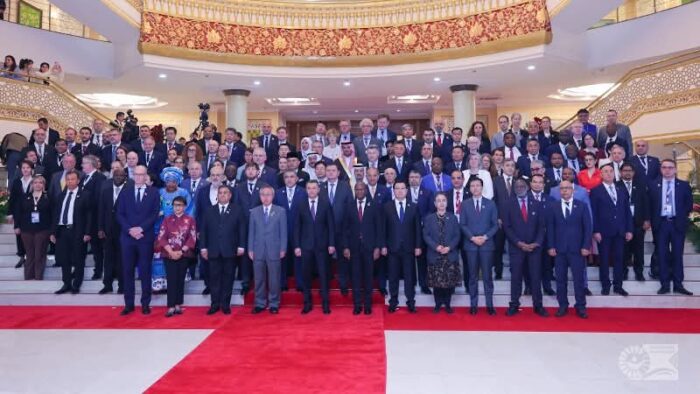
The number and level of participants in the Conference — approximately 2,500 participants, including 1,100 international participants from 110 countries, representatives of 75 international and regional organizations, as well as 170 NGOs and academic institutions — once again confirmed the high level of international interest in the Dushanbe Water Process and recognition of its role as an important platform for advancing the global water agenda.
Kokhi Somon Complex, the Residence of the Government of the Republic of Tajikistan, was the main venue . the forum was covered by over 300 journalists from domestic and international media.
The participants reaffirmed water as a priority on the international agenda, calling for a high level of ambition at the 2026 UN Water Conference and the 2028 UN Water Conference.
The conference brought together world leaders, representatives of the UN and other organizations, and major groups and stakeholders to showcase scalable solutions, forge new partnerships, and take stock of progress on the Water Action Agenda that comprises more than 800 voluntary commitments made at the 2023 UN Water Conference.
Discussions focused on sustainable and integrated water resources management, ensuring access to water and sanitation, strengthening international, regional, and transboundary cooperation, as well as expanding partnerships for the implementation of the global water agenda.
Special emphasis was placed on promoting inclusive approaches and expanding the participation of women, youth, the scientific community, the private sector, and other stakeholders in advancing the international water agenda.
The forums held within the framework of the Conference, including the Youth Forum, the Women and Water Forum, the Private Sector Forum, the Africa-focused forum, and other events, provided a broad range of stakeholders with an opportunity to contribute to discussions on accelerating the achievement of the goals of the Water Action Decade.
An important component of the Conference was also the Special Exhibition, which showcased modern technologies, scientific developments, innovative solutions, and best practices in the field of water resources management and addressing water-related challenges.
President of the UN Economic and Social Council (ECOSOC) Lok Bahadur Thapa
He highlighted water as “a cross-cutting issue that connects major international processes and agreements.”
He identified the following priorities:
1- Accelerate implementation of SDG 6 (clean water and sanitation) through integrated and inclusive approaches;
2- Strengthen coherence among water, climate, biodiversity, and disaster risk reduction (DRR) processes;
3- Scale up financing, technology transfer, and capacity building;
5- Strengthen resilience in mountain regions and protect glaciers;
6- Continue to ground policies and actions in science, innovation, and inclusive partnerships.
UN Special Envoy on Water Ms Retno Marsudi
She called for urgent, collective action to solve the global water crisis. She emphasized that no single government or institution can address these challenges alone, stating, “Only through collective work can we make a difference.”
She stressed that the world is moving past the phase of just making commitments; the focus must now shift to actionable implementation and delivering tangible results to meet the Sustainable Development Goal (SDG) 6 (clean water and sanitation).
On the sidelines of the event, she held strategic meetings—including a bilateral discussion with Tajikistan’s Foreign Minister Sirojiddin Muhriddin—to build a unified roadmap and align future actions across UN agencies and partner countries.
Speeches were delivered from the heads of government delegations from various countries, representatives of international and regional organizations, and high-level experts.
They included Prime Minister of the Republic of Burundi, Nestor Ntahontuye, Chairman of the Cabinet of Ministers of the Kyrgyz Republic -Minister of Agriculture and Processing Industry, Erlist Akunbekov, Deputy Chairman of the Cabinet of Ministers of Turkmenistan, Tangryguly Atakhalliyev, UN Under-Secretary-General, Li Junhua, Vice-President of the European Bank for Reconstruction and Development, Mark Bowman, UN Under-Secretary-General and Executive Secretary of the UN Economic and Social Commission for Asia and the Pacific (ESCAP), Armida Salsiah Alisjahbana, and Rector of the United Nations University – UN Under-Secretary-General, Professor Tshilidzi Marwala.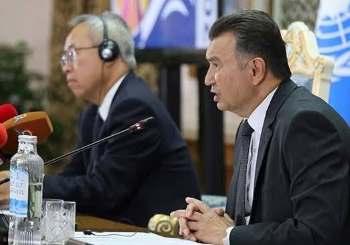
Dushanbe Declaration
The participants reiterated their determination to promote engagement on water-related issues in upcoming high-level meetings.
These include the 2026 UN Climate Change Conference (UNFCCC COP 31), the 2026 UN Biodiversity Conference (CBD COP 17), and the 17th session of the Conference of the Parties (COP 17) to the UN Convention to Combat Desertification (UNCCD), as well as UN Special Thematic Sessions on Water and Disasters, the 2027 SDG Summit, the Ninth Global Platform for Disaster Risk Reduction in 2028, the 2028 High-level Review of the Pact for the Future, and the 11th World Water Forum in 2027.
The Dushanbe Declaration further proposes that the Co-Hosts of the 2026 UN Water Conference and 2028 UN Water Conference present the results and voluntary commitments from each conference as an input to the UN High-level Political Forum on Sustainable Development (HLPF).
The declaration formulates key messages for decision makers and stakeholders, including:
1- Prioritize water-related actions to promote sustainable development and reduce inequalities
2- Ensure meaningful and inclusive participation to achieve impactful water and sanitation outcomes
3- Translate national commitments into concrete action at all relevant levels
4- Address gaps in technology, knowledge, data, and scientific cooperation to help bridge the science-policy interface
5- Enhance international cooperation, including at the global, regional, and subregional levels.
The Prime Minister of Tajikistan Kohir Rasulzoda and Co-Chair of the conference – UN Under-Secretary-General for Economic and Social Affairs Li Junhua held press conference at the conclusion of the conference and shared the outcomes of the international event including the declaration. They prepare a Co-Chairs’ summary that , along with the contribution of the Dushanbe Water Process, will be presented at the 2026 UN Water Conference.
Prime Minister Kohir Rasulzoda
He said the conference successfully concluded with common commitment to preserve, manage and develop the water resources with shared resolve and joint efforts as water issues are directly linked to sustainable development, economic growth, food and energy security, environmental protection, and the well-being of populations.
During these days, Dushanbe once again became a global platform for discussing pressing issues of the water and climate agenda, strengthening international cooperation, and promoting joint action in the field of sustainable water resources management. He shared 7 findings of the conference as ;
1. Dushanbe has once again become the center of the global water dialogue
2. The world is falling behind on water and sanitation access targets
3. The conference’s results will be linked to the UN’s global water agenda.
4. Following the conference, three key documents were adopted and will be prepared
5. There is a shortage of more than $130 billion per year for water and sanitation.
6. More women, youth, science, and business were involved in the water discussion.
7. Tajikistan announced water plans until 2040 (Details are in the full text of the speech of the President of Tajikistan)
UN Under-Secretary-General Mr. Li Junhua
He shared, while the 2030 deadline for achieving the (SDGs) is rapidly approaching, progress on SDG 6 and other water-related goals remains significantly off track.
Today, 2.2 billion people lack safely managed drinking water services, and 3.5 billion lack safely managed sanitation services, while water stress continues to increase, Li said, noting that the fourth conference was perfectly timed to accelerate the implementation and reflect on the future architecture of the global water agenda.
The 2026 UN Water Conference will take place in Abu Dhabi, United Arab Emirates (UAE), from 8-10 December 2026. It will be co-hosted by Senegal and the UAE.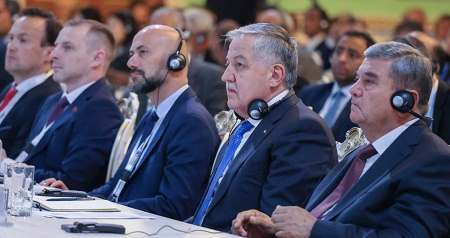
Burundi
Prime Minister Nestor Ntahontuye focused heavily on the profound vulnerabilities Burundi face due to the intensifying effects of climate change, emphasizing actionable steps to mitigate national water security threats.
The country faces catastrophic severe flooding, unpredictable seasonal shifts, and widespread erosion. This compromises fertile land and costs Burundi nearly $100 million in damages every single year. To counteract these crises, Burundi’s strategy concentrates on its Vision 2040-2060 milestones. This involves the active deployment of small-scale hill irrigation and integrated regional watershed restorations.
He aligned with African Union objectives by asserting that developing countries contribute marginally to global emissions but inherit disproportionate climate suffering. He requested targeted technological transfers and substantial adaptation support from global financial partners.
Pakistan
Federal Minister for Climate Change and Environmental Coordination Dr. Musadik Malik represented Pakistan at the conference. In his remarks, he warned that efforts to undermine international water-sharing agreements could jeopardize the rights of downstream nations, accusing India of attempting to politicize shared water resources in violation of long-standing international commitments.
The minister urged India to respect the 1960 ‘Indus Waters Treaty’ and honor international mediation mechanisms, warning that any attempt to place the treaty in abeyance would set a dangerous precedent for downstream countries around the world.
Malik expressed concern over what he described as the decline of multilateralism in global affairs, saying cooperative international frameworks are increasingly being replaced by unilateral approaches.
He emphasized the urgent need for regional cooperation on glacial melt and ecosystem preservation. He noted that both Pakistan and Tajikistan host nearly 13,000 glaciers each and have lost approximately 1,000 glaciers because of rising global temperatures.
Kyrgyz Republic
Erlist Akunbekov, Deputy Chairman of the Cabinet of Ministers and Minister of Water Resources, Agriculture and Processing Industry of Kyrgyzstan, called for the introduction of mutually beneficial compensation mechanisms in Central Asia’s water and energy sector and urged stronger regional cooperation amid accelerating glacier melt and declining water resources.
He warned that accelerated glacier melting, driven by climate change and reduced precipitation, poses a severe threat to Central Asia, as it impacts vital water resources for agriculture and the region’s overall ecosystem.
He called for enhanced regional cooperation and highlighted Kyrgyzstan’s proactive measures, including a National Water Strategy to 2040 and an updated Water Code designed to improve water management and protection.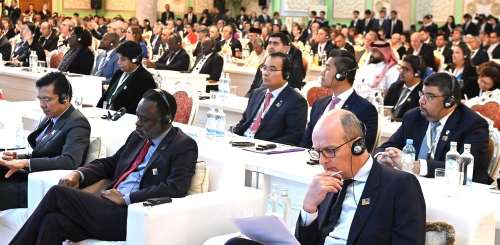
Turkmenistan
Deputy Chairman of the Cabinet of Ministers of Turkmenistan T. Atahallyyev, in his speech emphasized that Turkmenistan views water resources as a key factor for sustainable development, regional stability and international cooperation, particularly considering the transboundary nature of water resources in Central Asia.
He underlined that Turkmenistan consistently advocates for the establishment of a fair, sustainable and scientifically grounded water management system based on the norms of international law, taking into account the interests of all states of the region and with the active coordinating role of the United Nations.
He highlighted Turkmenistan’s international initiatives in the fields of water and ecology. In particular, the significance of the proposal to establish a Regional Council on Water Issues in Central Asia under the auspices of the UN as an effective mechanism for coordinating the interests of the regional states was highlighted.
The relevance of the initiatives to establish a Regional Climate Technologies Center and a Regional Center for Combating Desertification in Central Asia aimed at promoting scientific cooperation, technology transfer and strengthening regional collaboration was also reaffirmed.
Turkmenistan’s commitment to further developing international cooperation within the framework of the key UN conventions on water resources, climate change, combating desertification and biodiversity conservation was confirmed, taking into account the interrelated nature of environmental processes and the need for a comprehensive approach to addressing them.
Indonesia
Deputy Minister for Foreign Affairs Arrmanatha Nasir of Indonesia warned that future competition among countries may increasingly center on access to and control over water resources, shifting from earlier conflicts focused on oil and land. He said water security has emerged as a major test for sustainable development as billions still face limited access to clean water and sanitation.
Speaking at the Conference, he warned of a new and underestimated threat to water sustainability. He said water security has become a strategic pillar of global development and stability as rising demand, climate pressures and industrial expansion reshape geopolitical risks. He said critical mineral mining, AI infrastructure, data centers, and digital industries now consume billions of liters of water daily, with demand doubling every few years.
“Water is the invisible resource powering the digital economy. If managed poorly, it could become the world’s next major crisis. Multilateral system relied upon to address global water challenges is itself facing a crisis, he underlined.
In conclusion, within thematic sessions and special panel discussions, participants discussed the implementation of voluntary commitments, financing issues, the introduction of technologies and innovations, as well as the interlinkages between the water agenda and climate, sustainable development, ecosystems, and United Nations multilateral processes.