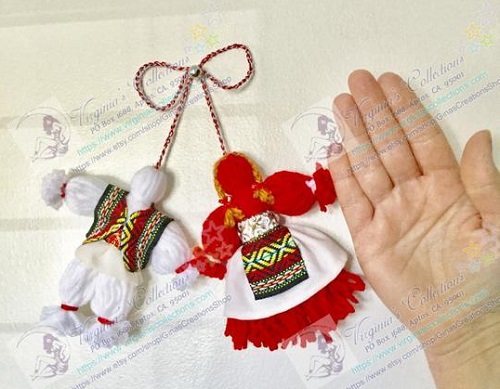
 The tradition of Marțișor on 1st of March symbolizes the rebirth of the nature and marks the beginning of spring and changing of seasons in Romania, being the first in line of a series of celebrations in the month of March.
Mărțișor is an old tradition celebrated all over Romania and archaeological discoveries (small stones painted in red and white) suggest that the Mărțișor traces its history more than 8,000 years back. Some ethnologists believe that the Mărțișor celebration has Roman origins while others support the theory that it is an old Dacian tradition. In ancient Rome, the New Year’s was celebrated on the 1st of March.
March (‘Martius’) was named in the honor of the god Mars. Mars was not only the god of war but also the god of agriculture, which contributes to the rebirth of vegetation.The Dacians also celebrated the New Year’s on the first day of March. Ample spring celebrations were consecrated to this event.
In the old times, Mărțișor were made of small river pebbles, colored in white and red, stringed on a thread and worn around the neck. They were worn, to bring good luck and good weather, from March 1 until the first trees would bloom. When the first trees were flowering the Mărțișor were hanged on tree branches.
Nowadays, on March 1, Romanians buy silky red-white threads (șnur) tied into a bow to which a small trinket is attached and offer them to their (female) family members, friends and colleagues to show friendship, respect or admiration.