 Importance of the Strait of Malacca | In the Background of Hormuz and Bab el-Mandeb Crises | If Hormuz is blocked, Asia loses supply. If Malacca is also blocked, Asia loses everything.
By Tazeen Akhtar, Editor, Pakistan in the World – Media Group, Islamabad
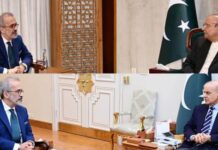
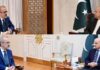
 Chief of Defence Forces and Chief of Army Staff Field Marshal Syed Asim Munir undertook an official visit to Malaysia on Monday, aimed at further strengthening bilateral defence and military cooperation that can be seen in wider perspective in the background of rapidly changing dynamics of the regions , especially in the Middle East that created a big crisis of energy security and international maritime and navigation safety disturbing the supply chains in Asian countries mainly.
Key point: 84% of oil transiting Hormuz is bound for Asia, and most of it must then go through Malacca.Hormuz and Malacca are not separate risks. They are sequential nodes on the same supply chain. Pakistan brings western Indian Ocean experience, Malaysia brings Southeast Asian / Malacca experience. Together, they cover the whole Indo-Pacific energy corridor.
Indonesia is the largest littoral state of the Strait of Malacca – it controls the western shore, Sumatra, along the entire 805 km strait. Together with Malaysia and Singapore, Indonesia is the guardian of the strait under the Malacca Straits Patrols (MSP) – originally MALSINDO (2004), now comprising Sea Patrol, Eyes-in-the-Sky air patrol, Intelligence Exchange Group and MSP-IS information system, with Thailand joining in 2008.
The principle is clear: security of Malacca is the primary responsibility of the littoral states, not outside powers. That patrol system cut piracy from 38 attacks in 2004 to 12 in 2005, and got Malacca delisted from Lloyd’s war-risk list in 2006.In 2026, Indonesia and Malaysia are building an integrated security framework – real-time intelligence sharing, harmonised rules of engagement, hot pursuit across maritime boundaries, and coordinated regulation against shadow fleets (50-70 shadow tankers transited monthly in 2025), sea robbery (100+ cases in 2025, a 19-year peak), and gray-zone threats like unauthorised underwater mapping.
In August 2026, Indonesia, Malaysia and Singapore reaffirmed at the 17th Co-operation Forum in Singapore to keep Malacca and Singapore Straits free, open and safe, with 50+ navigational aids, virtual aids, AI traffic management, and new guidelines for ships in distress.
Why This Is Bigger Than Bilateral
PM Anwar said after the meeting that the two countries share a commitment to strengthening cooperation in defence and security, including through trilateral cooperation with Türkiye, and to exploring opportunities for collaboration in maritime security and counter-terrorism. He also said the meeting provided an opportunity to exchange views on regional and international security developments, including efforts to ease tensions in West Asia, referring to ongoing efforts by Islamabad and other regional partners to bring the US and Iran back to negotiations to end their lingering war.
This is the key context:
Strait of Hormuz is still disrupted – oil, LNG, shipping under attackBab el-Mandeb / Red Sea is under Houthi blockade – Suez route crippled.
Strait of Malacca – between Malaysia and Indonesia, carrying 23.2 million barrels of oil per day, 25-30% of world trade – is now the world’s most critical surviving chokepoint.
Malaysia sits on Malacca. Pakistan sits on the approach to Hormuz, at Gwadar / Karachi.
When a Pakistani CDF meets a Malaysian PM and all three Malaysian service chiefs, it is not just about training courses.
It is about:
1. Freedom of Navigation – Keeping Malacca, Hormuz and Bab el-Mandeb open
2. Maritime Security – Joint patrols, intelligence sharing, coast guard cooperation, anti-piracy
3. Sea Lines of Communication – Protecting the Middle East -> Malacca -> East Asia energy route on which China, Japan, Korea and Pakistan all depend
4. Counter-Terrorism & Cyber – In August 2026, Pakistan and Malaysia had already agreed to enhance intelligence sharing to counter terrorism, drug trafficking, illegal immigration, cybercrime, coast guard activities and training.
The world is learning in 2026 what strategists have warned for 20 years: Global energy does not depend on one chokepoint, it depends on three – and they are all under pressure at the same time.
Strait of Hormuz – Bab el-Mandeb – Red Sea / Suez route are in crisis. That makes Malacca – the third, quiet one – suddenly the most important strait in the world.
1. What is Malacca?
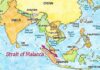
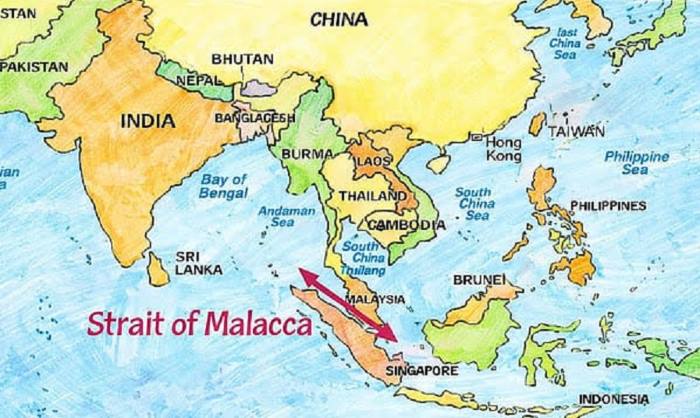
805 km long, between Malaysia / Peninsular Malaysia in the east and Indonesia’s Sumatra in the westSingapore at its southern entrance, Thailand to the northConnects Indian Ocean -> South China Sea -> Pacific OceanShortest sea route between Middle East / Europe and China, Japan, South KoreaAt its narrowest – Phillips Channel near Singapore – only 2.7 km wide.
2. How Big Is It? Bigger Than Hormuz ChokepointOil Per DayGlobal Trade
Strait of Malacca ; 23.2 million barrels/day | 25-30% of all traded goods
Strait of Hormuz ; 20.9 million barrels/day | 20% of global oil
Bab el-Mandeb ; 12% of global trade | 70-150 ships/day
102,500 vessels transited Malacca in 2025 – 3x Hormuz, 7x Suez and Panama. It carries:
@ 29% of all global seaborne oil trade @ 20% of global LNG – 95 bcm/year, Qatar alone @ 28%23% of all dry bulk – Australian coal, Brazilian soybeans, SE Asian rice, palm oil, iron ore, electronics, critical mineralsMore oil flows through Malacca every day than through Hormuz.
3. The Hormuz Crisis – Why Malacca Matters More Now
Since 28 Feb 2026, after US-Israeli strikes on Iran, Hormuz has been effectively blocked / mined / under attack.
Daily tanker passages fell from ∼40 to near zero in days, later recovered partially to ∼10.2 million bpd by mid-November from 20 million bpd pre-war
Brent surged to $92-$120, at one point forecasts of $150IEA called it largest energy supply shock in recorded history – over 1 billion barrels lost in 90 days, 2.8 billion barrels since blockade began
Saudi Arabia cut production ∼20%, to ∼8 million bpd, because it could not export
Pakistan, Thailand, Philippines imposed 4-day week / remote work to save fuel
On 23 Nov 2026, Brent fell to $89.23 after US strikes on Qeshm Island raised hopes Hormuz may reopen – but 7 tankers were hit since 15 Nov alone
If Hormuz is blocked, Asia loses supply. If Malacca is also blocked, Asia loses everything.
4. The Bab el-Mandeb Crisis – The Second Front
Bab el-Mandeb – 29 km wide, between Yemen and Djibouti / Horn of Africa – is the Gate of Tears leading to Red Sea and Suez Canal.
Since late 2023, Houthis launched 200+ attacks. In 2026 it became a second front:
Houthis seized Red Sea coast, advanced to Bab el-Mandeb, announced sea blockade against Saudi shipping in July 2026. Saudi Arabia tried to bypass Hormuz via East-West Pipeline (7 million bpd) to Yanbu on Red Sea. But Yanbu oil still has to exit via Bab el-Mandeb. Now that is blocked too.
Suez Canal cannot absorb it. SUMED pipeline capacity only 2.3-2.5 million bpd, far below Yanbu volumes. Transit fell from ∼70 ships/day pre-2023 to ∼22 ships/day in Nov 2026, and to 19/day after Yemen army redeployed from Bab el-Mandeb on 15 Nov.
Rerouting around Cape of Good Hope adds 10-14 days and $1 million+ fuel per voyageSuez traffic down 50%, Egypt lost billions, global disruption estimated >$100 billion$520 billion of Chinese trade, $243 billion Indian trade, $226 billion US trade passes through Bab el-Mandeb annually.
Result: Saudi Arabia is trapped between two closed gates – Hormuz in east, Bab el-Mandeb in west.
5. The Malacca Dilemma – China’s Achilles Heel
China is the most exposed country in Malacca: 48% of all crude transiting Malacca goes to China – ∼7.9 million bpd75-80% of China’s total seaborne crude imports pass through Malacca80% of Japan’s oil, 70% of South Korea’s oil also pass through Malacca.
Suppliers are concentrated: Saudi Arabia, UAE, Kuwait, Iraq = ∼60% of crude through Malacca.
Former President Hu Jintao coined it in 2003: “Malacca Dilemma” – In a war over Taiwan, or a US-China confrontation, the US could interdict China’s oil at Malacca and strangle its economy without firing a shot on Chinese soil.
China’s response – Belt and Road diversification:
Pipelines from Russia, Central Asia, Myanmar (Myanmar-China pipeline to Yunnan)China-Pakistan Economic Corridor (CPEC) / Gwadar – to bypass Malacca via PakistanInvestments in ports, alternative routesBut still, maritime route remains central. No pipeline can replace 23 million bpd.
6. Why Malacca Has Never Been Closed – And Why That Is The Risk
Unlike Hormuz and Bab el-Mandeb, Malacca has never been mined, blocked, or closed.
The risk is not closure. The risk is concentration. One accident, one collision, one grounding in a 2.7 km channel can slow 30% of world tradePiracy, terrorism, great-power rivalry, or even Indonesia’s recent talk of a passage fee (later withdrawn) shows how political the strait isIf Hormuz stays unstable, more pressure shifts to Malacca – more ships, more insurance, more naval competition between US, China, India, JapanIf Malacca were blocked, nearly half the world’s fleet would have to reroute via Lombok or Sunda Strait – longer, shallower, more dangerous, and Sunda has only 20m depth and strong currents.
7. What It Means For Pakistan / South Asia
Pakistan is at the junction of Hormuz and Malacca routes – Gwadar / Karachi sit on the way
Hormuz crisis already hit Pakistan: PNSC ships stopped at Fujairah / Gwadar, fuel rationing, 4-day weekBab el-Mandeb crisis hits Pakistan’s exports to Europe via Suez – longer, costlierMalacca stability is vital for Pakistan’s imports from East Asia – electronics, machinery, palm oil, coal – and for China’s CPEC trade that passes through PakistanAny Malacca disruption would push oil prices to $150+, food and fertilizer prices up – Gulf supplies 1/3 of world traded fertilizer
Bottom Line ; Hormuz supplies the oil. Bab el-Mandeb supplies Europe. Malacca supplies Asia.Lose one, world suffers. Lose two, world stagflates. Lose three, world stops.In 2026, two are already in crisis. That is why Malacca – the strait nobody was watching – is now the strait everybody must protect.