Middle East Monitoring Desk Islamabad
Ukraine has signed air defence agreements with two more Gulf states after Saudi Arabaia. President Zelensky visited UAE and Qatar on the second leg of his historic middle east tour during US Israel war on Iran with support from Arab countries mentioned above.
Three Gulf states are now on board with Ukraine for their defence against Irani missile strikes on US bases. This is being seen interestignly as well as astonishigly because Zelensky himself need defence support for his own country in shape of weapons and missiles , missile defence systems.
Ukraine UAE defence cooperation
The deal on the table changes everything about this war. Ukraine is offering Gulf states 1,000 drone interceptors per day. Each Sting interceptor costs $2,100. Each Patriot missile it replaces costs $3.9 million. In exchange, Ukraine wants the Patriot missiles the Gulf states are burning through, because Kyiv cannot get enough of them to stop Russian missiles.
Read that again. The country America refused to arm fast enough is now arming America’s allies with a weapon that costs 1,857 times less than the one America cannot produce fast enough.
The National reported on March 27 that Zelensky told reporters: “We’d like to quietly receive the Patriot missiles we have a deficit of, and give them a corresponding number of interceptors.” AFP confirmed the UAE agreement on March 28.
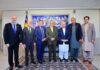
Volodymyr Zelenskyy said Ukraine and the United Arab Emirates (UAE) are finalizing an agreement on “security and defence” cooperation following talks with UAE President Mohammed bin Zayed Al Nahyan.
In a post on Telegram, Zelenskyy said the two sides are working toward a strategic partnership. “We are open to joint work, which in a strategic perspective will definitely strengthen our people and the protection of life in our states,” he said.
The discussions come amid growing interest among Gulf countries in Ukraine’s defense capabilities, particularly its battlefield-tested drone technologies.
Here is the arithmetic that should terrify every Pentagon procurement officer on earth.
The United States fired 943 Patriot interceptors in the first four days of the Iran war per a US Congressional study cited by the Jerusalem Post. That is eighteen months of Lockheed Martin’s annual production consumed in 96 hours.
Each of those 943 shots cost $3.9 million. Total expenditure: $3.68 billion in four days on defensive interceptions alone. Iran produces 10,000 Shahed drones per month per Reuters. Each drone costs $20,000 to $50,000. The cost exchange ratio is 114 to 1 in Iran’s favour per Military Times.
Ukraine’s Sting interceptor inverts this arithmetic entirely. At $2,100, the cost ratio flips from 114-to-1 against America to roughly 10-to-1 against Iran.
Ukraine can supply 1,000 per day. That is 30,000 per month against Iran’s 10,000 Shaheds per month. For the first time in this war, the defender’s production rate exceeds the attacker’s production rate at a fraction of the cost.
And the country that built this weapon is the same country that Trump publicly rejected.
“No, they are not helping. We do not need their help. We know more about drones than anyone else” per Fox News. He doubled down: “The last person we need help from is Zelensky.” Meanwhile the Pentagon notified Congress of plans to redirect $750 million in Ukraine-bound Patriot missiles to Gulf states per House of Saud reporting. America is simultaneously refusing Ukraine’s cheap solution and cannibalising Ukraine’s expensive one.
Zelensky framed this explicitly. He told The National: “No matter how many Patriots, THAADs, or other air-defence systems are in the Middle East, that alone is not enough for fully effective air defence.” He told the UK Parliament: “When it comes to shooting down massive Shahed attacks, only Ukrainian experience can really help with this today.”
The Pentagon is spending $3.9 million per interception, raiding Swiss fighter jet accounts to cover shortfalls, and diverting Ukraine’s own Patriot supply to the Gulf. Zelensky is offering the same result for $2,100 and producing 1,000 units per day. The market has a word for this kind of disruption.
The $2,100 drone is the most important weapon in this war. And the country that built it is the one America said it did not need.
The deal establishes a framework for joint defense industry projects, including the creation of co-production facilities for electronic warfare systems and drone interceptors right here in the Gulf. This collaboration is specifically designed to neutralize modern aerial threats that have increasingly targeted Qatari infrastructure following the recent escalations in the regional conflict.
Beyond technology, the pact includes the deployment of Ukrainian anti-drone specialists to Doha to share real-time battlefield intelligence gathered from over four years of defending against similar Russian and Iranian aerial platforms. This “drone-for-defense” diplomacy allows Ukraine to secure vital security partnerships while the Gulf states gain access to proven, high-tech shield capabilities.
Ukraine Qatar
Qatar and Ukraine have signed a defence cooperation agreement covering technological collaboration, joint projects, defence investments, and the exchange of expertise in countering missiles and unmanned aerial systems.
The signing came during a meeting between Qatar’s Deputy Prime Minister and Minister of State for Defence Affairs Sheikh Saud bin Abdulrahman Al Thani, Secretary of Ukraine’s National Security and Defence Council Rustem Umerov, and Chief of the Armed Forces of Ukraine Lieutenant General Andriy Hnatov on Saturday.
The two sides also reviewed the latest regional security developments and discussed areas of defence cooperation and joint coordination in light of the current situation. The agreement was signed on the Qatari side by Chief of Staff of Qatar Armed Forces Lieutenant General (Pilot) Jassim bin Mohammed Al-Mannai, and on the Ukrainian side by Lieutenant General Andriy Hnatov.
The meeting was also attended by the Chief of Staff of Qatar Armed Forces. The agreement follows Ukraine’s President Volodymyr Zelenskyy finalising similar defence cooperation arrangements with the UAE and Saudi Arabia during working visits to the Gulf this week.As reported by Ukrinform, Ukraine and Qatar have signed a defense partnership agreement for at least 10 years.
President Volodymyr Zelenskyy and Emir Sheikh Tamim bin Hamad Al Thani met in Doha today to finalize a defense partnership spanning at least 10 years. This agreement centers on a mutually beneficial exchange where Ukraine provides its world-class expertise in countering Iranian-made drones, while Qatar offers strategic investment and potential access to advanced western-made air defense components.
Military analysts view this as a significant pivot for Qatar, which is seeking to diversify its security portfolio amid a surge in regional missile activity and a shifting U.S. focus. By aligning with Kyiv, Doha is positioning itself as a leader in adopting the latest tactical innovations for protecting civilian airspace and critical energy facilities.
The signing in Doha follows similar agreements reached with Saudi Arabia and the UAE, signaling a broad regional effort to create a “united sky” defense network across the Middle East. As both nations face persistent aerial incursions, this partnership represents a new era of cooperation that bridges European and Middle Eastern security interests.
Ukraine Key Producer of Advanced Drone Interceptors
Ukraine has emerged as a key producer of advanced drone interceptors, developed in response to sustained aerial attacks since Russia’s full-scale invasion of Ukraine in 202
Ukrainian experts have already conducted a comprehensive assessment of Qatar’s capabilities to repel air threats and have developed specific solutions to strengthen air defense.The president met with a team of Ukrainian experts working in Qatar to share their experience and expertise.
“Our experts have already conducted an overall assessment of the security situation, Qatar’s capabilities to counter aerial threats, and have developed concrete solutions to strengthen the protection of its airspace. And today, during my meeting with the Amir of the State of Qatar, Sheikh Tamim bin Hamad Al Thani, it was important for me to hear such a high assessment of our team’s work and appreciation for their consultations,” the president noted.
According to Zelensky, ballistic missile and drone strikes are currently the biggest challenge in the region. While only air defense systems are effective against ballistic missiles, Ukrainian specialists have developed other, significantly cheaper solutions to combat drones. These solutions have already proven effective against various types of drones, which is why Qatar is so interested in Ukraine’s experience.
“Ukraine has always said that we are ready to share our expertise and help those who can also help us strengthen our own protection in Ukraine. Qatar is ready for long-term cooperation across various areas. It is important to restore stability in the region so that no one suffers from Iran’s terrorist strikes. And we support an approach where, by helping one another, we increase security worldwide,” Zelensky emphasized.
Eleven countries have formally requested Ukraine’s drone defence expertise per Zelensky’s own count. Over 200 Ukrainian military specialists are already deployed across the UAE, Qatar, Saudi Arabia, Kuwait, and Jordan.