Rawalpindi : 27 Feb 2026 – Pakistan’s military on Friday said it had destroyed more than 73 Afghan Taliban posts and 115 tanks in retaliatory strikes, killing 274 Taliban regime operatives and terrorists and injuring over 400 since Thursday night.
Addressing a press conference in Rawalpindi, Director General of Inter-Services Public Relations (ISPR), Lt Gen Ahmed Sharif Chaudhry, said Afghan Taliban forces had initiated unprovoked cross-border firing in 15 sectors across 27 locations along the Pakistan-Afghanistan border.
DG ISPR addressed a range of issues, including counterterrorism efforts, Pakistan’s grievances with Afghanistan regarding the handling of the TTP, ceasefire violations by India, and the May 9 riots, among other matters of national importance.
He said Pakistan security forces “effectively repulsed” the attacks and launched calibrated counterstrikes in response.
According to the military spokesperson, 12 Pakistani soldiers were martyred, 27 sustained injuries and one remains missing in action during the clashes.
He said Pakistani air strikes hit military targets at 22 locations across Afghanistan, including in Kabul, Kandahar, Paktia, Nangarhar, Khost and Paktika provinces.
According to the spokesperson, the aerial strikes targeted what he described as core headquarters of Afghan Taliban forces, brigade and battalion headquarters, sector headquarters, ammunition depots and logistics bases.
“All these targets were very carefully selected based on intelligence,” Chaudhry said, adding that efforts were made to avoid civilian casualties.
DG ISPR said the Afghan Taliban regime attempted to use rudimentary drones to carry out attacks in Swabi, Abbottabad and Nowshera.
He said Pakistan’s anti-drone systems intercepted and shot down the drones, adding that the incident demonstrated how the Afghan Taliban regime operates as a master proxy.
The DG ISPR said Pakistan specifically targeted hideouts of the banned Tehreek-e-Taliban Pakistan (TTP) operating from inside Afghanistan. He accused the Afghan Taliban regime of providing space to terrorists involved in attacks inside Pakistan.
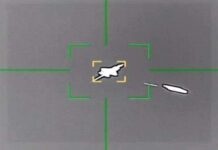
During the media briefing, the military’s media wing played videos showing Pakistan Army’s strikes on alleged terrorist positions inside Afghanistan and along the border.
Lt Gen Chaudhry described the cross-border firing as a “deliberate escalation” and warned that Pakistan would continue to respond with full force to defend its sovereignty and territorial integrity.
Tensions between Islamabad and Kabul have risen sharply in recent days amid a surge in terrorist violence in Pakistan’s border regions.
“All evidence related to terrorism can be traced back to the safe havens enjoyed by terrorists in Afghanistan,” Gen Chaudhry said.
“The army chief has a clear and straight-forward stance on this: that Pakistan has reservations on banned organisations sanctuaries, support, and unrestrained activities on Afghan territory,” he asserted.
“Pakistan will leave no stone unturned to eliminate the terrorist networks and keep our citizens safe.”
He added that the repatriation of illegal Afghan citizens from Pakistan was underway. “From September 2023 till now, 815,000 illegal Afghan citizens have gone returned [to their Afghanistan].”
Responding to a question, the ISPR DG said Pakistan “fully respected” Afghanistan’s sovereignty and termed it a brother Islamic nation. “But we want that they do not give kharijis (outcasts) and terrorists precedence over Pakistan,” he added.
“The army chief has said that a Pakistani citizen’s life and protection is superior to Afghanistan,” he said, adding that if the terrorists’ “blood-stained hands receive strength and aid from across the border, then the status quo is no more acceptable”.
Gen Chaudhry went on to say: “Not only geographical borders but technical and legal actions are being taken step-wise to protect your digital borders as well.”
Noting that work under the Western Border Management Regime was near completion, the ISPR official stated that the armed forces had cleared “72 per cent of the area in the tribal districts from minefields”.
Speaking on action taken against terrorism in Balochistan, the DG ISPR detailed that some high-value targets were eliminated in the region.
He said that “Baloch terrorists’ most-wanted leaders Sana urf Baro, Bashir urf Pir Jan, Niaz urf Gumman, Zareef Shah Jehan, Hazrat Ali urf Asad, Lak Jan Chakirabadi urf Sawara were also sent to hell”.
Terming it a “major success”, he highlighted that two suicide bombers-to-be — Insafullah urf Talha and Roohullah hailing from Afghanistan — were apprehended by security forces and “their evil intentions were thwarted”.
Gen Chaudhry noted that 10 suicide bombing jackets and more than 250 kilograms of explosives and weapons were recovered from the two.
Referring to statements made by Adeela Khudabaksh and Mahil Abdul Hamid — alleged women terrorists arrested from Balochistan — the DG ISPR said they both “revealed how terrorists brainwashed innocent people and were using the youth to rebel against the state”.
“Due to state institution’s excellent plan of action, 14 wanted terrorists put down their arms and joined the national mainstream, including Najeebullah urf Ustad urf Darwesh, Rasheed urf Tamash, and Fitna al Khawarij leader Naheed.”