 STRATCOM Public Forum and Roundtable “Reshaping Regional Security Architecture: Strategic Partnership and Multilateral Cooperation from a Türkiye-Pakistan Perspective”
Tazeen Akhtar
Turkiye is keen to enhance trade as well as defense cooperation with Pakistan. Turkiye looks forward to more countries to join Makkah Agreement to face the emerging threats and challenges of hybrid and ultra hybrid wars in the future despite a nuclear power and a economic giant are already there. Turkiye promotes the expansion of Makkah Pact in the name of Regional Ownership of Regional Solutions to Regional Disputes.
Turkish policy makers say that bilateral relations are good but not enough and both sides need to speed up the trade. Here it is worth mentioning that Pak Turk leaders have set a target to take the trade level upto $5 Billion. The participant Turkish policy makers said good relations are good but not enough. The trade should be increased according to the relations.
Bilateral trade is in Türkiye’s favour – clearly, and consistently for the last 10+ years.Pakistan has never had a surplus with Türkiye in recent history. Every year, Türkiye sells much more to Pakistan than it buys from Pakistan. Türkiye’s exports to Pakistan $918.2 million , Türkiye’s imports from Pakistan $440.1 million, Total trade volume $1,358.3 million / $1.36 billion – Balance – In Türkiye’s favour+$478.1 million.
The Turkish policy makers opine that Pak Turk defense cooperation is fine but not enough and a bigger alliance is required to meet the threats. Turkish side sees Egypt as the next member of Makkah Agreement. They stressed regional plateform including Egypt for defence and economy.
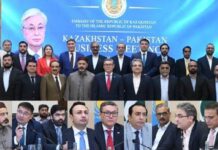
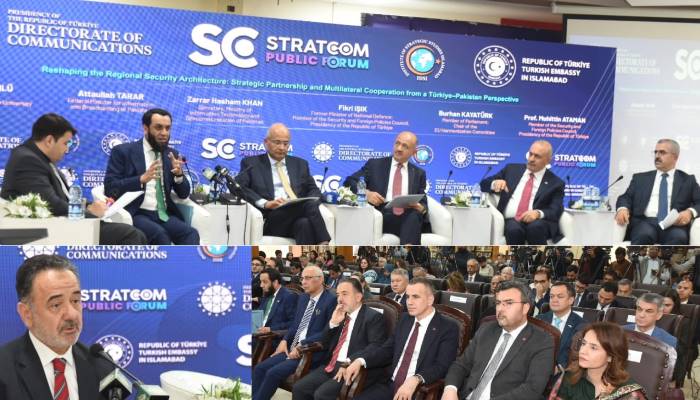
They expressed these views at Centre for Afghanistan, Middle East and Africa (CAMEA) at the Institute of Strategic Studies Islamabad (ISSI), that jointly with the Presidency of the Republic of Türkiye Directorate of Communications and the Embassy of the Republic of Türkiye in Islamabad, organised a STRATCOM Public Forum titled “Reshaping Regional Security Architecture: Strategic Partnership and Multilateral Cooperation from a Türkiye-Pakistan Perspective.”
Ambassador Khalid Mahmood, Chairman BOG, ISSI, highlighted the deep-rooted historical, cultural and strategic bonds between Pakistan and Türkiye, reaffirming their commitment to strengthening cooperation in defence, security, trade, technology and regional connectivity, as well as promoting regional peace, stability and a balanced international order.
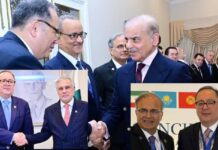
Ambassador Irfan Neziroglu, Ambassador of Türkiye, wars are complex now. Turkiye and Pakistan are not partners but brothers. Our relations are eternal. He emphasised the unique people-to-people bonds underpinning bilateral relations. He stressed the need to counter disinformation, strengthen information resilience and explore opportunities arising from growing trade ties and Turkish investment in Pakistan.
Ambassador said , biltareal trade is increasing and for defense both sides trust each other that is the base of cooperation in defense. He said Makkah agreement is new chapter in the trilateral cooperation.
He said the three countries (Saudia Turkiye Pakistan) have a history of good relations and common vision on future. The resources of three nations combined are for the stability , peace and prosperity of their people and the region. He said Turkiye supports Pakistani stance on Kashmir and calls for the just solution of this dispute according to aspirations of the indegenous people.
(Saudia Turkiye relations before Makkah Agreement were never satsifactory if we see the history of bilateral relations – Recommending a more bigger defense alliance with Egypt especially mentioned leads to the hypothesis that Turkiye wants two things at one time – be in the Makkah Agreement but keep from contributing in the defense of Saudia from Houthis)
Professor Dr. Burhanettin Duran, Head of Communications, Presidency of the Republic of Türkiye, highlighted the growing importance of strategic communication amid geopolitical and technological transformations. He underscored the challenges posed by disinformation and digital manipulation, emphasising international cooperation, information integrity and public trust, while highlighting the STRATCOM Summit’s role in fostering dialogue and societal resilience.
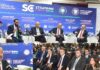
A panel discussion followed, moderated by Dr. Hayati ÜNLÜ, Faculty Member, Turkish National Defence University.
Federal Minister for Information and Broadcasting, Attaullah Tarar, highlighted the longstanding Pakistan–Türkiye partnership and called for institutionalised cooperation in strategic communications to counter disinformation and digital threats. He proposed a bilateral strategic communications agreement and a joint working group comprising government institutions, academia and think tanks.
Fikri Işık, Former Minister of National Defence of Türkiye, emphasised accelerating bilateral cooperation against hybrid threats, cyberattacks and technological competition. He called for moving beyond traditional defence cooperation towards joint research, development and production, alongside stronger institutional mechanisms and inclusive regional security partnerships.
Burhan Kayatürk, Member of Parliament and Chair of the EU Harmonization Committee, Türkiye, underscored the historical bonds and mutual solidarity between the two countries. He called for greater economic cooperation, including achieving the $5 billion bilateral trade target, and highlighted the Makkah Accord’s significance in strengthening regional security and collective security partnerships.
Zarrar Hasham Khan, Secretary, Ministry of Information Technology and Telecommunication, highlighted emerging threats from cyberattacks, disinformation and vulnerabilities in critical information infrastructure. He stressed institutionalising Pakistan–Türkiye cybersecurity cooperation through a bilateral agreement, strengthening digital connectivity and infrastructure resilience, and establishing sustained mechanisms for dialogue and coordination.He suggested Pak Turk Cyber Dialogue led by the Pesidency of Turkiye or Turkish Ministry of IT.
He said a development between two states on an agreement is likely and we are hopeful it will be signed, on cyber security and threat intelligence sharing.
” We are facing big challenges in cyber security as the communication is intercepted and disinformation is spread creating narrative problems. We need protection of criticle infrastructure and our communication should be safe,” Zarrar Hasham noted.
Prof. Muhittin Ataman, Member of the Security and Foreign Policies Council, Presidency of the Republic of Türkiye, described Pakistan and Türkiye as key pillars of an emerging regional security architecture. He highlighted regional initiatives, including the Makkah Accord, and emphasised regionalism, complementarity, strategic autonomy and regional ownership as essential to addressing regional challenges and promoting lasting peace and stability.
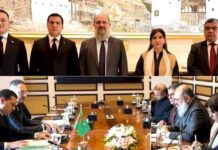
Earlier, a closed-door STRATCOM Roundtable titled “Türkiye and Pakistan in a Changing Regional Security Architecture: Strategic Cooperation in an Age of Global Crises” brought together senior policymakers, diplomats, security experts and academics from both countries.
Prof. Ferhat Pirinççi, Deputy Head of Communications, Presidency of the Republic of Türkiye, stressed enhanced cooperation against hybrid threats, cyberattacks, terrorism and disinformation. He discussed emerging security architechture in which he saw the central role of Turkiye and Pakistan.
Ambassador Moin ul Haque, Director General ISSI, highlighted the longstanding strategic partnership and called for greater cooperation in defence, emerging technologies and counterterrorism.
Dr. Amina Khan, Director CAMEA, moderated the discussion and highlighted the need for sustained dialogue, closer coordination and stronger Pakistan-Türkiye cooperation amid evolving regional security dynamics.
The roundtable focused on the evolving regional security architecture, particularly the Makkah Accord, collective security and regional cooperation. Participants emphasised strengthening cybersecurity, strategic communications, economic ties and institutional cooperation to promote regional peace and stability.
Why Pakistan Keeps Losing?
PTA is limited: Signed 2022, effective 2023. Türkiye gave concessions on only 261 tariff lines, Pakistan gave on 130. Not a full FTA.
Non-tariff barriers: Quotas, subsidies, customs delays on Pakistani textiles.
Similar products: Both produce textiles, agriculture – they compete, not complement.
No land route: Pakistan-Iran-Türkiye road/rail (RCD / ECO route) still not fully active, so freight is expensive via sea.
Defence dominates: Political and defence ties are “exemplary”, but commercial ties have not kept pace.
Target – $5 Billion
To reach it, they are now talking about:Expanding PTA into a Free Trade Agreement / Trade in Goods Agreement,Special Economic Zone for Turkish businesses in Karachi,Turkish investment in energy, minerals, IT, transport, DISCO privatisation, ship-breaking.