Special Report
Forty-six years ago, following the outbreak of one of the most popular contemporary uprisings in the world, the Islamic Revolution of Iran won on February 11, 1979, with the sacrifices of the Iranian people and under the leadership of the great man in the history of the country, Imam Khomeini.

Independence, freedom and the Islamic Republic were the three main demands of the Iranian nation, derived from the slogans of the people during the Islamic Revolution, for which the government and the people of Iran have made many sacrifices over the past four decades.
The denial of foreign domination has been one of the fundamental principles of the revolution.
Before the victory of the Islamic Revolution in Iran, the Pahlavi monarchy was an affiliated government, and the decisions of the king and the ruling body were made under the influence of the orders of the Western hegemonic countries, especially the United States.
Liberation from oppression, repression and tyranny of the monarchy were among the demands of the protesting freedom-loving people who had risen up against the Pahlavi monarchy to achieve their demands.
Establishing a democratic system of government based on religious teachings and values and high cultural elements of Iran was one of the other goals of the people, which was achieved by establishing the Islamic Republic through a referendum to determine the ruling system of the country and the Iranian people, including women and Men determined their destiny for the first time.
Following a free referendum, the Islamic Republic replaced the authoritarian monarchy with a decisive 98% of the Iranian people, and the Iranian people voted in favor of the new Constitution. According to the new Constitution, the legislative and executive organs of the country will be elected by the people. In this regard, on average, one election is held in the country every year, and through this, the participation of the people in determining the fate of the country is guaranteed.
Today, from the highest officials of the country to the members of city councils and local councils, they are elected by direct and indirect popular vote. So far, dozens of elections have been held for members of the Assembly of Leadership Experts, the Islamic Consultative Assembly (Parliament), the President, and town Councils.
The Iranian people’s movement has been the source of great and glorious changes in the political, economic, social, cultural and scientific fields of the country and despite the difficult conditions caused by the imposition of imposed war and sanctions; it has continued to grow and has achieved great achievements in different areas.
As a result of the establishment of the Islamic Republic in Iran, our nation and government have determined their destiny according to their will and have taken their own path in the current turbulent world by adopting an independent policy. The model that Iranians have set for the past forty years in the international community has emerged from independence based on constructive interaction with the world.
Undoubtedly, one of the most important manifestations of the Islamic Revolution has been the changes in the field of Iranian foreign policy, which has led to the formation of an independent, active, innovative foreign policy based on the three principles of dignity, wisdom and expediency.
At the same time, this foreign policy is based on the two strong and inviolable pillars of non-interference in the affairs of others and not allowing others to interfere in the internal affairs of the country. Defending the rights of the oppressed nations of the world (especially Muslims) in international forums has been one of the principles of the foreign policy of the Islamic Republic of Iran.
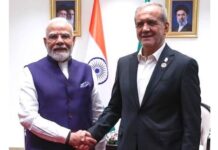
Pakistan Iran Foreign Ministers Meet at Sidelines of ECO conference
In this regard, the government and people of Iran have always called for the realization of the just ideals of the oppressed nation of Palestine and have supported their resistance against the evils and crimes of the occupying and racist Zionist regime. The Islamic Republic of Iran believes that all Palestinians (regardless of their religion or ethnicity) have the right to determine the fate of their occupied territories through a comprehensive referendum and to provide grounds for the return of all Palestinian refugees to their ancestral homeland.
In order to continue Iran’s peaceful foreign policy, the different governments have made many efforts in the past eight years to de-escalate tensions and develop foreign relations with other countries. Important examples of these efforts include the initial settlement of the nuclear issue, a fruitful presence in international forums especially the United Nations to defend the rights of the great nation of Iran against US aggression, and to help resolve regional crises, strengthening regional and trans-regional relations and cooperation and fighting against the great threat of Takfiri terrorists in the region.
The Government of the Islamic Republic of Iran seeks to establish better and greater mutual trust with the countries of the region and the world and to develop national and regional security. Constructive interaction based on equality, mutual respect and common interests is the basis of Iran’s relations with other countries.
The Iranian government also seeks effective and constructive interaction with the outside world, building mutual understanding and mutual trust with neighbors and other regional and international actors.
Pak Iran Leaders Review Entire Spectrum of Relations in Meeting at sidelines of 79th UNGA
In the field of regional interaction, the Islamic Republic of Iran has made an effective practical effort to establish regional cooperation in the fight against terrorism and extremism and to establish security in the region and is always ready to expand this cooperation. In addition, efforts to promote regional convergence and strengthen economic ties and joint ventures have been on the government’s foreign policy agenda.
Over the past years, the Iranian government has always sought to strengthen friendly ties with neighboring countries and non-hostile countries of the world and has played an active role in establishing peace between the countries of the region by presenting peaceful plans and efforts.
Examples of Iran’s engagement in peaceful settlements of the international disputes in recent years have been mediation in the Nagorno-Karabakh conflict, helping to advance the Afghan peace process, establishing peace in Tajikistan, and so on.
Despite various conspiracies of some countries in the Persian Gulf region against the Iranian nation and especially their active participation in full support of Saddam Hussein’s regime during the eight years of the imposed war, the Islamic Republic of Iran in order to resolve any misunderstandings in the region and establish stability and security in the sensitive region of the Persian Gulf has repeatedly extended its hand of friendship to the countries of this region and has announced its readiness to cooperate with them.
The proposal of the Islamic Republic of Iran to sign a non-aggression pact and present the “Hormoz Peace Plan” as a forum for discussing regional issues with the participation of regional countries and with the aim of forming a coalition for peace and peaceful settlement of issues can be observed as a sample.
The Islamic Republic of Iran, along with the denial of hegemony and belligerence, believes in a common destiny for the whole of human society, respecting international norms and paying attention to the principle of sovereignty of countries. Accordingly, just as it authoritatively prevents the domineering from interfering in the internal affairs of other countries, it is also reluctant to interfere in the internal affairs of other countries.
Moscow Welcomes , Iran Supports Ukraine Initiative of Brasilia & Beijing
A- effect has the Islamic Revolution of Iran in the region
With the Islamic Revolution of Iran, the whole region was affected by its message of independence and freedom. At the same time, the role of the Islamic Republic of Iran in the years after the revolution as a government supporting the oppressed nations was highlighted in the international community and made many sacrifices to maintain and expand security in the region and the world.
Preventing violence and fighting terrorism and extremism on a global scale has been at the heart of the Iranian government’s foreign policy and strategy. The idea was put forward by Iran at the United Nations and approved by the UN General Assembly in the form of a Plan called: WAVE: ‘World against violence and extremism’.
The Islamic Republic of Iran is committed to the fight against terrorism in all its forms and emphasizes the collective effort to prevent the institutionalization of extremism and terrorism. In this regard, Iran has a serious interest in interaction and close relations with all neighbors and countries in the region, and tries to work with regional governments to institutionalize indigenous and endogenous models of security in a way that is in the public interest.
The Islamic Republic of Iran has always strived to ensure and strengthen peace, stability and tranquility at the international level, especially in the region and the surrounding area. Undoubtedly, adherence to the provisions of the nuclear agreement, as well as stubborn confrontation with terrorism and sectarianism on the one hand, tolerance and restraint against misperception and provocative sectarian policies of certain countries, are the best proof of correctness of the policies of the Islamic Republic of Iran.
With the resolute support of its people, the Iranian government is confronting terrorist, counter-revolutionary and separatist groups. So, in addition to providing security inside the country, it has been able to play an important role in helping countries in the region to establish peace and security. The invitation of some countries, including Syria and Iraq, to provide effective assistance in the fight against terrorist groups and to eradicate these groups, including ISIS, from the region is a proof for that.
In line with the golden principle of “First Neighbours” in its foreign policy, the Islamic Republic of Iran is fully prepared to develop cooperation in various fields with countries around the world, especially its neighbors, and seeks to increase its economic, political and cultural interactions with neighbors and other regional countries.
B- obstacles and problems of the Islamic Republic of Iran after the revolution
The United States government, which had taken control of the government and resources of the country by carrying out a coup d’etat on 1953 against the elected government of the Iranian people, has opposed the independent and neutral policy of the Islamic Republic of Iran since the beginning of the victory.
Therefore, by sabotaging, putting pressure and imposing tough sanctions against the Iranian nation, it has tried to create obstacles in the way of the country’s economic development and welfare. Under the Trump administration, these decisions culminated by adopting a policy of maximum pressure.
But the proud nation of Iran was able to overcome all these pressures during its holy national resistance against the illegal, unjust and inhumane sanctions of the hegemonic regime of the United States of America.
Equipping and directing terrorist and counter-revolutionary groups to assassinate ordinary people and scientific, political and religious figures of the country, bombing, creating unrest in various regions, encouraging and supporting Saddam Hussein’s regime to impose an eight-year war against Iran, bombing and targeting civilians and residential areas with the silence of the international community, destabilization of the Persian Gulf through the presence of foreign military forces, destruction of Iran’s oil facilities, missile attack on a 290-passenger Iranian airliner by a US ship in Persian Gulf waters, imposing unprecedented economic, political, commercial and military sanctions and crackdowns on the Iranian people, blackmail and negative and unrealistic media propaganda have been part of US destructive efforts to prevent the Iranian people from pursuing their goals and pursuing an independent foreign policy.
Pakistan for Enhancing Counter Terror, Trade, Energy Cooperation, Road, Rail Connectivity with Iran
The Islamic Republic of Iran, in order to strengthen world security and prove the peaceful nature of its nuclear program, during negotiations with the five permanent members of the UN Security Council and Germany under the P5 + 1 formula reached to an agreement called the Comprehensive Joint Plan of Action (JCPOA).
Although Iran by the IAEA testimony adhered to all its obligations under this international document, the US breach of the treaty and the withdrawal of the Trump administration from that agreement in 2018 and the lack of will of European member states to fulfill their obligations caused Iran to reciprocate. With the provisions of JCPOA, Iran suspended the implementation of part of its obligations under Article 36 of JCPOA. Obviously, Iran cannot and should not alone bear the burden of fulfilling all the obligations of this agreement.
In order to destroy JCPOA and UN Security Council Resolution 2231, the previous US administration, while declaring economic war, even resorted to economic terrorism against the Iranian nation and pursued a policy of delusional maximum pressure to repeat the scenario of regime change while this political regime arises from the Iranian people’s vote.
In this regard, the Trump administration went so far as to commit war crimes. The brutal assassination of Martyr General Qassem Soleimani, one of the high-ranking commanders of the Islamic Republic of Iran and the most effective figure in the fight against terrorist groups in the region, such as ISIS, is one of the examples of these American crimes.
Another crime is the intensification of sanctions against the Iranian people during the Corona pandemic and depriving the Iranian government of access to its financial resources to provide the necessary medicine and medical equipment to fight the Covid-19 virus.
The Iranian people have suffered greatly as a result of these sanctions, and large numbers of Iranians and foreign immigrants residing in the country have fallen victim to US inhumane policies.
In recent years, despite the efforts of governments to create an atmosphere of Iranophobia, the policy of the Islamic Republic of Iran is based on a moderation and constructive interaction approach, resolving disputes and resolving misunderstandings through dialogue and cooperation, including the signing and Adherence to a nuclear agreement.