 Interview : Tazeen Akhtar | Camera : Raja Ghulam Farid
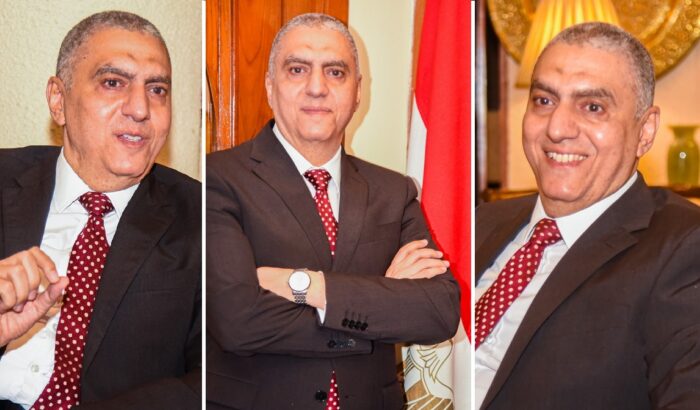
The Ambassador of the Arab Republic of Egypt to Pakistan, H.E Dr. Ihab Mohamed Abdelhamid Hassan has said, both countries can benefit greatly by exchanging experiences in corridor development, logistics management by enhancing the cooperation in maritime connectivity and jointly promoting trade routes.
He expressed these views in exclusive interview for ” Pakistan in the World ” media organization. Here are main points and the detailed interview in QnA from for our readers ;
@ President El-Sisi has accepted an invitation to visit Pakistan, and both foreign ministries are coordinating the timing of this important visit.
@ Egypt warmly welcomes Pakistani students and offers various scholarships.
@ Egypt’s Suez Canal Economic Zone offers incentives for Pakistani investors, while Pakistan’s Special Economic Zones under CPEC can attract Egyptian enterprises.
@ Egypt and Pakistan do not have any agreement on heritage conservation but collaborate through UNESCO channels and are open to expanding direct cooperation.
@ Egypt and Pakistan advocate sustainable political solution based on justice and the legitimate rights of the Palestinian people.
@ Egypt is playing a constructive and responsible role in helping its neighbors, Libya and Sudan, achieve peace and stability.
@ Egypt prevents illegal migration but at the same time emphsizes the need for addressing the root causes , open legal migration channels and youth employment opportunities.
@ The Sharm El-Sheikh Peace Summit reflected Egypt’s unwavering commitment to regional peace and humanitarian relief.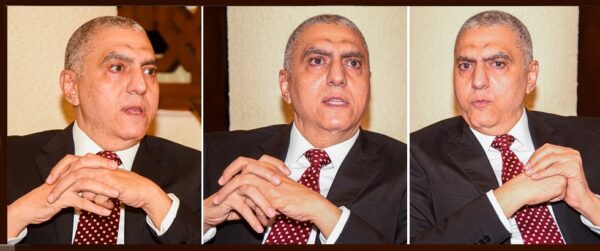
Q- Pakistan and Egypt Relations have always been close, cordial, trustworthy, mutually respectful. What commonalities do you see between the two countries other than religion ?
A- Egypt and Pakistan share many similarities beyond their common faith. Both nations are heirs to great ancient civilizations and proud cultural legacies that have shaped regional and global history. Each occupies a vital geostrategic position — Egypt linking Africa, Asia and Europe, and Pakistan connecting South Asia, Central Asia and the Middle East.
Both countries are also developing economies with young populations, ambitious for progress, modernization and industrial growth. Their societies value family, hospitality, and respect for tradition while embracing modernization and education. These shared characteristics naturally strengthen understanding and cooperation between the two nations.
Q- Egypt and Pakistan enjoy a very central geostrategic location on the world map ! Both connect the regions, continents. We are sharing our experiences of connectivity with each other ?
A- Indeed, both countries occupy central positions that make them natural bridges between continents. Egypt has vast experience in global connectivity through the Suez Canal, which is one of the world’s busiest maritime routes linking Asia and Europe. Pakistan, through CPEC and the Gwadar Port, is emerging as a vital link connecting China, Central Asia, and the Middle East to the sea.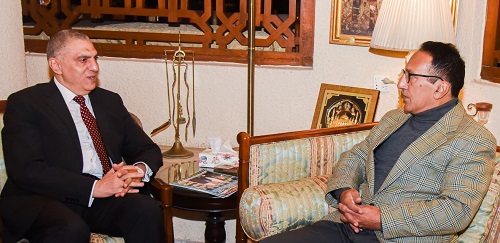
Egypt and Pakistan can benefit greatly by exchanging experiences in corridor development, logistics management, and infrastructure security. Both nations can cooperate in enhancing maritime connectivity, sharing expertise in port modernization, and jointly promoting trade routes that connect the Red Sea and the Arabian Sea for mutual benefit.
Q- Pakistan is facing instability on its borders ! Egypt has two neighbors with almost the same situation ! conflicts ! warring groups etc. How has Egypt kept itself safe from the effects of disturbance across its borders?
A- Egypt has managed to protect itself from regional turmoil through a comprehensive and balanced approach. On the security side, the government strengthened its borders, enhanced surveillance, and maintained a strong, capable military presence to deter infiltration or cross-border threats.
Diplomatically, Egypt has remained active in promoting political settlements among its neighbors, especially in Libya and Sudan, to prevent the spread of instability. Additionally, Egypt’s leadership has invested in internal stability by improving infrastructure, promoting economic development, and strengthening national unity, which together have created resilience against external disturbances.
Q- Egypt has some role in facilitating peace and reconciliation in its two neighbors , Libya and Sudan?
A- Yes, Egypt continues to play a constructive and responsible role in helping its neighbors achieve peace and stability. In Libya, Egypt has hosted multiple rounds of talks between rival factions and encouraged the unification of Libyan institutions, especially the armed forces.
Cairo’s mediation aims to ensure a political solution that preserves Libya’s unity and sovereignty. In Sudan, Egypt supports ceasefire efforts and humanitarian access while calling for dialogue between the conflicting parties. Egypt’s approach is based on respect for the sovereignty of both nations.
Q- Egypt recently hosted the Sharm El-Sheikh Peace Summit on Gaza ! It highlighted the constructive role and potential of your country ! Pakistan also participated ! Both countries jointly or bilaterally contribute any more in restoration of peace and reconstruction in Gaza ?
A- The Sharm El-Sheikh Peace Summit reflected Egypt’s unwavering commitment to regional peace and humanitarian relief. Egypt has consistently mediated between parties in the Gaza conflict and kept its borders open for humanitarian aid, medical evacuation, and relief operations. Pakistan’s participation demonstrated shared concern for the Palestinian people.
Moving forward, both Egypt and Pakistan can cooperate more closely in the reconstruction phase, with Egypt facilitating logistical routes and Pakistan contributing its expertise and manpower in housing, health, and education projects. Together, the two countries can advocate for a sustainable political solution based on justice and the legitimate rights of the Palestinian people.
Q- Pakistani Prime Minister and Field Marshal visited Egypt in Oct and met with President Abdel Fattah El-Sisi ! Sides agreed on enhancing economic and security cooperation.What are the prospects of economic cooperation ! trade, investments, joint ventures? Previously , we have seen remarkable cooperation in the Telecom sector ! Which other sectors , you see , the most appropriate for businessmen of both sides?
A- Economic cooperation between Egypt and Pakistan holds great promise. Both countries’ leaders have agreed to expand trade and investment through joint ventures and industrial collaboration. Beyond the success story of the telecom sector, new opportunities lie in renewable energy, information technology, pharmaceuticals, textiles, fertilizers, construction materials, and food processing.
Egypt’s Suez Canal Economic Zone offers incentives for Pakistani investors, while Pakistan’s Special Economic Zones under CPEC can attract Egyptian enterprises. Business councils from both sides are now working to increase private-sector linkages and facilitate easier market access.
Q- Both countries have military to military cooperation among all three wings of armed forces ! Our militaries are considered the two strongest in the world ! What possibilities do you see for joint ventures in defence production specifically ?
A- Egypt and Pakistan already enjoy strong military-to-military relations built on trust and mutual respect. Both participate in joint exercises which enhance interoperability and professional understanding.
Q- After high profile visits from the Pakistani side, is there any reciprocation in the near future from the Egyptian side ?
A- Yes, Egypt looks forward to maintaining the momentum of high-level exchanges. President Abdel Fattah El-Sisi has accepted an invitation to visit Pakistan, and both foreign ministries are coordinating the timing of this important visit.
In addition, there are plans for Egyptian ministerial and defence delegations to visit Islamabad soon to follow up on the agreements made during the Pakistani leadership’s visit to Cairo. Such exchanges reflect the political will of both governments to deepen the strategic partnership.
Q- Egypt is the center of civilizations ! Same is the case with Pakistan ! Thousands of years of heritage is an attraction for the tourists ! Both have sites that have been declared by UNESCO as world heritage ! Do we have cooperation on the conservation of these sites bilaterally at any level?
A- Both Egypt and Pakistan are proud custodians of ancient civilizations and world heritage sites recognized by UNESCO. While there is no formal bilateral agreement yet on heritage conservation, both countries collaborate through UNESCO channels and are open to expanding direct cooperation.
Egypt is ready to share its experience in museum curation, archaeological preservation, and site management, while Pakistan’s work on heritage restoration and its efforts to promote cultural tourism can serve as a model for exchange programs. In the future, cultural ministries and universities from both sides can cooperate through joint training, exhibitions, and conservation projects.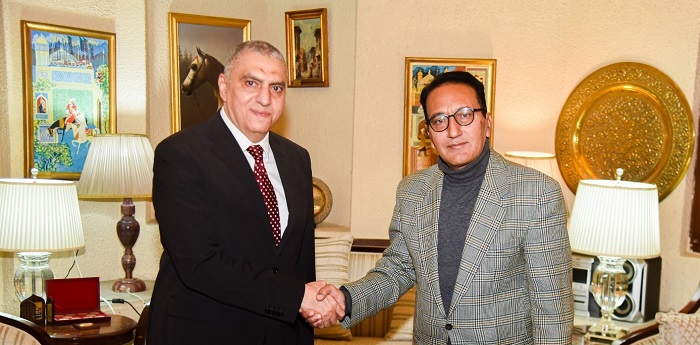
Q- What is your take on so-called illegal immigration from North Africa to European countries through the Mediterranean ? Many Pakistanis lost their lives in the sea ! Most recent is an incident in the sea of Morocco ! And many intending travelers to the EU select Libya as well for that ! What is the Egyptian position in this regard?
A- Egypt deeply regrets the loss of lives caused by irregular migration and has taken firm steps to combat this tragic phenomenon. The Egyptian government enforces strict anti-smuggling laws and has succeeded in preventing illegal migration from its Mediterranean coast since 2016.
Egypt works closely with the European Union and neighboring countries to dismantle trafficking networks, strengthen border controls, and promote awareness about the dangers of irregular travel.
At the same time, Egypt emphasizes the need for legal migration channels, youth employment opportunities, and addressing the root causes—poverty and conflict—that push people to take such dangerous journeys.
Q- What does Egypt offer to Pakistani youth in the Education sector ? Especially in Engineering and Medical Universities ? What are the prospects that Egyptian Universities open their campuses in Pakistan?
A- Egypt warmly welcomes Pakistani students and offers various scholarships in engineering, medicine, pharmacy, information technology, and Islamic studies at prestigious institutions such as Cairo University, Ain Shams University, and Al-Azhar University.
The Egyptian government provides affordable education and hosts thousands of international students every year. Cooperation between educational authorities of both countries is expanding, especially in research and academic exchange.
Regarding branch campuses, Pakistan’s new policy allows foreign universities to establish campuses in the country, and Egypt is open to exploring this opportunity if it meets academic and regulatory standards. Strengthening academic ties will bring our youth closer and enhance people-to-people friendship between the two nations.