 Dr. Nasir Hussain Bukhari
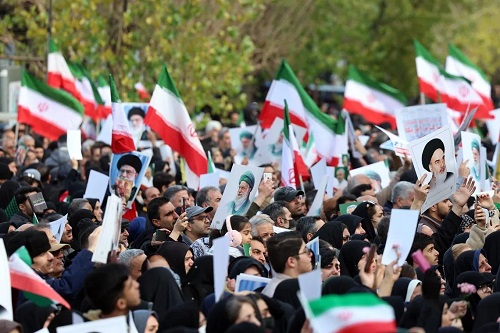
 The recent wave of violent protests in Iran against the existing political order under Ayatollah Khamenei is not a sudden or accidental development. It is the outcome of deep-rooted social, cultural, economic, and geopolitical tensions that have been accumulating for decades. These protests reflect not only internal contradictions within Iranian society but also intense external pressures from global and regional powers.
Understanding this crisis requires looking beyond street violence and slogans, toward the historical identity of Iran, the nature of its revolutionary system, economic hardships caused by sanctions, and the strategic interests of the United States and Israel.
At the heart of the Iranian crisis lies a clash of identity. Iranians possess one of the oldest civilizations in the world. Their history, language, poetry, art, and traditions predate Islam by thousands of years. Many Iranians feel deep pride in their Persian heritage and consider themselves Iranian first and Muslim second.
However, since the Islamic Revolution of 1979, the ruling system has emphasized a different identity—one in which religious belonging comes before national, cultural, and ethnic roots. The revolutionary state has consistently promoted the idea that citizens are first Muslims and only then Iranians.
This ideological difference has created a permanent tension within society. Many educated, urban, and liberal Iranians feel that their cultural identity is being suppressed in the name of religious ideology. The state’s efforts to reshape social life—through dress codes, censorship, moral policing, and control over arts and expression—have generated resentment, especially among youth and women. What is unfolding on the streets today is not merely political anger; it is a cultural rebellion against enforced uniformity and the erosion of Iran’s ancient social fabric.
The second major cause of unrest is economic suffering. Years of international sanctions have devastated Iran’s economy. The Iranian currency has lost much of its value, inflation has soared, and basic necessities have become unaffordable for large segments of society. Unemployment among young people is high, and opportunities for social mobility are shrinking. While ordinary citizens struggle to survive, many believe that political elites and institutions remain insulated from hardship.
This economic frustration has made society highly vulnerable to unrest. When people cannot meet basic needs, anger quickly turns into protest. Economic pain has become the fuel that keeps the fire of resistance burning. At the same time, this instability creates an opportunity for foreign powers to interfere.
The United States and Israel, long hostile to Iran, are widely seen as trying to exploit these protests to weaken or even overthrow the Iran regime. Statements from American and Israeli leaders openly supporting regime change strengthen the belief that external actors are actively involved in shaping the unrest.
American Students for Palestine – by Dr Nasir Hussain Bukhari
From Washington and Tel Aviv’s perspective, Iran is not just another regional state—it is the main strategic threat. Iran’s missile program, nuclear ambitions, and influence through allied groups such as Hezbollah, the Houthis, Hamas, and Iraqi militias have challenged Israeli security and American dominance in the Middle East. Iran’s support for these groups has required enormous financial and military resources, further draining its own economy. Billions of dollars have been spent on regional influence while Iranian citizens face rising poverty.
Despite economic pressure, Iran continued to invest heavily in missile and nuclear technology. This made Iran a direct strategic challenge to both the United States and Israel. After recent confrontations, both powers appear to have concluded that Iran is not only an enemy but a long-term threat that must be neutralized.
They have previously removed regimes in Iraq, Libya, and Syria through war, sanctions, and political manipulation. Egypt and Jordan have already aligned themselves with Israel, and groups like Hamas and Hezbollah have been weakened. In this strategic map, Iran stands as the last major obstacle to complete Israeli security dominance in the region.
Therefore, many observers believe that the ultimate goal of American and Israeli policy is regime change in Iran. Economic sanctions, political isolation, media pressure, and support for internal dissent are all seen as tools in this long-term strategy. The current protests, regardless of their genuine domestic roots, are being viewed as a potential gateway for foreign intervention.
The consequences of regime change in Iran would not be limited to Iran alone. The entire region would be shaken. One of the most vulnerable countries would be Pakistan. Pakistan is a nuclear power but faces internal political instability, economic difficulties, and security challenges. If Iran falls under a pro-Western or pro-Israeli government, Pakistan could become the next strategic target. Israeli and Western planners have long referred to Pakistan’s nuclear weapons as “Islamic bombs,” showing deep concern about their existence.
There is fear that political parties, militant groups, or ethnic movements within Pakistan—such as PTI supporters, TTP, or BLA—could be manipulated using the same model now being applied to Iran.
Destabilization could create conditions either for installing a pro-Israel government or for launching military or covert operations against Pakistan’s nuclear assets. This would be catastrophic not only for Pakistan but for regional and global security.
Turkey would also be affected by a regime change in Iran. Iran is a key regional power whose balance restrains Western and Israeli influence. Without Iran, Turkey would face increased pressure to conform to Western strategic demands. Central Asia, the Caucasus, and South Asia would also feel the shockwaves.
Arab monarchies are already caught in a dangerous position. Many are trying to prevent the United States from using their military bases for attacks on Iran. However, American leadership, especially under President Trump’s aggressive policies,has shown determination to use regional bases regardless of local hesitation.
IRAN REJECTS STATEMENT OF G7 AS INTERVENTIONIST AND FRAUDULENT APPROACH OF MEMBER STATES
If U.S. or Israeli forces attack Iran from Arab territory, Iran will almost certainly retaliate. Iranian missiles could strike bases and cities across the Gulf. The result could be large-scale destruction in Arab states, massive civilian suffering, and long-term regional chaos.
In such a scenario, the United States might achieve its hidden objective: weakening Arab states and gaining easier access to their resources under the excuse of “security.” Israel, however, might also suffer greatly. Iranian leaders and the Revolutionary Guard have openly declared that any attack will be met with the full force of Iran’s advanced missile technology. Israel’s cities and infrastructure would face unprecedented danger.
Given these dangerous possibilities, the Iranian crisis must not be solved through war or foreign interference. The only rational path is diplomacy. The United States and Iran must return to dialogue. Iran should be allowed to manage its internal protests through political and social reforms rather than violence or foreign manipulation. Sanctions must be lifted so that economic pressure on ordinary Iranians is reduced. Economic stability is the strongest antidote to chaos.
The Muslim world, especially Arab states, must play a responsible role. Instead of silently supporting foreign strategies, they should collectively pressure the United States to stop interfering in Iran’s internal affairs. If Washington refuses to lift sanctions, Muslim countries must show unity and resilience against neo-American imperialism. Silence today will invite disaster tomorrow.
Iran should also be integrated into regional security frameworks. A Pakistan–Saudi–Iran defense understanding could help stabilize the region and prevent foreign aggression. The Economic Cooperation Organization (ECO) provides an excellent platform for increasing trade, economic cooperation, and even collective security among Muslim states. Strong economic ties can reduce dependence on Western systems and make the region more self-reliant.
Leadership at this moment is crucial. Muslim leaders must rise above narrow interests. In Pakistan, the Chief of Army Staff General Asim Munir and Prime Minister Shahbaz Sharif must take diplomatic initiatives to prevent Iran from becoming another Libya or Iraq. Saudi Crown Prince Muhammad bin Salman also has a major role to play by promoting regional reconciliation instead of confrontation.
The Iranian crisis is not merely about protests or politics. It is about identity, dignity, sovereignty, and the future of the Muslim world. If Iran is broken, no Muslim country will truly be safe. Today it is Tehran; tomorrow it could be Islamabad, Ankara, or Riyadh. The Muslim world must understand that unity is not a slogan—it is a necessity for survival.
This moment demands wisdom instead of war, dialogue instead of destruction, and cooperation instead of conspiracy. Only through collective effort can peace be preserved and the region saved from another century of blood and ruin.