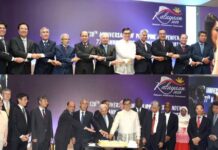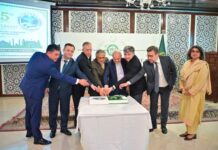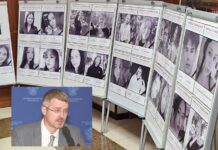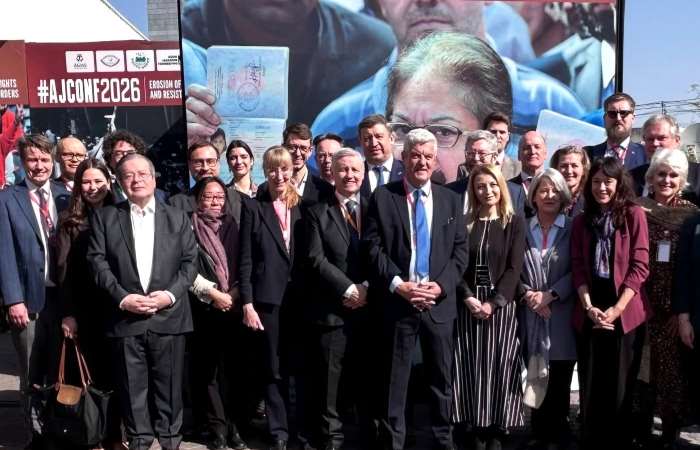
LAHORE : Monitoring Desk – The Sixth Asma Jahangir Conference was held on 7 and 8 February 2026. The Asma Jahangir Conference was co-organized by the Asma Jahangir Foundation along with the Pakistan Bar Council and the Supreme Court Bar Association of Pakistan. From the international community living in Pakistan, only the European Union ambassadors vehemently took part in the conference.
Ambassadors of EU, Austria,Bulgaria, France, Germany, Ireland,Netherlands, , Portugal, Poland, Sweden, participated in the conference and the experts from European countries were also present for their high sensitivity about human rights subject.
The conference had six themes: freedom of expression, right to a fair trial, conflict resolution, climate change, vulnerable communities and gender discrimination. There were 22 sessions in total with international and local experts as well as members of the current government.
The AJ Foundation along with its partners, the Supreme Court Bar Association, and the Pakistan Bar Council, believe that members of all political parties, big and small, should be invited to speak, and freedom of expression, even where it involves true but uncomfortable conversations, is the cornerstone of democracy.
From the crisis in Balochistan to the digital frontier of AI, speakers warned that human rights remained aspirational, as long as “national security” was repeatedly used as an excuse to stifle dissent and international double standards persist.
The conference concluded with fiery speeches from leading and eminent personalities from different fields of human rights activism, law and politics, including Afraisab Khattak, Farhatullah Babar, Abdul Malik, Nasir Zaidi, Abid Saqi, Hina Jilani, Senator Ali Zafar, Parvaiz Rasheed, and the leader of Opposition and chairman of Pushtun Milli Awami Party (PK-MAP) Mahmood Khan Achakzai as Chief Guest of the closing ceremony.
The organizer of the conference Munizae Jahangir said that politicians must protect the fundamental rights of citizens by scrapping action in aid of civil power in KPK and the amendments to anti terrorism law in Balochistan under which you can arrest people without charge.
Jahangir said that PECA law has been used to crush dissent and must be repealed. Iman Mazari, Hadi Chattha, Ali Wazir and Mahrang Baloch have been wrongly incarcerated and must be ensured due process .
The opening ceremony was presided by Federal Law Minister Azam Nazeer Tarar and prominent leaders of the Bar Associations including Ahsan Bhoon and Akhtar Hussain.
There were many international experts and a host of United Nations Special Rapporteurs addressed the audience in the opening ceremony and asked tough questions about the state of fundamental rights in Pakistan.
The hundreds of hours of voluntary work to put together this event is a testament to the commitment of the AJ Foundation, AGHS Legal Aid Cell and other members of civil society who formed part of the conference committee, to the rule of law and democracy.
AJ Foundation stands firmly with civil society in Pakistan which remains steadfast in its commitment to universal principles of human rights without fear or favour. We hope to keep this format alive for all stakeholders and leaders of opposition parties in the future, regardless of partisan politics.
Participation was huge with more than 130 speakers who are known experts in their own fields and the over 3000 participants. The impressive turnout was a result of the inclusive and uncensored agenda, the observers included 600 lawyers with approximately 50 office bearers of the Bar, former Presidents of the Supreme Court Bar Association and High Court Bar Associations and furthermore, participants included sitting members of the Pakistan Bar Council and the provincial Bar Councils, 300 members of civil society organizations, 400 students and 100 women lawyers who had traveled form Quetta, Interior Sindh and Karachi especially to attend the event.
The Asma Jahangir Conference has maintained itself as the largest human rights and legal conference in Pakistan and this year was no different. For this reason, it is often referred to as the People’s Assembly.

From government side, Ministers , Law Justice Human Rights Azam Nazeer Tarar, Barrister Aqeel Malik, Special Assistant to PM on Political Affairs Rana Sana Ullah, State Minister Finance Railway Bilal Azhar Kayani, Chairperson Human Rights Commission Rabia Jaweri Aagha participated in the conference.
EXCERPTS FROM THE SPEECHES OF SOME MAIN PARTICIPANTS
Christine Cheung, UN official: “Now, when we talk about counter-terrorism and national security, these are also important parts of the legal and regulatory framework of the state. It is the duty of the state; we have to look at the role of the state as the primary duty-bearer for human rights. The government also has to protect individuals.
Wim Geerts, Human Rights Ambassador for the Kingdom of the Netherlands, explains that AI technologies are eroding trust in online content. The EU has adopted the Digital Services Act, which requires large social media platforms to moderate content, establish a transparency criteria, and create supervisory system.
Freedom of expression is important to the Netherlands’ foreign policy, and expressed concern over the implementation of PECA
“What led to the withdrawal in Afghanistan had been unfolding for a long time—crumbling institutions, among other failures. What must be scrutinized is what went wrong and who was responsible. These are the questions we should be asking. “
Patricia Gossman, Associate Director, Asia Division of the Human Rights Watch
Irina Schoulgin-Nyoni – Ambassador for Human Rights, Democracy, and the Rule of Law, Sweden on How politics today are creating division and how this division feeds on discrimination against women
“In my country, there are many laws that guarantee gender equality, but we would not see them implemented if people did not believe in institutions. When we talk about equality, it means equal rights, equal responsibilities, and equal respect—and the whole of society needs to be committed to this. When women and men work together, it creates a strong team. We all need to build trust in our systems and embrace the idea that we are all equal in regard to the law and to each other.” — Irina Schoulgin-Nyoni, Ambassador for Human Rights, Democracy, and the Rule of Law, Sweden
Ken Roth, American attorney and former Director of HRW, says that the current US administration is opposed to upholding human rights, however this is not the first nor the worst regime (citing G. W. Bush’s administration) in terms of violations of human rights
“The Security Council is a disaster because of Trump’s veto… anything to get rid of the veto will be great.” – Ken Roth
Isabelle Rome recounts domestic violence cases she judged, highlighting women who found the strength to stand up for themselves after years of abuse.
BALOCHISTAN
“We should engage with #MahrangBaloch. Baloch women want some answers,”
“We hope that judges will honour their oath by safeguarding the fundamental rights of the people. Today, #AliWazir is in jail without any case against him @MunizaeJahangir
Pakistan’s laws clearly state that it is illegal to kidnap people or to forcibly make them disappear.The law itself recognises that enforced disappearances are illegal.So the question is: if enforced disappearances are illegal, why is raising one’s voice against them treated as a crime?Why is speaking for human rights considered illegal, while the violation of those rights continues unchecked?
Nadia Baloch sister Mahrang Baloch
Punjabis are killed in Balochistan. Any Baloch has been killed in Punjab? Balochis have busnesses of millions of rupees in Faisalabad and Punjab. They are safe there. Do the Saviours kill the innocent citizens? Destroy the infrastructure? They accepted responsibility of attack on Jaffer Express. Minister Rana Sana Ullah
“Democracy is all about equality, non-discrimination, fairness and justice,” renowned activist Hina Jilani
Iman Mazari and Hadi Ali Chatha were sentenced to seventeen years for a tweet, but the one who broke and looted the country was not punished even for a day. Mehrang Baloch came to Islamabad, but he was hosted by throwing cold water in this cold. No one has the right to protest against the atrocities happening in Balochistan. Sardar Akhtar Mengal
“We didnt have elections in Balochistan, we had auctions. But the people of Balochistan are aware and stand with their true representatives”. – Abdul Maalik Baloch
PRESS FREEDOM
“Democracy does not just mean organizing elections and electing representatives. Elections have also been held under martial laws. True democracy means a sovereign parliament, an independent judiciary, and a free press.” — Akhtar Hussain, Former Vice Chairman, Pakistan Bar Council
Pakistan has dropped 6 points in the World Press Freedom Index, from 152 to 158, while Nepal fell from 74 to 90, showing a massive decline.
“Censors and the ones imposing those censors will not survive. [Us journalists] might be beaten or thrown behind bars, but we will survive,” award-winning journalist Hamid Mir speaks at #AJCONF
“UNCRPD mission is fully integrated to enhance global implementation of the UN Convention on the Rights of Persons with Disabilities. Our goal is to support all state parties in realizing the rights of persons with disabilities to fully participate in society,” H. E. Ina Lepel, Ambassador of the Federal Republic of Germany to Pakistan adds that two practical commitments are key: make all development programs inclusive and accessible, and ensure at least 15% explicitly pursue disability inclusive.
DISABILITY
“Prejudices and lack of awareness reduce life expectancy and quality of life for disabled individuals, it’s a tragedy.”
“France and the European Union are fighting discrimination and promoting accessibility, but public perception and stigma remain big obstacles.”
Olivier Mailloux
When we talk about social barriers, it is society that disables people. The fault lies in the infrastructure of society. How can 15–18 percent of the population not be considered? There are serious gaps in the implementation of the law. – Zulqernain Asghar VC Human rights cell, PPP
AFGHANISTAN
Before the Doha deal, the Taliban’s perspective regarding women’s participation was that they could not be the head of the state only but later they stepped back from all of the points related to women. We must hold our govts responsible. The Taliban has ruined situation for rights of women, says Fawzia Koofi Afghan gender expert.
The political process that led to the Taliban takeover showed an incremental tightening of the grip. A key litmus test was the rollback of human rights. Girls’ education was suspended soon after the takeover—promised as temporary—but remains shut. Even limited exceptions, like medical studies for women, were later withdrawn. – Richard Bennet, UN special rapporteur on Afghanistan
Pakistan hosted for 40 years but now has prioritized the security of its citizens because we cannot afford any more losses. We are cooperating with UNHCR even though we are not even a signatory, some people may have been deported by mistake but not all. It would have been about Pakistan but why is the world not talking about Afghanistan, Barrister Aqeel Malik, Minister State for Human Rights and Law
ARTIFICIAL INTELLIGENCE
Many people are using AI without realizing it. Younger generations use social media constantly, posting all the time. We must guide them to use AI in a better and responsible way. Dr. Toyosi Akerele-Ogunsiji, Artificial Intelligence for Development Professional, Nigeria
Fake accounts, fake content, and disinformation must be taken down, and action should be taken. It is tough, but the government must take it seriously. Olivier Mailloux, Lawyer of the Marseille Bar Association, France
INDIA PAKISTAN
“The conflict ended with missile exchanges between Pakistan and India. Once missiles are launched, all calculations are left behind.” Khurram Dastgir
“Pakistan-India dispute should be resolved not for only these countries but for the world because both are nuclear countries” Kanak Mani Dixit Founder ‘Himal Southasian’, Nepal
CONSTITUTIONAL AMENDMENTS
Hon. Justice Ali Baqar Najafi Judge Federal Constitutional Court of Pakistan highlights 10 factors that lead to the creation of the Federal Constitution Court in Pakistan.
-judicial overreach in Supreme Court decisions beyond its domain
– Activism leading to interpretation of constitution extending into executive policy-making
– Directions issued on domestic, foreign, economic, and educational policies without expert opinion
– Decisions based on subjective perception rather than objective law
– Interference in executive functioning
– Bypassing primary institutions and departments
– Exposure of misgovernance without correction
– Double standards in interpretation
– Different interpretations for different parties
Challenging writ of state
Former Law Minister Khalid Ranjha: “There are questions about the process of constitutional amendment. I’m a lawyer, and I’m asking, which friend of our parliament read this amendment a day before presentation? You don’t read it before passing.
First, there’s a method to madness, but in this case, there wasn’t. I wish this amendment was debated and discussed.