 Pakistan Hosts 2nd Meeting of Strategic Political and Defence Committee (SPDC) Under Makkah Agreement for Joint Defence
By Tazeen Akhtar, Editor – Pakistan in the World Media Group
The Strategic Political and Defence Committee (SPDC) of Makkah Alliance has made it clear that the Alliance is not a war alliance. It is a defence alliance for peace. Its aim is to prevent war by deterrence, and to resolve disputes by talks, not by force. Also sent a strong message to Houthis and their supporters that the security of Pakistan, Saudi Arabia and Türkiye is now linked. An attack on one will be considered an attack on all, and the three will respond together.
The Committee reiterated its strong condemnation of persistent and heinous attacks by the Houthi militia targeting civilians and civilian infrastructure in the Kingdom of Saudi Arabia, and reaffirmed their collective resolve to continue exerting and accelerating efforts to support the Kingdom in safeguarding its security, in accordance with the collective defence provisions of the Agreement.
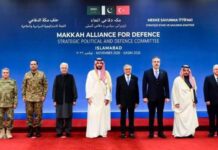
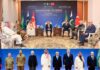
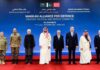
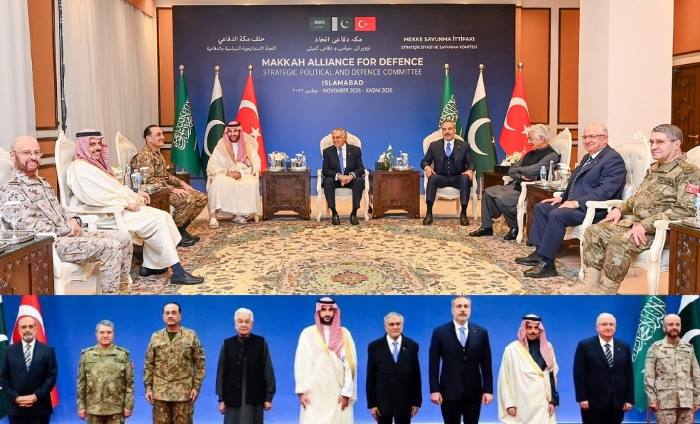
Pakistan successfully hosted the second meeting of the Strategic Political and Defence Committee (SPDC) under the Makkah Agreement for Joint Defence in Islamabad today, bringing together the top political, diplomatic and military leadership of Pakistan, Saudi Arabia and Türkiye.Deputy Prime Minister / Foreign Minister of Pakistan briefed the media after the successful conclusion of the meeting, outlining the key decisions, commitments and the collective vision of the three brotherly countries for regional peace and security.
Deputy Prime Minister / Foreign Minister announced that Pakistan had successfully hosted the 2nd meeting of the Strategic Political and Defence Committee, known as SPDC, of the Makkah Alliance for Defence. The SPDC is the highest decision-making body of the Alliance. It consists of the Ministers of Foreign Affairs, Ministers of Defence, Chiefs of Defence Forces and General Staff of the three member states – Pakistan, the Kingdom of Saudi Arabia, and the Republic of Türkiye.
Today’s meeting was a continuation of the process launched after the signing of the Makkah Agreement for Joint Defence, under which an armed attack on one member is treated as an attack on all three.
Pakistan’s Delegation: Deputy Prime Minister / Foreign Minister – Head of delegation, Khawaja Muhammad Asif, Minister Defence, Field Marshal Syed Asim Munir, Chief of Defence Forces & Chief of Army Staff.
The presence of Pakistan’s top civil and military leadership reflected the importance Islamabad attaches to the Alliance and to its relations with Saudi Arabia and Türkiye.
The Kingdom of Saudi Arabia sent a powerful delegation led by Prince Khalid bin Salman bin Abdulaziz Al Saud, Minister of Defence, Prince Faisal bin Farhan Al-Saud, Minister of Foreign Affairs, General Fayyadh bin Hamed Al-Ruwaili, Chief of the General Staff of the Armed Forces.
The Deputy Prime Minister thanked the distinguished Saudi guests for their presence in Pakistan, calling it a sign of deep brotherhood and trust.
Türkiye was represented by Hakan Fidan, Minister of Foreign Affairs, Yaşar Güler, Minister of National Defence, General Selçuk Bayraktaroğlu, Chief of the General Staff. The participation of Türkiye’s foreign and defence ministers together underlined Ankara’s full commitment to the Makkah Alliance as a strategic partner.
Review of Regional Security Situation
The SPDC meeting reviewed the evolving regional security situation in detail.The three countries reaffirmed their determination to continue working collectively towards regional peace, security and stability.The discussion covered the ongoing tensions in the Middle East, including the Yemen crisis, Houthi attacks on Saudi Arabia, the situation in Gaza, and the wider US-Iran tensions – all of which directly affect the security of the three countries.
The three sides agreed that no single country can face these challenges alone. Collective action, consultation and coordination are essential.
Reaffirmation of Makkah Agreement: Collective Defence and Sovereignty
The three countries reiterated their commitment to the principles and objectives of the Makkah Agreement for Joint Defence, including: Collective Defence, Mutual Solidarity, Respect for Sovereignty and Territorial Integrity of Each Country.
This means that the security of Pakistan, Saudi Arabia and Türkiye is now linked. An attack on one will be considered an attack on all, and the three will respond together in accordance with international law and the UN Charter.
Progress on Implementation and Alliance Secretariat
The SPDC also reviewed progress towards implementing the decisions taken at the previous meetings of the Makkah Alliance for Defence. The three sides expressed satisfaction at the pace of progress towards the establishment and operationalisation of the Alliance’s Secretariat in the Kingdom of Saudi Arabia.
The Secretariat will serve as the permanent institutional hub of the Alliance – coordinating joint planning, intelligence sharing, training, and operational cooperation. Its establishment in Riyadh shows Saudi Arabia’s central role and the Alliance’s move from declaration to practical institutionalisation.
De-escalation, Dialogue and Peaceful Resolution of Disputes
The SPDC agreed to continue consultations aimed at:
Enhancing cooperation and coordination on matters of mutual interest
Supporting efforts towards de-escalation of regional tensions
Encouraging peaceful resolution of disputes through dialogue and diplomacy
This is a key point: The Makkah Alliance is not a war alliance. It is a defence alliance for peace. Its aim is to prevent war by deterrence, and to resolve disputes by talks, not by force.
Pakistan, Saudi Arabia and Türkiye all stressed that diplomacy remains the first choice.
Strong Condemnation of Houthi Attacks on Saudi Arabia
In the strongest part of the briefing, the three sides reiterated their strong condemnation of persistent and heinous attacks by the Houthi militia targeting civilians and civilian infrastructure in the Kingdom of Saudi Arabia.
They reaffirmed their collective resolve to continue and intensify efforts to support the Kingdom in safeguarding its security, sovereignty and territorial integrity, in accordance with the collective defence provisions of the Makkah Agreement.
This is a direct message to the Houthis and their supporters:
Attacks on Riyadh, Jeddah, Jizan, airports, ports and oil facilities are not just attacks on Saudi Arabia – they are attacks on the Alliance as a whole.
The SPDC made clear that the Alliance will stand with Saudi Arabia in defending its territory.
Defence Industries, Technology, Training and Capacity-Building
The Parties reaffirmed their commitment to strengthening cooperation in: Defence Industries, Joint Technological Development, Training and Capacity-Building
The aim is to enhance the collective capabilities and cohesion of their armed forces, to address mutual security concerns and contribute to peace and security in the region.
This includes joint production, transfer of technology, joint exercises, and sharing of expertise – making the three countries less dependent on outside powers and more self-reliant in defence.
Symbol of Brotherhood and Pakistan’s Diplomatic Footprint
Concluding his remarks, the Deputy Prime Minister said today’s meeting not only symbolises the bonds of long-standing friendship and solidarity amongst the three brotherly countries, but also represents Pakistan’s continued efforts towards regional and international peace and security.
He added that the meeting also shows Pakistan’s growing and robust diplomatic footprint at the international level. Islamabad is today not just a participant in regional diplomacy – it is a host, a mediator, and a convenor of major alliances.
Conclusion
The 2nd SPDC meeting in Islamabad has taken the Makkah Alliance from paper to practice.With the Secretariat being operationalised in Riyadh, with a clear condemnation of Houthi attacks, with a commitment to collective defence, and with a focus on de-escalation and dialogue, the three countries have sent a unified message:
We want peace, but we are ready to defend it together.For Pakistan, hosting this meeting on 27 November 2026 is a diplomatic achievement – it places Islamabad at the centre of a new security architecture linking South Asia, the Gulf and Türkiye.