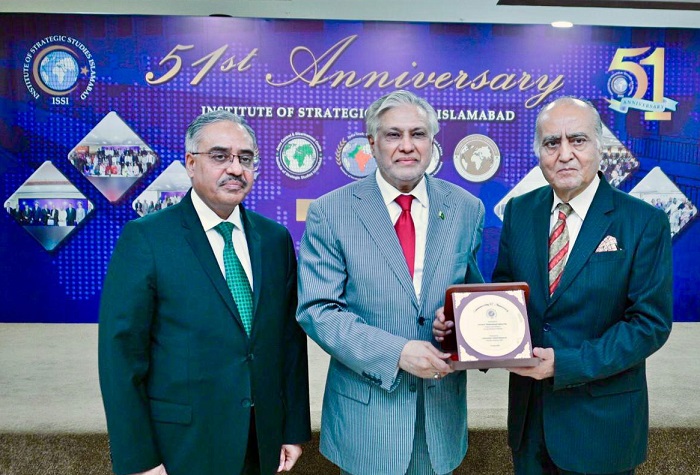
 ISLAMABAD: Deputy Prime Minister and Foreign Minister Senator Mohammad Ishaq Dar has warned of new and non traditional security threats in the world and a specter of looming ominously new cold war at the global landscape. He has outlined key objectives of Pakistan’s foreign policy. Addressing the 51st Foundation Day of the Institute of Strategic Studies Islamabad (ISSI) as Chief Guest, he commended the Institute’s role as Pakistan’s leading think-tank, underscoring the importance of multilateralism, peaceful regional relations, and Pakistan’s strategic position in a rapidly changing global landscape.
He described the key objectives as ;
1- Leveraging Pakistan’s strategic location and advocating for international cooperation over confrontation, with a firm support for multilateralism.
2- Promoting peaceful relations and regional stability to foster sustainable economic development.
3- Emphasizing humanitarian cooperation in Afghanistan and ensuring Afghan soil is not used for terrorism.
4- Seeking peaceful relations with India based on mutual respect, resolving the Kashmir dispute, and rejuvenating SAARC, while rejecting India’s unilateral actions.
5- Strengthening the strategic partnership with China, especially through the advancement of the China-Pakistan Economic Corridor (CPEC).
6- Deepening ties with Iran, Gulf nations, Türkiye, Central Asian states, and Azerbaijan.
7- Maintaining balanced relations with major global powers like the US, China, Russia, the EU, Japan, and ASEAN to enhance Pakistan’s diplomatic flexibility.
Mr. Ishaq Dar also expressed concern over pressing global issues such as ongoing conflicts, humanitarian crises, unresolved disputes like Palestine and Kashmir, arms race and technological militarization, rising extremism and populism, economic and environmental challenges, the spread of disinformation, and the weakening of multilateral institutions.
Deputy Prime Minister and Foreign Minister Senator Mohammad Ishaq Dar emphasized the need for political stability and economic growth as pillars of Pakistan’s foreign policy, enabling the country to fulfill its potential as a positive force in global affairs. He urged ISSI to continue providing critical policy feedback to the Ministry of Foreign Affairs, especially during Pakistan’s upcoming tenure as a non-permanent member of the UN Security Council.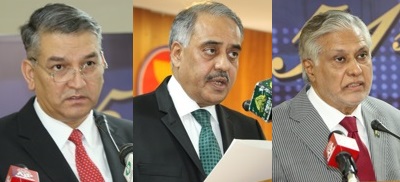
The DPM/FM underscored that the world today is undergoing profound transformations. In this regard, he noted that world leaders like President Xi and Chancellor Scholz have spoken of ‘global tectonic shifts’ and changes taking place in the world which have not been seen in a century. He added that the world is witnessing the end of one era and the beginning of a new one — marked by the emergence of a multi-polar order.
FM emphasized that old and traditional security threats are compounded by new and non-traditional security threats and challenges.
“These include ongoing conflicts in Europe and the Middle East, genocide in Palestine, and simmering tensions across several continents. Disintegration of arms control regime, new arms races, unprecedented growth of new emerging technologies, food and fuel crises, Islamophobia, grey-zone conflict, and climate change present further challenges to global security.”
Alluding to the intensifying major-power contests, he noted that a specter of a new Cold War looms ominously over the global landscape. He asserted that it should be evident to all that our collective salvation lies in finding global solutions to shared problems. No single nation can resolve these issues in isolation; hence, communication and dialogue are imperative.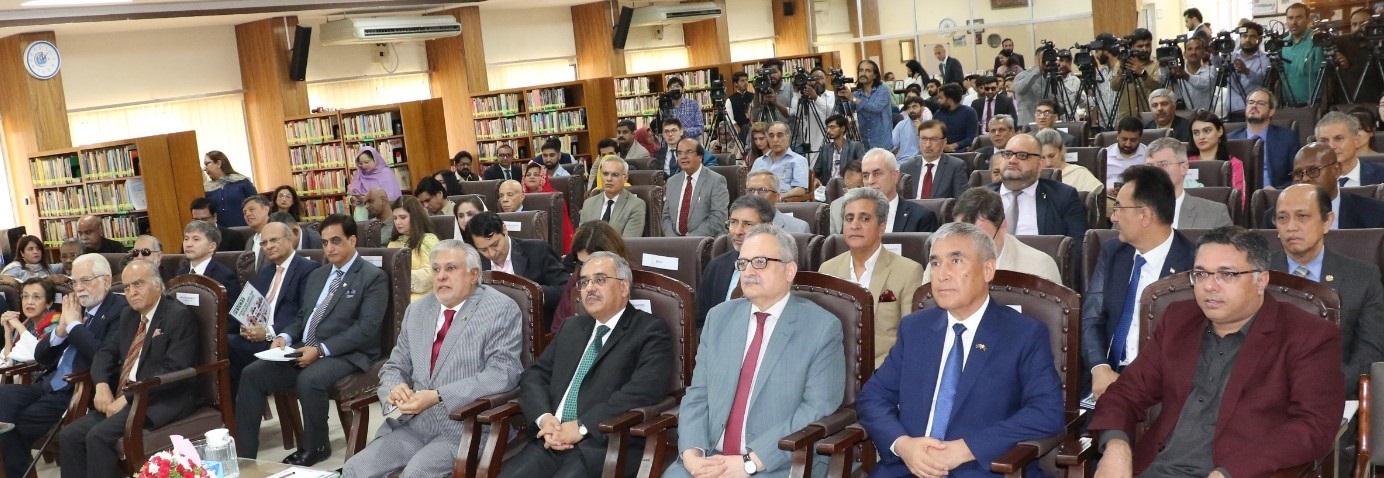
The DPM/FM underscored Pakistan’s strategic importance globally and regionally. Highlighting Pakistan’s perspective, he underscored its aversion to bloc politics and preference for cooperation over confrontation. He also highlighted that Pakistan’s regional policy is underpinned by the concept of “peaceful neighborhood” and the inextricable link between peace and development.
He stated that a peaceful, stable, united and prosperous Afghanistan is in Pakistan’s vital interest. Since the Taliban’s takeover, Pakistan has adopted a pragmatic approach, prioritizing both national and regional stability. He emphasized the need for Afghan soil not to be used by terrorists against any state. If the vision of a peaceful and stable Afghanistan is realized, the fruits of economic cooperation, regional integration, and connectivity would be enormous.
He described India-Pakistan relations as troubled, citing ongoing mistrust stemming from India’s actions in IIOJK on 5 August 2019. The DPM/FM said Pakistan seeks good-neighborly relations with India on the basis of mutual respect, sovereign equality, and a just and peaceful resolution of the long-standing Jammu and Kashmir dispute.
He added that while Pakistan has always been receptive to constructive engagement through dialogue that includes all outstanding issues, Pakistan would never agree to unilateral approaches or attempts to impose India’s will or hegemony.
He further emphasized Pakistan’s readiness to ensure strategic stability and respond to any military provocations. He expressed the hope that the BJP-led NDA government would have sober reflection, revisit India’s policies and postures that have bedeviled bilateral relations and regional cooperation, and take tangible steps that move the relationship in a positive direction.
The DPM/FM emphasized Pakistan’s enduring friendship with China as crucial for stability in the region and beyond, highlighting their commitment to ensuring safety and security of Chinese personnel and projects and enhancing bilateral relations. He praised the transformative impact of the CPEC on Pakistan’s economy and development.
The DPM/FM stressed efforts to strengthen ties with Iran, Gulf countries, Turkiye, and Central Asia and Azerbaijan, prioritizing regional connectivity.
He highlighted that the guiding principle of Pakistan’s foreign policy is to enhance Pakistan’s diplomatic space and autonomy of action including through good relations with all major powers, especially the United States, China, Russia, EU, Japan and ASEAN — as forging closer ties is crucial for navigating today’s complex world. This expansive foreign policy agenda requires substantial resources, which must be effectively utilized under the current environment.
DG ISSI Ambassador Sohail Mahmood, delivering his welcome remarks, underscored the growing impact of think-tanks and research organizations globally, stressing their pivotal role in generating research-based inputs, fostering informed dialogue, and impacting policy.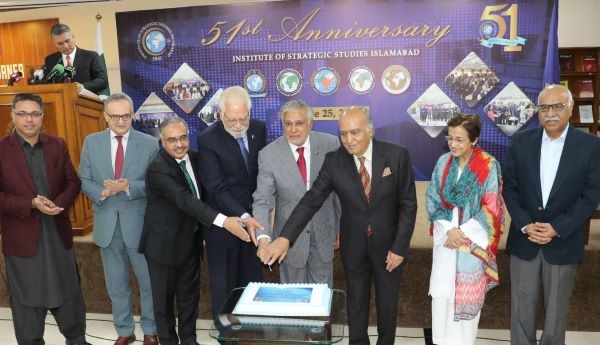
Over the past five decades, he said, the ISSI has evolved into a formidable research organization and a reputable public sector think-tank. This journey, he emphasized, has been supported by the political and administrative leadership of the Foreign Ministry and guided by the ISSI Board of Governors.
Reflecting on the past year, Ambassador Sohail Mahmood highlighted ISSI’s proactive initiatives aimed at bridging the gap between academic and policy communities;
1- Providing a platform for inclusive, multi-stakeholder dialogue; 2- Strengthening collaboration with national stakeholders; 3- Increasing collaboration with international partners; 4- Enhancing research standards; and leveraging media and social media platforms for wider dissemination of insights.
STRATEGIC VIRTUAL DIALOGUE on “Challenges to Peace and Security in South Asia”