 Tazeen Akhtar
The Embassy of Bosnia & Herzegovina commemorated the Internation Day of Reflection and Commemoration of the 1995 Genocide in Srebrenica, observed on 11 July.
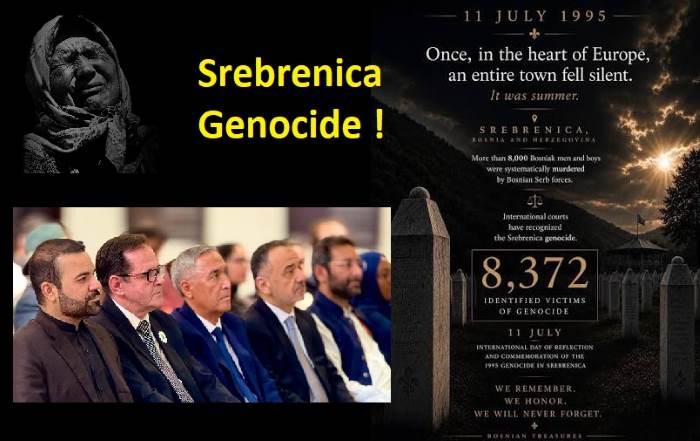
This year marks the 31th anniversary of the Srebrenica genocide is being observed worldwide including Pakistan, during which over 8 000 Bosnian Muslim men and boys were systematically murdered in what the United Nations has described as the worst atrocity on European soil since the Second World War.
This anniversary reminds the cruelty more than the previous years because on 11 July 2026 the coffins containing the bones of ten innocently murdered Bosniaks, Bosnian Muslims, will be lowered into graves dug in Bosnian and Herzegovinian soil at the Potočari Memorial Center near Srebrenica.
As of July 11, 2026, there will be 6,782 graves in the Bosnian Valley of Martyrs. Within this number are woven lives, dreams, childhoods, first steps, first teeth, first spoken words, letters and photographs…
Ambassador H.E Emin Čohodarević held a commemoration in collaboration with Pakistan National Arts Council in Islamabad where a documentry was screened and pitorial exhibition of the atrocities against Bosnian Muslims was also the part of the event. The message of the Chairman of the Presidency of Bosnia & Herzegovina H.E Denis Bećirović was also screened at the occasion.
Government of Pakistan was represented by Barrister Aqeel Malik, State Minister for Law, Justice and Human Rights who participated as Chief Guest and delivered his speech in which he expressed solidarity from Pakistan with Bosinan Muslims and the government. He reiterated Pakistan’s unequivocal support for Bosnia Herzegovina in seeking justice for the victims of the Genocide.
Senator Faisal Saleem, Director General Ministry of Foreign Affairs of Pakistan, Dean of Diplomatic Corp, Ambassador Atadjan Movlamov, Ambassadors of Algeria, Turkiye, Rwanda, Malaysia and other countries, a large number of civil society representatives and media persons were also present.
Ambassador H.E Emin Čohodarević, in his welcome address, briefed the guests, ” These are not complete skeletal remains, they are only small fragments of bones found in recent years in mass graves, forests, and meadows scattered throughout eastern Bosnia and Herzegovina.
“The perpetrators of crimes exerted enormous efforts to try to hide the crime. They moved bodies from primary to secondary and tertiary graves, convinced that they would hide the truth along with the bones. The remains of some victims were found in five different graves. They did not succeed, H.E noted.
The Srebrenica genocide did not begin in July 1995. It was preceded by years of persecution, ethnic cleansing, concentration camps, mass killings, and the destruction of towns and villages across Bosnia and Herzegovina since April 1992. Bosniaks were killed, burned, expelled, and imprisoned in camps solely because of their name, religion, and identity. Thousands of our sisters, mothers, and girls were dishonored and raped. The world watched. And remained silent.
Ambassador shared , the world saw the images of starving camp inmates behind barbed wire. It heard the testimonies of survivors. It knew what was happening. Instead of decisive action, an arms embargo was imposed on Bosnia and Herzegovina, denying it the right to defend itself. The Srebrenica genocide represents the culmination of that policy of crime and ethnic cleansing, which had been carried out for years throughout Bosnia and Herzegovina.
Srebrenica, a town known for mines used since ancient Roman times, for its healing Guber waters and natural beauty, became the largest concentration camp in the heart of Europe starting in April 1993. Following the massacre at the school playground in Srebrenica, the United Nations Security Council adopted Resolution 819 and declared this town a protected zone. At that time, nearly 60,000 residents of Srebrenica and surrounding municipalities were there, believing that the “United Nations protected zone” designation would protect them from death.
For the residents of Srebrenica, it represented hope. They believed that the world had finally decided to protect civilians. Unfortunately, it turned out otherwise.
Cowardice, indecisiveness, and the lack of a timely reaction from the international community emboldened the perpetrators to commit a new genocide on European soil. Many managed to survive by breaking through the forests to free territory.
8,372 of them did not. A genocide was committed.
 Thus, the United Nations “safe zone” became the biggest stain on the conscience of the international community in recent history, but also the biggest wound in the history of the Bosniak people and Bosnia and Herzegovina. The genocide in Srebrenica remains the greatest crime committed in Europe after the Holocaust.
After the Holocaust, the world said: “Never again.”
Half a century later, genocides were committed in Rwanda and Srebrenica.
The world said again: “Never again.”
A few decades later, the world watched the destruction of Gaza.
Ambassador H.E Emin Čohodarević
Ambassador said, “Live broadcasts of the demolishing of homes, the killing of civilians, children, babies, pregnant women, doctors, humanitarian workers, journalists.”
He said, I fear that today we live in a time in which that “Never again” has lost a large part of its meaning. Unfortunately, the world we live in today confirms the truth of those words every day.
Ambassador said, “Our path is truth and justice, based on facts and court rulings. The genocide in Srebrenici is firmly documented and legally adjudicated. Through the verdicts of international and domestic courts, the truth about the genocide is cemented in the history of humanity. Although there are serious occurrences and activities regarding the denial of genocide, for us, and for the entire civilized world, there is no discussion about it.”
It is the obligation of us and the generations to come to speak the truth, research, write, learn, and remind. Not for revenge. Not for hate. But for justice. For the dignity of the victims. For a future in which such evil will never happen again to anyone.
Pakistan’s Support
Ambassador recalled support from Pakistan and said, Bosnia and Herzegovina remembers. We remember the first ship of humanitarian aid which reached our people during the hardest days. We remember the arrivals of your highest officials in besieged Sarajevo.
We remember your advocacy in the United Nations Security Council and Committees and at other international organizations and forums.We remember the reception of our refugees and the help of the Pakistani Battalion during the war, especially the support provided to the surviving victims of genocide.
We remember and appreciate the help you provided in the reconstruction of Bosnia and Herzegovina after the war, as well as the support you provide to our country today. For that, we thank you sincerely and deeply.
In our remembrance, we reflect on what this anniversary means for today’s increasingly polarized world, our society, and how we can act today.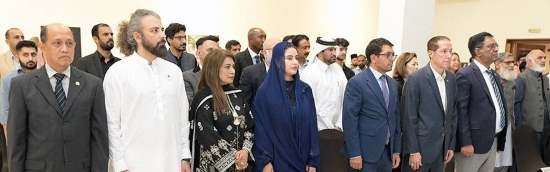
H.E said, We stand together against those who try to divide us and recommit ourselves to opposing hatred, discrimination, and prejudice wherever they rear their head. Only then can our communities and the world be safer, stronger, and more cohesive.
Ambassador expressed gratitude to the Government of Pakistan for its great assistance in adopting the Resolution on the International Day of Remembrance and Commemoration of the Srebrenica Genocide at the United Nations General Assembly in May 2024. The adopted resolution has planetary significance. It represents a moral, historical and civilizational act of the United Nations.
” In times of complex global relations, it is important to know that the truth has its guardians. Therefore, it is important that we together strengthen the culture of peace, encourage advocates of justice, institutionally protect the legacy of the United Nations courts, affirm dialogue, condemn the policy of glorifying war criminals and strengthen education systems in the function of genocide prevention, H.E Emin Čohodarević stressed.
The commemoration event concluded with the Srebrenica Prayer of the Reis-ul-Ulema of the Islamic Community in Bosnia and Herzegovina, ” In the name of God, the Most Gracious, the Most Merciful. We pray to Thee, Almighty God, May grief become hope, May revenge become justice, May a mother’s tear become a prayer: That Srebrenica never happens again to anyone.”