 CENTRAL ASIA MONITORING DESK ISLAMABAD
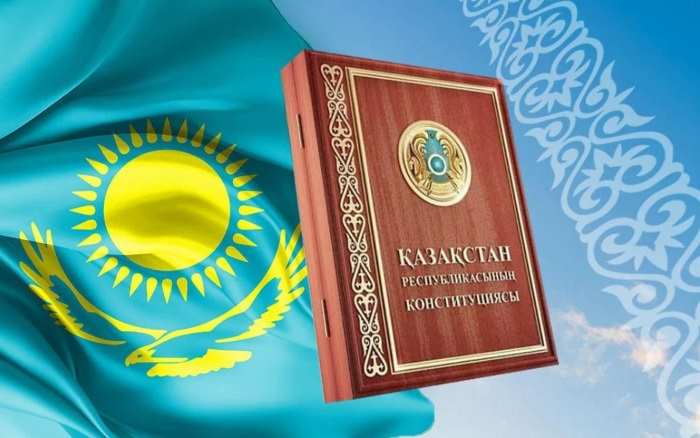
The Constitutional Court of the Republic of Kazakhstan has published the draft of a new Constitution on January 31, following an extensive constitutional reform process initiated by President Kassym-Jomart Tokayev.
The reform marks a transition from targeted amendments to a comprehensive constitutional transformation, reflecting changes across the political system, governance model, and the state’s value framework. The final decision on adopting the new Constitution will be taken by citizens through a nationwide referendum.
Background and Reform Process
The constitutional reform was launched following the President’s proposal, announced on 8 September 2025 in his annual Address to the Nation, to establish a unicameral Parliament as part of a broader political system reset.
A Working Group on parliamentary reform was formed in October 2025 and conducted a six-month review process, during which more than 2,000 proposals were received from citizens via the e-Otinish and eGov platforms.
In January 2026, a Constitutional Commission was established, comprising 130 members representing all regions and social groups, including members of the National Kurultai (Congress), legal experts, government officials, media representatives, maslikhats (local executive bodies) chairs, and civil society.
The Commission reviewed proposals affecting 77 articles – approximately 84% of the existing Constitution – leading to the decision to prepare an entirely new constitutional text.
All Commission meetings were open and publicly broadcast, with broad participation from legal professionals, human rights advocates, parliamentarians, political analysts, and academic experts.
 Institutional and Political System Changes
Parliamentary System
Establishment of a unicameral Parliament (Kurultai) consisting of 145 deputies (members of Parliament).
Deputies elected under a proportional electoral system.
Five-year term of office.
Expanded parliamentary powers.
The proportional system is intended to strengthen political parties’ institutional development and accountability.
New Consultative Body
Creation of the People’s Council of Kazakhstan.
Highest nationwide consultative body.
Represents public interests.
Granted the right of legislative initiative.
Executive Branch
Introduction of the institution of Vice President.
The Vice President will act on behalf of the President in engagement with domestic and foreign socio-political, scientific, cultural, and educational organisations.
Rule of Law and Legal Guarantees
The draft Constitution significantly strengthens legal safeguards and procedural rights, including:
Explicit protection of the legal profession through a dedicated constitutional article on advocacy.
Enhanced protection of intellectual property.
Prohibition on retroactive application of laws that impose new obligations or worsen citizens’ legal position.
Constitutional reinforcement of the presumption of innocence.
Ban on double jeopardy.
Constitutional enshrinement of the “Miranda rule”.
New Kazakhstan Celebrating Journey of Sovereignty and Progress on 32nd Independence Day
Core Principles and Values
The draft Constitution consists of a Preamble, 11 sections, and 95 articles. It updates constitutional language, replaces outdated terminology, and reflects Kazakhstan’s evolving political system, social priorities, and international standing.
Key foundational values reaffirmed or newly enshrined include:
Human and Other Rights
The new Constitution places human rights and freedoms at the centre of the state’s constitutional framework. For the first time, they are declared in the Preamble as the highest priority of the state and form the guiding principle of the entire constitutional text.
Unity and solidarity, interethnic and interfaith harmony as the basis of statehood.
Sovereignty, independence, the unitary nature of the state, and territorial integrity as immutable values.
Justice, Law and Order, and responsible stewardship of nature, enshrined at constitutional level.
Recognition of the people of Kazakhstan as the sole source of state power and bearer of sovereignty.
Human-Centered Development and Strategic Orientation
The Constitution redefines the long-term development trajectory of the state by identifying education, science, culture, and innovation as central constitutional priorities.
This reflects a strategic shift toward human capital as the primary driver of national development, rather than reliance on natural resources.
Digital transformation is explicitly addressed. For the first time, constitutional protection of citizens’ rights in the digital environment is introduced.
Separation of State and Religion
The draft Constitution reinforces the secular nature of the state, clearly separating religion from government and affirming the secular character of education and upbringing.
Family and Social Provisions
Marriage is constitutionally defined as a voluntary and equal union between a man and a woman. This provision is framed as a measure to protect traditional values and strengthen the legal protection of women’s rights.
While introducing a fundamentally updated constitutional framework, the draft acknowledges the role of the existing Constitution in Kazakhstan’s state-building and historical development. The new text is positioned as an evolution, reflecting institutional maturity, accumulated international credibility, and a forward-looking governance model.
Next Steps
Public consultation on the draft Constitution continues via the e-Otinish and eGov platforms.
The final decision on adoption will be made through a nationwide referendum.
The Constitutional Commission continues its work to refine the draft ahead of the public vote.
Composition of the Constitutional Commission
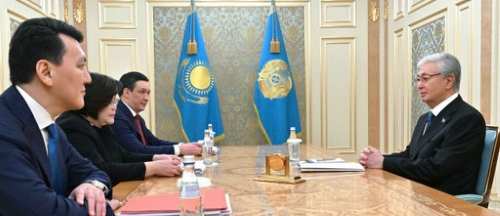
By decree of the Head of State, the composition of the Constitutional Commission was approved. It includes around 130 members – representatives of the National Kurultai, renowned constitutional lawyers, members of the business and corporate sector, public associations, human rights advocates, experts, media professionals, representatives of the scientific and cultural intelligentsia, Members of Parliament, and civil servants.
The Commission also includes representatives of all parliamentary parties (Amanat, Ak Zhol, Auyl, OSDP, NPK, Respublica).
This clearly demonstrates that the Constitutional Commission not only representatively reflects all sectors of Kazakhstani society (the state, business, and civil society), but has also brought together the country’s leading experts – lawyers, economists, political scientists, and others.
It is evident that the primary criterion in forming the Commission was professionalism. At the same time, the composition is highly balanced.
From a regional perspective, it includes representatives of all regions of the country – chairs of regional maslikhats, members of public councils, and other qualified specialists.
Gender balance has been ensured: women who are professionals in their respective fields – scholars, managers, and entrepreneurs – are among the Commission members.
All members possess extensive professional backgrounds, including experience in legislative work.
Such a broad, representative, and professional composition of the Commission provides full grounds to assert that the work entrusted to it – of enormous importance for the country’s future – has been carried out effectively and in a timely manner.
Openness and Transparency of the Constitutional Commission
By their nature, constitutional changes affect the foundations of the state and the social contract; therefore, they could not be discussed behind closed doors or within a “narrow circle.”
To enhance the openness of the Constitutional Commission’s activities, a number of measures were introduced.
First, live broadcasts of meetings were provided on the official website and social media accounts of the Constitutional Court.
Second, a dedicated Telegram channel, “Konstitutsiyalyq Reforma 2026,” was created for coverage and information aggregation regarding the Commission’s activities.
In addition, many Commission members are active social media users. Independently or through mass media, they communicated their views on the Commission’s work to hundreds of thousands of citizens.
Thus, the Commission’s work proceeded in an open and transparent manner, and information about its activities was accessible to all interested parties.It is important to note that live broadcasts are not merely a technical format. They demonstrate trust in society and the authorities’ readiness to conduct dialogue without filters.
In a context where the state proclaims the principles of a “Listening State” and institutional responsibility, the open work of the Constitutional Commission becomes a logical continuation of the declared course.
Public accessibility of meetings helped reduce speculation and rumors, enabled citizens to understand the logic behind the proposed provisions, and most importantly strengthened the legitimacy of the final decisions.
Discussion Process
The process of discussing and drafting the new version of the Constitution was quite lengthy – nearly six months.
In fact, discussions began when the Head of State announced, in the Address to the People of Kazakhstan on 8 September 2025, the initiative to reform Parliament.For this purpose, in October of last year a Working Group on Parliamentary Reform was established on a permanent basis to develop legislative amendments.
At the same time, public discussion of parliamentary reform was not limited to the Working Group’s activities. Through a dedicated “Parliamentary Reform” section on the e-Otinish and eGov platforms, hundreds of proposals were submitted since October by citizens, expert community representatives, and public associations.
Moreover, political parties and other public associations submitted more than 1,600 proposals to revise provisions of the current Constitution. As a result, a decision was made to conduct constitutional reform and establish the Constitutional Commission.
State feedback mechanisms were actively used by citizens and made it possible to take into account a wide range of societal views and practical demands regarding constitutional reform.
The collected proposals were not considered fragmentarily but were consolidated into a single, internally coherent draft. As a result, the update affected all sections of the Constitution from the Preamble and the foundations of the constitutional order to mechanisms of justice, public administration, and citizen participation.
This approach made it possible to abandon the previously used practice of isolated, piecemeal amendments and instead build a holistic and logical structure for the new Basic Law.
New Version of the Constitution
The Constitutional Commission prepared a consolidated draft of amendments based on all submitted proposals and discussions, harmonized among themselves and incorporated into the constitutional text.
The proposed draft contains a Preamble, 11 sections, and 95 articles (the current version contains a Preamble, 9 sections, and 101 articles).
Two new sections are introduced:
“People’s Council”
“Amendments and Additions to the Constitution.”
Four sections have been renamed:
“General Provisions” → “Foundations of the Constitutional Order”
“Human and Citizen” → “Fundamental Rights, Freedoms, and Duties”
“Parliament” → “Kurultai”
“Courts and Justice. Prosecutor’s Office. Human Rights Commissioner” → “Justice. Prosecutor’s Office. Human Rights Protection Mechanisms.”
Amendments have been introduced into 77 articles, representing 84% of the constitutional text.
Thus, the changes and additions affect all sections of the Basic Law.Renaming sections or clarifying constitutional wording is not merely editorial revision but a significant and carefully considered step that transforms conceptual approaches, strengthens legal precision, and improves the quality of the Basic Law.
It is important to note that, under the Law of the Republic of Kazakhstan “On Normative Legal Acts,” when amendments and/or additions affect more than half of a normative legal act, a new version of the act is adopted.
Taking this into account, as well as the scale and substance of the proposed changes, the adoption of a new version of the Constitution of the Republic of Kazakhstan, meeting modern requirements, societal needs, and the state’s strategic development goals, was both appropriate and justified.
Therefore, this is not about isolated amendments but about deep constitutional modernization, fundamentally transforming the content and conceptual foundations of the Basic Law.