 Tazeen Akhtar
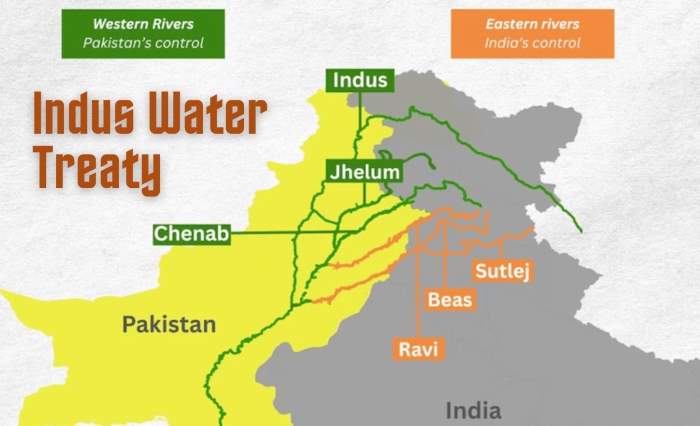
Pakistan has made it clear that International Arbitration Court has declared that India cannot build water reservoirs on the waters of Pakistan’s share, if the Indus Waters Treaty fails, its effects will not be limited to Pakistan alone, but will threaten every country in the world that depends on the upper and lower river systems, India is not only obstructing the flow of our water but also the third largest polluter in the world, under the Indus Waters Treaty, India cannot unilaterally divert water.
This was stated by DPM/FM Ishaq Dar, Minister Information Ata Ullah Tarar, Minister Climate Change Dr. Musadik Malik, Chairman Pakistan Peoples Party Bilawal Bhutto Zardari, Chairperson Foreign Affairs Standing Committee Hina Rabbani Khar both are former Foreign Ministers in the first ever conference on Water security hosted by Pakistan in Islamabad.
Defense Minister Khawaja Muhammad Asif, former federal minister Khurram Dastgir, former president National Defense University Lieutenant General (retd) Aamir Riaz, President of the Institute of Regional Studies Ambassador Johar Saleem, former federal law minister Ahmed Bilal Sufi, Indus Water Treaty Commissioner Syed Mehr Ali Shah and international water experts were also present.
DPM/ FM Ishaq Dar, Bilawal Bhutto Zardari, Mr. Khurram Dastgir Khan, Ms. Hina Rabbani Khar also briefed the participants on the issue and expressed their views on the case in light of Pakistani perspective.

He argued that the Indus Waters Treaty is a binding international agreement brokered by the World Bank and cannot be suspended unilaterally. According to his remarks, the Indus River is Pakistan’s lifeline—supporting agriculture, livelihoods, food security, and millions of people across the country.
 Be it the Nile River, the Euphrates River or the Indus River, water-related challenges are similar in different regions of the world, so this problem is not just of one country but of global importance.
Sometimes India releases very little water at the Marala Head Works and sometimes there is a sudden flash flood, which makes it clear that the real problem is not climate change but control over the flow of water. Using water as a weapon is a dangerous trend for the peace and stability of the region.
Due to Indian actions, six thousand people have lost their lives in Pakistan and thousands have been injured, while such a huge human cost is not seen even in many wars.
The Indus Waters Treaty is considered one of the strongest international treaties in the world and it has survived despite three wars between Pakistan and India. If even such a strong treaty cannot survive, then no international treaty in the world will be safe.
The International Court of Arbitration has declared that no country can unilaterally suspend or terminate the Indus Waters Treaty, nor can it divert the flow of rivers in Pakistan’s share, nor can it build reservoirs on these rivers that violate the treaty.
India is also refusing to accept the decisions of the International Court of Arbitration. If the Indus Waters Treaty fails, its effects will not be limited to Pakistan alone, but will threaten every country in the world that depends on the upper and lower river systems. This is not just a problem for Pakistan, but a matter of global water conservation, international law and world peace.
The Indus Waters Treaty is the lifeblood of the 240 million people of Pakistan, in which no kind of unilateral amendment, cancellation or suspension is possible. India has made unsuccessful attempts to suspend the treaty unilaterally, due to which it has faced embarrassment at various international forums. Pakistan will take steps at all levels to protect the right to water.
The Indus Waters Treaty has endured despite three wars. If even such a robust treaty cannot be sustained, then no international agreement in the world would remain secure; furthermore, no single country can be permitted to hold regional and global peace hostage.

With climate change accelerating, glaciers melting at an unprecedented rate, and water scarcity becoming a major challenge, the need to protect this agreement has become even greater.
South Asia is home to nearly a quarter of the world’s population. Our collective future depends on us turning water into a means of cooperation rather than conflict. History teaches us that rivers do not divide civilizations, but rather connect them.
Rivers transcend borders, politics, and generations. Nature knows no boundaries, and humanity’s shared challenges require shared solutions. Any attempt to stop or block water always fails because water finds its own way.
Ambassador R Jauhar Salim Chairman Institute of Strategic Studies shared the discourse today reflects the paramount importance Pakistan attaches to safeguarding its water security, while steadfastly upholding international law, and promoting regional peace.
Today, we have done more than discuss a treaty. We have reaffirmed a principle.
That enduring peace is best secured through respect for international law, fidelity to solemn commitments, and institutions that enable nations to resolve their differences peacefully.
Throughout today’s deliberations, one conclusion emerged with unmistakable clarity.
The Indus Waters Treaty is more than a water-sharing arrangement.
It is one of the world’s most enduring examples of how law, dialogue and institutions can transform competing interests into peaceful cooperation.Our discussions also reaffirmed that the Indus Basin lies at the heart of Pakistan’s water, food, energy and economic security. The uninterrupted flow of the Western Rivers is therefore not merely an economic necessity.