Islamabad: Monitoring Desk – On September 22, R. Kadyrov announced that mobilization would not be carried out in Chechnya, since the republic “exceeded the plan by 254 % during the SMO in Ukraine.”
The demarche of the head of Chechnya is a very serious precedent and an open challenge to Putin, to whom Kadyrov has repeatedly admitted loyalty. Against the backdrop of a critical weakening of the Russian army (all combat-ready units of which have already been destroyed in Ukraine, and as part of “partial mobilization,” janitors and minibus drivers are being recruited instead), Putin’s “reliable infantryman” chose the right time to leave the Kremlin’s auspice, due to the dynamic weakening of the latter.
Kadyrov hates Putin, who actually killed his father — A. Kadyrov and drowned Chechnya in blood, and enforced Kadyrov’s Jr. obedience.
The collapse of the Russian army means the collapse of Putin, and the announced mobilization is designed to prevent the shameful ending of the Kremlin dictator. In fact, it is planned to mobilize at least a million Russian men. Shoigu has voiced the figure of 300,000 in order to prevent social panic and resistance to mobilization.
Kadyrov’s refusal to mobilize in Chechnya touched a delicate nerve of Russian domestic politics: if Putin does not respond to the demarche, this will launch a “parade of sovereignties” in the Caucasus, primarily in Chechnya and Dagestan.
Kadyrov closely monitors the Russian society’s mood regarding the attitude towards the war and will support the overwhelming majority. The mobilization announced by Putin clearly indicates that the regular Russian army (together with a huge number of PMCs traditionally used in hostilities by Russia), has failed to fulfill the task of capturing Ukraine.
Calling up ordinary civilian men and expecting something special from them is a utopia.
Even their mediocre training can take months. If Putin loses his army, Kadyrov will be the first to use his weapon against him and declare the independence of Chechnya.
Given the carefully concealed social tensions in Russian society, Putin is unlikely to dare to openly confront Kadyrov. He does not need a hotbed of instability within Russia itself.
Therefore, the number of mobilized people due from Chechnya will be recruited in other regions of Russia. Chechnya is one of the most subsidized republics in Russia, and against the background of the economic crisis in the Russian Federation, the inflow of investments into the republic has sharply decreased.
It is also one of the reasons of Kadyrov’s willfulness and his increased criticism of the central government in the Kremlin. The cuts in funding will in any case affect his support for Putin.
Russia, led by a weak, aging Putin, is starting a new, bloody war, being unable to turn the situation at the front in its favor. Kadyrov understands this and has already begun his independent game so far in the internal Russian political space so far.
Further weakening of Russia and defeats at the front will lead to an outcome that has happened more than once: the collapse of Russian statehood and the possible emergence of new states on its territory, one of which may be Chechnya.

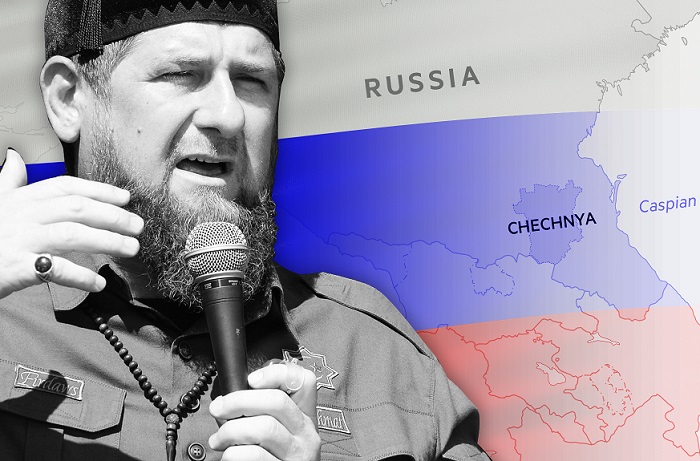 Islamabad: Monitoring Desk – On September 22, R. Kadyrov announced that mobilization would not be carried out in Chechnya, since the republic “exceeded the plan by 254 % during the SMO in Ukraine.”