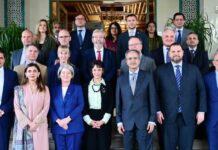
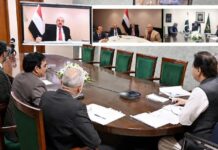
International Conference on ” Central Asia South Asia Interconnectedness’ at Tashkent on 15-16 July 2021 was initiative of President Shavkat Mirziyoyev of Uzbekistan but the participation from not only around the regions but the world was manifestation of trust by the stake holders on the vision of the President. Speech of the President at inaugural session was expression of his dream of restoration of the connections that were lost because of different problems that aroused time to time. The connections those were beneficial for all.
The President presented 10 proposals in the conference before the leaders of the regions and adjacent countries. Every suggestion was finalized with hard work and complete consideration with respect to its importance and relevance. Here we have a look on the suggestions and analyze them for further discussion and implementation.
First – Our priority task is to create favorable conditions for the development of trade and economic ties and the growth of mutual investments.
“Trade and Economic relations have been the real basis for stronger bonds between the nations. Central and South Asia have been cherishing these relations for centuries as the President mentioned himself. Both regions have many items that can be traded with each other. The population and potential is huge and sky is the limit. Central Asia has untapped reservoirs of natural resources while South Asia needs energy badly. The role of Chambers of Commerce is also very crucial. They can arrange multiple conferences in order to push the trade and economic ties, generating employment opportunities on both sides.”
Second – Creation of modern, efficient and safe transport and logistics infrastructure in Central and South Asia.
“ Transport and communication facilities are pre-requisite for any kind of connectivity. Unfortunately, the two regions could not work upon it in previous years. There was a big obstacle in the case of Afghanistan situation, no doubt. Pakistan provides the nearest seaports for Central Asia but this could not be accomplished even when a strong desire was present on both sides. Pakistan is ready to offer its seaports to Central Asia but the security issues hindered the efforts. Pakistan traced a route from northern areas to Tajikistan for truck trade but it failed to serve for required communication. Uzbekistan took a lead by first starting direct flights to Lahore and then signing agreement to connect Peshawer by railway, with Tirmiz through Mazar-i-Sharif and Kabul. Communication is imperative to bridge the existing gaps between both governments and people. The foundation of economy of a country is based on connectivity and communication.”
Third – The introduction of digital platforms should become the locomotive of economic cooperation between the countries of Central and South Asia.
“Digital Platforms have brought a revolution in almost every field of life in the world during last two decades. It is necessary to develop specific measures to implement digital connectivity in the field of trade, transit and border crossing, to adopt a Joint Action Strategy.Digital platforms are opening new doors and digital transformation can be very beneficial for both countries in generating global GDP. Digital connectivity is becoming the new reality of the global village. COVID-19 pandemic compelled the world to move towards digital connectivity and digitalize many sectors. Digital connectivity offers many opportunities to overcome the problem of communication and connectivity. Both should work together to promote e-commerce and digital entrepreneurship that can provide an impetus to economic growth. Digital collaboration is another area which can provide space for both States to develop strong bilateral ties.”
Fourth – A joint search for ways to ensure food security in our vast region. Recently, there has been a rapid rise in prices for basic food products; in some regions of the world, the population is experiencing an acute shortage of them. We propose, under the auspices of the Food and Agriculture Organization of the United Nations (FAO), to hold a meeting of the ministers of agriculture of our countries to develop a Program to overcome these challenges.
“This suggestion is highly appreciated as food is basic necessity of every household. The President rightly pointed about inflation in food prices that is definitely unbearable for most of the population. Central and South Asia have fertile lands and hard working growers. If the countries of the region cooperate with one another in this sector, all can become self reliant in food requirements. Uzbekistan has achieved success in agriculture sector in both areas, the crop and the machinery manufacturing. Pakistan and all states can benefit from Uzbekistan’s experiences. Pakistan imports wheat from far flung destinations. Our cotton industry needs good quality cotton as cotton cultivation area is reducing in Pakistan.”
Fifth – Consolidation of efforts in the fight against common challenges and threats to stability and security. Together, we will be able to more effectively confront terrorism, extremism, transnational crime, including in cyberspace. As a first step, we propose to develop a Joint Anti-Drug Action Plan with the participation of the UN Office on Drugs and Crime.
“That is in vast interest of all states of both regions. Central and South Asia have suffered a lot in the past decades from the menaces that were noted by the President. Safety and security is concern of the whole world. Our individual problems and mainly the situation in Afghanistan did not let us prosper as we deserved to. Pakistan is contributing in controlling the proxy and drug trafficking in the region. Pakistan has fought a war against terrorism. We can exchange our experiences with Uzbekistan and other states. Similarly countries of the regions can share their observations and achievements in this regard.”
Sixth – Environmental issues and stimulation of “green” development require the closest attention.All countries of Central and South Asia are experiencing rapid industrial and demographic growth amid global climate change. Under these conditions, common problems are water scarcity, air and environmental pollution, soil degradation and desertification.
“ Uzbekistan is working upon the drying up of Aral Sea that is affecting the whole region with its environmental problems while Pakistan is counted among first 10 most hit countries by climate change. Therefore the Presidents suggestion to tackle environmental issues is welcomed by Pakistan. Industrialization in Pakistan has polluted the water in major cities that is confirmed by government departments. Similarly other countries are facing the same situation. Floods and Draughts are regular phenomenon in South Asia including India. Kazakhstan has recently controlled the after effects of draught that damaged the availability of fodder for the animals and livestock. In short, Environment is a major issue of both regions that should be addressed jointly.”
Seventh – We stand for a fuller disclosure of the unique tourism potential of Central and South Asia.
“Tourism is one of the most earning industries of the world. Many countries are running their economy only on the tourism. The President rightly suggested establishing recognizable travel brands, new, affordable products and routes. The President’s proposal to develop, within the framework of the World Tourism Organization, a Program for Central and South Asia has been appreciated by the participants across the board. Promotion of tourism is also vision of Imran Khan. Both leaders can contribute a lot by further implementing their strategy in this sector. Connectivity is central for this purpose and both leaders are already on evolving the means of direct and easy communication. Moreover, as mentioned by the President, Pilgrim or Ziyorat tourism carries another huge potential in both nations. Needless to mention that how many attractions for Uzbekistan presents for Ziyorat tourists including city of Imam Bukhari and the heritage of saints of Naqshbandiya and other religious schools of thoughts. Pakistan is land of ancient civilizations, sacred places for Buddhists, Sikhs and others.”
Eighth – Expansion of scientific, cultural and humanitarian exchanges. Propose to hold international forum “Historical heritage of Central and South Asia” in Uzbekistan – in Termez under the auspices of UNESCO. The implementation of joint programs in the field of education and science, culture and sports, with the wide involvement of young people.
“Youth has always been a priority in the policy making of the President Shavkat. Youth needs education and science for their future and cultural knowledge to know the other civilizations around them and accept the people who are different from them. This saves them from cultural shocks. Both regions are rich in historical heritage. It should be preserved for the generations to come. It is history that proves we can walk together again as we were in previous centuries. As long as sports are concerned, attention given to this sector in Uzbekistan rewarded the nation with medals in latest Olympics in Tokyo. The youth and sports persons of Uzbekistan have proved themselves equal to the trust of their President.”
Ninth – High achievements in the field of science, technology and innovation are an important factor in the accelerated development of our countries.
“ As the President himself presented a roadmap to achieving that goal , joint research and innovative work, introduction of a facilitated visa regime for scientists and researchers, creation of an online platform for cooperation between universities and research centers in Central and South Asia, is no doubt a well thought approach. It can bring fruitful results if all nations whole heartedly consider the proposal and implement it in its true spirit. Youth, researchers and scientists of both regions are second to none. They can deliver if facilitated.”
Tenth – To develop thoughtful decisions based on a systematic study and analysis of development trends and the interconnectedness of our regions. International Institute of Central Asia to create a permanent expert pool of prominent scientists and researchers from our countries to promote regional cooperation.
“It is self explanatory that decisions should be made after looking into all ifs and buts. When you are a leader, the decision making is the most difficult thing because the wrong decision can be destructive at national level. Therefore the President rightly mentioned the necessity of thoughtful decisions. The nations of both regions have lost so much during last couple of centuries only because of wrong decisions. We in Indo-Pak sub continent learnt many lessons in the history. Now is the time to decide rightly with full attention towards the challenges and their impacts. Opening of the institute is appreciative step taken by Uzbekistan government. Hopefully it will be supportive in fetching the desired results.”
( The writer is Editor of a newspaper and magazine in Islamabad, Pakistan. He visited Tashkent on 15-16 July 2021 to cover the Connectivity Conference hosted by Government of Uzbekistan. The writer is analyst current affairs at Pakistan Broadcasting Corporation (Radio Pakistan). His articles are published in “Hilal” the official magazine of Inter Services Public Relations (ISPR) of Pakistan Army. The writer is regular contributor to Navy News official magazine of Pakistan Navy.)