 Middle East Monitoring Desk Islamabad
Israeli Elbit Systems and Israel Aerospace Industries sold hundreds of millions of shekels’ worth of missile defense systems and components for advanced jets to Saudi Arabia and Qatar
According to a report published in Haaretz, advanced Israeli defense systems have been sold to Qatar and Saudi Arabia, including missile defense systems and combat helmets for their advanced F-15 fighter jets, documents and photographs reveal.
As he sought to downplay the severity of the so-called Qatargate scandal involving his close aides’ business ties to Qatar, Prime Minister Benjamin Netanyahu described the Gulf state as “a complicated country.” On other occasions, however, he backed legislation designating it a state sponsor of terrorism and ordered strikes targeting senior Hamas figures in its capital.
Qatar’s “complexity” is also reflected in its covert ties with Israel, which have included exports of sophisticated Israeli defense systems – among them systems designed to protect the life of Qatar’s emir. When Tamim bin Hamad Al Thani flew to Tehran last year, his aircraft was equipped with an air defense system manufactured by Israel-based Elbit Systems.
Unlike the Abraham Accords countries – the United Arab Emirates, Bahrain and Morocco – which maintain extensive security ties with Israel, Qatar and Saudi Arabia have no official diplomatic relations with the country.
In June last year, Maariv reported that Netanyahu had approved more than $100 million worth of defense deals with Qatar.
Earlier, Haaretz-TheMarker revealed that a company whose partners include a former senior Mossad official and retired IDF Major General Yoav (Poli) Mordechai – both of whom are suspects in the investigation into alleged ties between Qatar and Netanyahu’s aides – represented Israeli defense firms Rafael and Elbit Systems in negotiations with Qatar, and also held talks with Israel Aerospace Industries over potential deals in the country.
In August, Calcalist reported that Mordechai and his partner had received hundreds of thousands of dollars in brokerage fees since 2018 from deals involving Elbit Systems sold to protect aircraft used by Qatar’s ruling family.
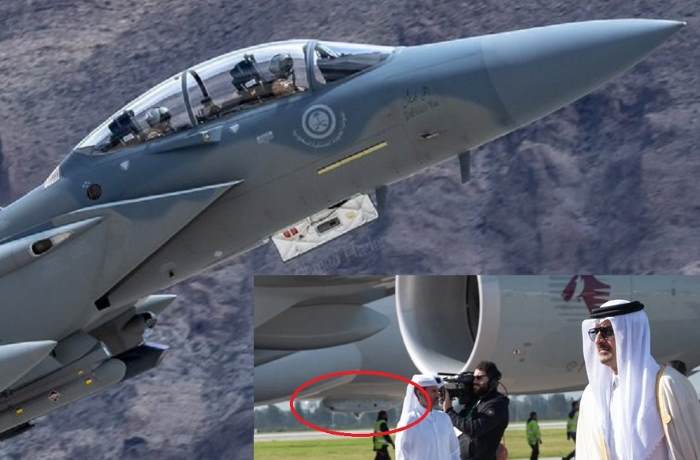
The Qatari royal fleet consists of 11 aircraft used, among other things, by Qatar’s emir and prime minister on their trips abroad. An analysis of publicly available photographs of the aircraft shows that three of them – two Boeing 747s and an Airbus A340-500 – were fitted with Elbit’s C-MUSIC system, known in Israel as Magen Rakia. The systems were installed at various points between 2020 and 2022, while the aircraft were undergoing maintenance in Basel.
The system is installed on the rear underside of the aircraft. It detects the launch of a heat-seeking surface-to-air missile and emits an infrared beam that disrupts the missile’s lock-on. It is especially effective against shoulder-fired missiles (MANPADS). The system was developed in response to the firing of two shoulder-launched missiles at an Arkia plane that took off from Mombasa, Kenya, in 2002. Elbit has installed systems from the MUSIC family on passenger aircraft operated by Israeli airlines, on Israel’s Wing of Zion aircraft, on the French presidential aircraft and on many others.
The cost of the deal with Qatar is unknown. Last year, Elbit signed a $260 million deal to install J-MUSIC systems on German Air Force transport aircraft, and another $170 million deal to install similar systems on transport aircraft operated by the Dutch and Austrian air forces. In the previous decade, the company also installed similar systems on NATO’s fleet of tanker transport aircraft.
Elbit and other Israeli companies are also involved in Qatar’s advanced F-15 fighter jet program, according to a U.S. Defense Department contract with Boeing. In 2017, the American aircraft manufacturer won a multibillion-dollar deal to supply F-15QA “Ababil” fighter jets to the Qatari Air Force; by 2023, Qatar had received 36 of the aircraft. According to the contract, Israeli companies were awarded subcontracts with Boeing worth $150 million to $250 million to supply advanced parts and systems for the Qatari jets.
Two Elbit subsidiaries – Elbit America and Cyclone, a Karmiel-based company specializing in the production of aircraft structural components – received some of the contracts. Another contract went to Collins Elbit Vision Systems, a joint venture with RTX, which produces the advanced JHMCS combat helmet. The helmet projects flight data onto the visor, allowing the pilot to focus on a target and launch a missile or bomb at it. Elbit also supplied another critical component for Qatar’s F-15 program: AN/AVS-9 night-vision goggles.
Additional contracts in the Qatari project went to Israel Aerospace Industries’ aviation division, which specializes in installing avionics systems and developing aircraft assemblies; TAT Technologies, an aviation company; and Beth-El Industries, which produces ventilation systems.
Official documents and photographs also reveal that Saudi Arabia is an indirect customer of Israeli defense companies. Over the past decade, the kingdom has received dozens of advanced F-15SA fighter jets under a major contract with Boeing.
While the procurement contracts contain only a handful of references to Collins Elbit Vision Systems and Cyclone, the U.S. Defense Department said the deal also included the delivery of 462 advanced JHMCS combat helmets and 462 AN/AVS-9 night-vision goggles – the same models sold to Qatar. Images published online confirm that the helmets are in use by Saudi fighter pilots.
Each Collins Elbit JHMCS helmet is estimated to cost about $200,000, putting sales to Saudi Arabia alone at roughly $100 million. Qatar separately purchased 160 of the helmets in a $35 million deal.