Middle East Monitoring Desk Islamabad
Saudi Arabia on Thursday accused Iran of encouraging Yemen’s Houthis in the dramatic escalation of their fight with the kingdom, adding that the Islamic republic continued to arm and train the group. Deputy Minister for Public Diplomacy, Dr. Rayed Krimly, stated that Iran is encouraging the latest escalation of Houthi rebel attacks targeting the kingdom. Riyadh was still in touch with Iran, but that Tehran did not appear ready to make concessions.
The Coalition to Restore Legitimacy in Yemen announced Thursday that a cruise missile had been intercepted and destroyed in the Madinah region of Saudi Arabia. The coalition’s official spokesperson, Maj. Gen. Turki Al Maliki, confirmed the interception in a statement.
The Wall Street Journal has published a report by the Conflict Armament Research a group that works in conflict zones and reports on the use of weapons and their supply chains on 14 Oct stating that Yemen’s Houthi rebels are sourcing Chinese-made components and technology to assemble and manufacture advanced medium-range ballistic missiles.
The Houthis shipped in from a Chinese supplier a range of components needed to make a version of one of Iran’s most powerful weapons, the Kheibar Shekan Iranian precision-guided missile, said the report by Conflict Armament Research. The Houthi missile would have a range up to about 1,200 miles, putting all of Saudi Arabia and Israel within reach.
Yemeni Foreign Minister Afrah al-Zouba said in this regard, “China will investigate the Houthis’ use of Chinese technology to manufacture weapons.”
The Chinese Embassy in Washington has stated that Beijing maintains a prudent approach to military and dual-use exports and fulfills its international obligations regarding U.N. arms embargos.
In 2023, regional rivals Iran and Saudi Arabia reached a deal mediated by China to thaw a longstanding freeze in ties, but the latest violence might threaten to upend the entente.
The announcement came two days after the coalition announced a military operation to neutralize Houthi capabilities that pose a threat to Saudi Arabia, Yemen, the southern Red Sea and maritime routes.
Saudi Arabia, the world’s top crude oil exporter, has come under sustained attack by the Houthis in recent days, shifting the focus of the Middle East war that erupted with US-Israeli strikes on Iran in February.
During a rare virtual press briefing on October 15, 2026, after more than a week of intensified drone and missile strikes by the Yemen-based Houthi militia against critical Saudi infrastructure—including Riyadh’s King Khalid International Airport, the headquarters of oil giant Saudi Aramco, and other vital aviation and military facilities. Krimly condemned the strikes, which have killed at least 19 people (including foreign nationals), labeling them as war crimes.
Accusations Against Iran: Krimly stated that Tehran “continues to arm, train, and support the Houthi militia” in direct violation of UN Security Council resolutions and its bilateral commitments under the 2023 Chinese-brokered Beijing agreement. He noted that while Riyadh maintains direct communication channels with Iran, Tehran does not appear ready to make the necessary concessions to resolve the wider conflict.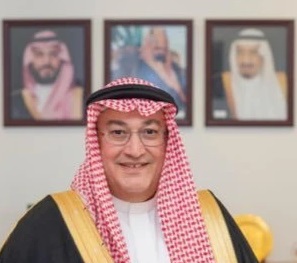
Failed Talks in Oman: The deputy minister revealed that Saudi Arabia had reached out to the Houthis a few weeks prior to request a direct meeting in Muscat, Oman, to end the escalation. However, the Houthi leadership refused the invitation. Krimly clarified that Oman acts strictly as a facilitator for these direct channels, rather than a mediator, and emphasized that Saudi Arabia has not requested Iranian mediation.
Involvement of Major Powers: According to reports by Al Jazeera, Krimly also noted that certain intelligence and hardware capabilities used by Iran and the Houthis stem from elements within Russia and China (including commercial entities). He mentioned that Saudi Arabia is actively raising and discussing these matters with both governments.
“Iran continues to arm, train and support the Houthi militia in violation of UN security council resolutions,” said Dr. Rayed Krimly, the deputy minister.
“We think that the escalation by the Houthis at this latest stage of the conflict is encouraged by Iran,” he added.
The official said the kingdom continued “to have direct communications with Iran”, but added: “Overall, it doesn’t seem yet that the Iranians are able to provide the necessary concessions for a solution.”
Parallel to Krimly’s briefing, the Saudi-led military coalition disclosed that Riyadh’s international airport alone had been targeted 20 times within the month, presenting significant operational challenges to the kingdom’s defense infrastructure.
On Saturday, a strike hit Riyadh’s international airport, killing 13 people and wounding around 300 others, in the deadliest attack on Saudi Arabia in a decade. The Saudi-led coalition fighting the Houthis on Thursday said the group had attacked Riyadh’s airport 20 times in October.
During a presentation in Riyadh covering the strikes, coalition spokesman Turki Al-Malki said “the Houthis must immediately cease all terrorist operations targeting civilians and civilian facilities, including airports, ports, oil facilities, and infrastructure”.
“The terrorist Houthi militias have worked to obtain advanced technologies with the help of regional actors,” he said, adding that the group now had “ballistic missiles, attack and suicide drones, and fast explosive-laden boats”.
Yemen’s civil war reignited in July after a years-long UN-brokered truce collapsed, months into a wider Middle East war that has rocked the region and roiled energy supplies and markets.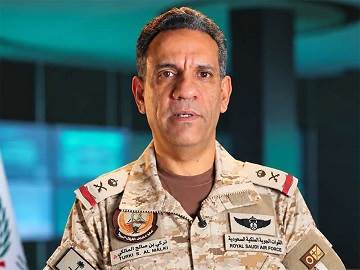
The situation took a sharp turn for the worse in September, when the Houthis launched a lightning offensive that saw them capture swathes of new territory in Yemen, including along the Red Sea coast where a waterway crucial to global energy flows is located.
On Thursday, the Houthis fired missiles at the presidential palace in Aden, which also serves as the headquarters of the internationally recognised government, security sources told AFP, while a journalist saw smoke rising from the site.
“Houthi missiles targeted the Al-Maashiq presidential palace in Aden,” the government’s interim capital, three local police sources said on condition of anonymity, after residents of the southern city reported hearing explosions.
Since their offensive began, the Houthis have also repeatedly targeted Saudi Arabia, which backs the internationally recognised government whose forces they are battling on the ground.
The attacks on Saudi Arabia have tested the country’s infrastructure and resilience, the energy minister acknowledged earlier this week. Riyadh usually hosts a packed calendar of events this time of year, including its flagship investment conference drawing foreign leaders and business titans.
In Yemen, the conflict has caused what the United Nations calls one of the world’s worst humanitarian crises, leaving most of the nation’s population dependent on aid.