 Tazeen Akhtar | Islamabad
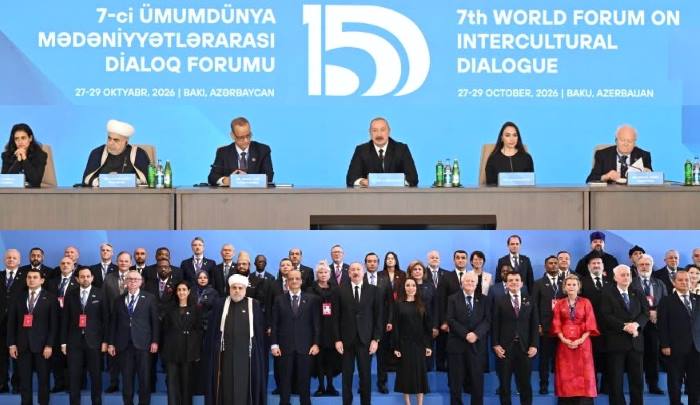
 The 7th World Forum on Intercultural Dialogue was held in Baku from 27 to 29 October 2026 at Gulustan Palace, under the theme:“Dialogue for a Shared Future: Building Bridges in a Fractured World”It is the flagship international event of the “Baku Process” — an initiative launched in 2008 at the proposal of President Ilham Aliyev to bring together Culture Ministers of Islamic and European countries.
Azerbaijan, which is currently undertaking the restoration of cultural heritage destroyed in the territories liberated following the conflict, intends to share its experience in this field with its international partners.
The first forum was held in 2011. Now in its 15th year, the forum has transformed into one of the most efficient and inclusive platforms for intercultural dialogue. The forum is co-organized by the Ministry of Culture of Azerbaijan UN Alliance of Civilizations (UNAOC)UNESCOICESCO (Islamic World Educational, Scientific and Cultural Organization)UN Tourism.
The core focus areas of the forum were, moving past passive cultural exchange into practical, actionable policies regarding conflict prevention, digital futures/AI, youth leadership, museums as inclusive spaces, and sustainable development.
The 2026 forum was structured around ten primary thematic tracks:
1. Trust, Peacebuilding and Security 2. Intercultural and Interreligious Dialogue 3. Youth Leadership and Skills 4. Digital Futures and AI (introducing the Intercultural Digital Competence Framework) 5. Business and Creative Economies 6. Media, Narratives and Public Trust 7. Migration and Higher Education 8. Heritage, Museums and Shared Memory 9. Women Dialogue and Inclusion 10. Tourism, Travel and Cultural Connection
Participants — A Global Gathering
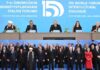
The forum registered more than 2,000 participants, including over 500 foreign guests from more than 100 countries.Prominent participants included: President Ilham Aliyev and First Lady Mehriban Aliyeva, Heads of State and Government, Ministers of Culture and Foreign Affairs, Dr. Salim M. AlMalik, Director-General of ICESCO,Ismail Ould Cheikh Ahmed Secretary-General of OIC (Organization of Islamic Cooperation), Alexandre Zouev, Acting Under-Secretary-General of UN Office of Counter-Terrorism (UNOCT), Zhang Ling, Deputy Secretary-General of CICA (Conference on Interaction and Confidence Building Measures in Asia).
Muslim Council of Elders delegation led by Judge Mohamed Abdelsalam, and Sheikh-ul-Islam Allahshukur Pashazadeh, Representatives of international organizations, intellectuals, academics, youth leaders, religious leaders, media were also present.
President Aliyev delivered a comprehensive keynote.
1. Azerbaijan as a Model of Multiculturalism:
“Azerbaijan has historically always been multicultural. We are situated between Europe and Asia, and for centuries Azerbaijan was a cultural bridge between Asia and Europe. The traditions of multiculturalism, religious and ethnic tolerance are values that our people have lived by throughout the centuries. One of the main reasons for successful and stable development is harmony in society. Representatives of all ethnic groups and religions live as one family.”
2. Efficient and Inclusive Platform:
“Over 15 years, the forum has transformed into one of the most efficient and inclusive platforms to address issues of intercultural relations. At every forum we talk about what is of concern to all of us.”
3. Liberation of Territories and International Law:
“We liberated our territories from Armenian occupation, restored justice and our dignity. We solely implemented UN Security Council resolutions adopted in 1993 which demanded immediate, unconditional and full withdrawal of Armenian troops but remained on paper for 30 years. We restored our dignity in accordance with UN Charter and Article 51, right to self-defense.”
4. Peace with Armenia:
Among negative developments are new wars next door. Among positive developments is peace with Armenia, which was initialed in Washington in August 2025 in presence of US President Donald Trump. Azerbaijan’s experience in putting an end to wars should be thoroughly examined.
5. Double Standards and Sovereignty:
“Armenia occupied almost 20% of our territory, conducted ethnic cleansing of 1 million Azerbaijanis, destroyed 65 mosques in Karabakh and was not sanctioned. This is double standard. Baseless feelings that one can dictate something to us have been and will always be met with our resistance. We never interfere in internal affairs of others. It is none of our business. What is happening in other countries is a matter of peoples of these countries.”
6. Independent Development:
“What has been achieved in 35 years of independence — celebrated this month — was achieved by the people of Azerbaijan. We came from devastation, occupation, endemic poverty towards progress. Our foreign debt is slightly more than 5% of GDP, one of the lowest in the world.”
7. Azerbaijan as Reliable Member of International Community:
“We have succeeded in presenting Azerbaijan as reliable and respected member. We have strategic partnerships with two superpowers — Comprehensive Strategic Partnership with China signed April 2025, Strategic Charter with US signed August 2025. Strategic partnership declarations with 10 EU members. Next year we will host and chair OIC Summit (almost 60 countries). In 2028 we will host Summit of European Political Community. This month we hosted CICA Summit.”
8. Risks and Identity:
“We do not have any internal risks. All potential risks are coming from beyond our boundaries. Ideological risks are as dangerous as physical risks. We must be very committed to protecting our identity, statehood, independence and lifestyle. We must always be very attentive to potential risks.”
9. Economic and Connectivity Role:
Role on global energy market as reliable supplier, and role in connectivity — “If you look at the map, it’s difficult to bypass Azerbaijan.” Goal to increase cargo transportation to 15 million tons on each route.
Deputy Minister of Culture of Azerbaijan Farid Jafarov
The theme was determined by taking into account the ongoing inequalities and conflicts between countries and various groups within society. The goal is to bring together different segments of society, as well as representatives from governments and international organizations, to discuss common issues.
The initial objective of the ‘Baku Process’ was to bring together ministers of culture from Eastern and European countries in Baku to hold consultations on cultural matters. Azerbaijan is prepared to share its experience in the restoration of cultural heritage in the liberated territories with the rest of the world.
He noted that six objectives have been established for the forum, the most significant of which is the strengthening of cross-sectoral partnerships.
At times, we observe a lack of sufficient cross-sectoral partnership between various segments of society and decision-makers. Expanding opportunities for future generations is also among the forum’s objectives.
Outcome and Discussions ! Forum program over 3 days included:
Dialogue of Religions: A Roadmap to Shared Future Culture at the Center: Secure Paths to Shared Future Museums and Heritage Sites as Spaces for Intercultural Dialogue — focused on restoration of tangible and intangible heritage in conflict-affected regions like Karabakh, Artificial Intelligence, digital literacy, protection of minors online, Azerbaijani-language AI tools — session
Baku Declaration / Final Statement
The Baku Declaration of the 7th Forum (following tradition of Baku Declaration 2008) reaffirmed: Commitment to Baku Process as leading global platform for Intercultural and interreligious dialogue as fundamental pillar of peace, highlighted the need to manage diversity with wisdom, justice and mutual respect — not diversity itself is problem but inability to manage it, pledged support for cross-sectoral partnerships between governments, international organizations, civil society, religious leaders.
Azerbaijan’s model of multiculturalism as rare and valuable experience to be studiedThe forum concluded with call to continue building bridges, not walls, in a world where “new wars emerge almost every year.”
Historical Context of the Baku Forum
Launched under the Baku Process initiated by Azerbaijan in 2008, the forum is a regular international gathering designed to foster global dialogue among civilizations:
• 1st Forum: April 7–9, 2011
• 2nd Forum: May 29 – June 1, 2013
• 3rd Forum: May 2015 (“Sharing Culture for a Shared Security”)
• 4th Forum: May 2017 (“Advancing Intercultural Dialogue: New Avenues for Human Security, Peace and Sustainable Development”)
• 5th Forum: May 2–3, 2019 (“Building dialogue into action against discrimination, inequality, and violent conflict”)
• 6th Forum: May 1–3, 2024 (“Dialogue for Peace and Global Security” at the Baku Convention Center)
• 7th Forum: October 27–29, 2026 (“Dialogue for a Shared Future”