 MIDDLE EAST MONITORING DESK ISLAMABAD BY EDITOR TAZEEN AKHTAR
The recent attacks on Iran have highlighted a significant difference in approach between the United States and two important European countries UK and Spain. While the US, along with Israel, launched strikes on Iran, the governments of UK and Spain have taken a strong stance against the attacks, refusing to allow the US to use its military bases for the operation.
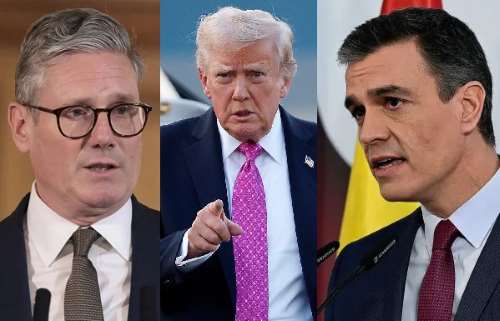
President Donald Trump criticized longtime allies Spain and the United Kingdom for their responses to the war with Iran. Spanish Prime Minister Pedro Sánchez condemned the “unilateral military action” by the US and Israel, calling it an “unjustified and dangerous military intervention” that risks creating a more hostile and uncertain environment.
“Some of the European nations have been helpful and some haven’t,” Trump told reporters in the Oval Office today while meeting with German Chancellor Friedrich Merz. “I’ve been surprised.”
“Spain has been terrible” and “unfriendly,” Trump said, adding that he’s directed Treasury Secretary Scott Bessent “to cut off all dealings with Spain.”
Spain said “we can’t use their bases,” Trump said, before threatening that he might do it anyway.
“We could use their base if we want. We could just fly in and use it. Nobody is going to tell us not to use it. But we don’t have to,” Trump said.
“Spain has absolutely nothing we need, other than great people. But they don’t have great leadership,” he said, adding, “We’re going to cut off all trade with Spain. We don’t want anything to do with Spain.”
“I’m not happy with the U.K., either,” he added, taking aim at Prime Minister Keir Starmer, saying, “This is not Winston Churchill we’re dealing with.”
The UK government, led by Prime Minister Keir Starmer, has taken a cautious stance on the attacks on Iran. Initially, Starmer refused to allow the US to use British military bases for strikes on Iran, citing concerns about international law and the need for a lawful basis for action.
However, after Iran launched missiles and drones at British interests and allies in the region, Starmer agreed to allow the US to use British bases for “specific and limited defensive purposes” to protect British lives and interests. This decision was made in line with international law and the UK’s commitment to collective self-defense.
Starmer emphasized that the UK is not joining the US and Israel in offensive action against Iran, but is taking steps to defend its allies and protect British nationals in the region. The UK has also deployed military assets, including a warship and helicopters, to Cyprus to bolster its defensive presence .
The UK government has condemned Iran’s attacks on countries in the region, including those not involved in the conflict, and is urging Iran to refrain from further strikes and return to the negotiating table.
Spain’s Foreign Minister, José Manuel Albares, reiterated that Spain would not authorize any activity that falls outside existing bilateral arrangements or the framework of international law.
In contrast, the US has taken a more aggressive stance, with President Donald Trump announcing a complete halt to trade with Spain and threatening a full embargo after Madrid refused to allow US bases to be used for operations against Iran.
Trump criticized Spain’s decision, saying “Spain has been terrible” and that the US doesn’t “want anything to do with Spain”.
The disagreement between the US and Spain reflects a broader divide within NATO, with some European countries expressing concerns about the US’s approach to Iran.
Spain’s stance is seen as a significant departure from the US’s aggressive posture, highlighting the complexities of international relations in the face of conflict.