By Nawaz Kamaal | Karachi
The Houthis have now taken control of Yemen’s western coast, in other words, the Bab al-Mandab Strait. This is almost as big a development as the fall of Aleppo, Hama, or Homs from Bashar’s hands in December 2024.
The Houthi flag is now flying over Mocha, Dhubab, and Mayyun Island, which sits right at the gateway of Bab al-Mandab.However, the southwestern city of Taiz is still under government control. Troops retreating from the western coast are regrouping there and preparing for a counterattack.
Saudi Arabia has also carried out airstrikes in various areas, including Mocha Airport. The aim seems to be that if the counteroffensive succeeds and the Houthis get encircled in the south, they won’t be able to receive any kind of support.
Taiz can be called the last stronghold. If the government forces and their allies push forward from here, they could pull off something remarkable. But if instead the Houthis gain ground and manage to capture Taiz, then the chances of the capital Aden also falling will increase significantly.
The question here is: just two days ago it felt like Sanaa was about to slip from the Houthis’ hands. How did the entire situation change so suddenly?One fact cannot be denied: the Houthis are a consolidated force. Their army numbers over 200,000. Many Arab states don’t even have armies that large. Iran applied to the Houthis the same “antidote” it considered successful for itself against every threat, so it filled their arsenals with all kinds of missiles.
In 2014 the Houthis captured Sanaa. In response, in 2015 a coalition force was formed under Saudi Arabia’s leadership. In the south, troops from Morocco, Sudan, Egypt, and the UAE along with a few other countries were deployed. The largest contingent was from Sudan, around 30,000. Command of this entire southern region was handed to the United Arab Emirates, and this was Saudi Arabia’s biggest mistake.
The UAE organized small groups along the south and western coast and in effect took control of the Gulf of Aden and Bab al-Mandab. Besides that, it also created a parallel force called the STC.
The important port of Hodeidah on the western coast was under Houthi control. In its southern area, the Tihama Resistance was a scattered regional force which the UAE organized by giving weapons and money.
In Khokha and Hays etc., this group had 10 to 15 thousand fighters.The most prominent force on the western coast is the Al-Amaliqa Brigades, which has more than 20,000 fighters from southern regions like Lahj, Al-Dhalea, and Abyan.
This group was also organized by the UAE. When Khokha and Mocha and other key areas were taken from the Houthis in 2017, the Tihama Resistance and Al-Amaliqa Brigades were at the forefront.
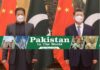
Pakistan warns Iran to rein in Houthis after Saudi strikes | Iran says it does not control Houthis
In 2018, when Brigadier General Tariq Saleh broke away from the Houthis and reached Mocha from Sanaa, he was given command of these two groups and other regional military units. The joint alliance was named the Joint Forces. The elders of Al-Amaliqa were not very happy with this decision. So during attacks on Hodeidah, these groups even ended up fighting each other.
Brigadier General Tariq Saleh’s own group, the National Resistance, was also part of this alliance. The UAE had provided it with weapons, logistics, training, and financial support.Another important group was formed under the leadership of Yemeni President Rashad Al-Alimi. It was called the Nation’s Shield Forces, with a strength of about 20,000.
This was Saudi Arabia’s own creation. Surprisingly, instead of the Ministry of Defense, its command was given to the President. This force is deployed in Hadramaut, Taiz, and Aden. At the start of last year, with Saudi support, the Nation’s Shield Forces expelled the UAE-backed STC from Mukalla, Hadramaut, and Al-Mahra.
Another key organization is the Islah Party. This is the Muslim Brotherhood branch in Yemen. It is allied with the current Aden government and has presence in Marib, Taiz, and other southern provinces. It is not a formal militant group, but a reformist party, though its supporters are part of the forces fighting the Houthis. It has played an important role, especially in Taiz.
Another significant entity is Al-Qaeda. Yemen can rightly be called Al-Qaeda’s nursery in the Middle East. After the jihad against the Soviet Union, many members settled in Yemen. This organization also has presence in southern provinces like Hadramaut. Since it has its own agenda, it doesn’t have full alignment with any side in the current conflict.
Last year when Saudi Arabia carried out airstrikes against the UAE-backed STC and Riyadh’s allied groups cut off its influence in various areas, the STC collapsed. The title of the group ended, but the people remained — local and regional. They had nowhere to go. So remnants of the STC are still present around Aden, in Shabwa and Abyan. It also has considerable support in Al-Dhalea.
Two days ago, the STC also attacked the convoy of Yemeni Defense Minister Taher Al-Aqili in Al-Dhalea.From these details you can see that facing the Houthis is a fragmented and divided Yemen. The Houthis’ rival groups are nominally under the banner of the Aden government, but internally the situation is like warlordism.
From 2015 until now, Saudi Arabia’s first mistake was handing command of southern Yemen to the UAE, as we mentioned. The second mistake was assuming that the many influential groups spread across the south were a unified army under Aden’s command, when they were not. So when a strong blow came, all the military units scattered like autumn leaves.
If Saudi Arabia had focused on unifying Al-Amaliqa Brigades, Tihama Resistance, Tariq Saleh’s National Resistance, and the government’s Nation’s Shield Forces etc. under one command, we probably wouldn’t be seeing this dire situation.
If we compare the military expertise of the UAE and Saudi Arabia on this point, the UAE’s record looks stronger. In the past it not only recaptured Mukalla from Al-Qaeda, but also successfully wrested coastal areas like Mocha from Houthi control.The most important question now is: what happens next?
If Saudi Arabia does not show skill on this chessboard, it could even lose Aden. Therefore it is crucial for Saudi Arabia to open its treasuries and arsenals to Tariq Saleh’s National Resistance, Tihama Resistance, Nation’s Shield Forces, and Al-Amaliqa Brigades stationed around Taiz. Then bring them together under one commander. If that happens, these groups can achieve wonders.
In the past too, it was these same groups that recaptured Aden, Shabwa, Mocha, Al-Dhalea, Lahj, and Abyan from the Houthis.The second option is to do in Yemen what Iran did in Syria with Pakistanis and Afghans — use fighters from Syria, Sudan, and Afghanistan. Iron will cut iron.
If there are 25-30 thousand Sudanese, 25-30 thousand Syrians, and the same number of Afghans, then not only is it possible to give the Houthis a matching fight in Yemen, but with the presence of Turkish, Saudi, and Pakistani air forces, the chances of capturing Sanaa would also brighten considerably.
Sudan and Syria are effectively in Turkey and Saudi Arabia’s pocket, while keep in mind the $50 billion deal a Saudi company signed with Afghanistan just days ago — and just think. Keep thinking.One last small question: Can Saudi Arabia, Pakistan, and Turkey deploy their troops in Yemen?
In a recent trilateral military meeting in Riyadh, it was decided that the three countries will not deploy ground troops in Yemen. The Mecca Defense Pact also requires defending Saudi Arabia from outside Yemen. At most, air forces can support ground groups.
But it is as clear as the sun that without ground intervention, changing the situation will be very difficult. So was the public announcement made to appease Iran? Or because these countries also have the option of using Syria, Sudan, and Afghanistan?The story will unfold very soon.
One thing is certain: this bone stuck in the throat must either be spit out or swallowed. There is no option to leave it stuck.