Adequate housing with a proper standard of living is a human right recognized in the 1948 Universal Declaration of Human Rights and reaffirmed in the 1966 International Covenant on Economic, Social and Cultural Rights.
Housing is a foundation of the 2030 Agenda for Sustainable Development. According to UN Habitat. It lies at the heart of SDG 11 – Sustainable Cities and Communities – and is essential for the realization of seven Sustainable Development Goals while contributing directly to another eight.
It encompasses secure tenure, access to services and infrastructure, good location and affordability, as well as housing that is habitable, accessible and culturally adequate. It enables progress in health, education, dignity, safety and social inclusion and is therefore a cornerstone of human dignity, security and well-being. In short , Housing is not just shelter.
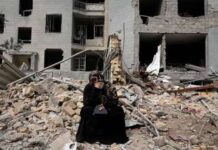
 Almost one third of the population of the world is living without such standardized housing that means the related standards are also compromised and the SDGs are hard to achieve in the prescribed time frame. UN Habitat counts more than 2.8 billion people live in conditions of housing inadequacy, including 1.1 billion in informal settlements and slums and more than 300 million experiencing homelessness. Rapid urbanization will intensify this challenge, with 68 per cent of the world’s population expected to live in cities by 2050 — an increase of 2.5 billion people.
How does it impact the world and the countries where this crisis is persisting? This is the big challenge that needs attention , deliberations , exchange of ideas, expertise , and sources to deal with it and mitigate the damage the crisis can cause to the communities.
Baku, the city of winds, the beautiful capital of the Republic of Azerbaijan is preparing to host another International event , as many have already been hosted successfully and amicably here in the previous years. The upcoming global event is the 13th session of the World Urban Forum (WUF13) from 17 to 22 May 2026 in collaboration with UN Habitat that has 170 countries as members from where 15 thousand participants are expected who have registered themselves with the org.
By examining housing as a foundation for inclusive, resilient, and sustainable urban development, WUF13 will link shelter to integrated planning, climate adaptation, and inclusive governance. Taking place at the midpoint of the New Urban Agenda, WUF13 will play a pivotal role in shaping global discussions and will contribute to the 2026 UN Secretary-General’s report on its implementation.
Azerbaijan as the Best place for the Forum
Azerbaijan, having special connection with the theme of WUF13, is the most relevant country to host this global conference. This country itself is working upon adequate housing and urban development in her newly liberated territories of Karabakh. Therefore , Azerbaijan is among few countries in the world that are already working on this sector , possess experience and are mindful of policy matters as well.
Azerbaijan & capital Baku are the most relevant country and city for this global conference presenting the urban development model in newly liberated territories and Baku as a combination of old and new city with adequate housing and modern living standards
President Ilham Aliyev has already signed an order declaring 2026 the “Year of Urban Planning and Architecture” in the Republic. The decision establishes a national framework focused on urban planning policy, architectural culture, and sustainable development. The declaration aligns with Azerbaijan’s growing engagement in international urban development agendas, including the New Urban Agenda and the United Nations Sustainable Development Goals, particularly SDG 11 on sustainable cities and communities.
House is a safe place for your family to live in and it protects them from the severity of the weather. It is a shelter that provides a satisfaction of security and living in peace. House provides your family a home and home is necessary for your affiliation with your homeland. Having no home keeps you detached from society and the state. That is why, the governments attach special importance to the availability of the houses to their citizens.
The impacts of the housing crisis reach far beyond shelter, affecting health, well-being, economic productivity and political stability at both local and global levels. They undermine progress toward sustainable and inclusive cities, posing a fundamental threat to human development and social cohesion.
Addressing this challenge demands more than building homes. It requires recognizing, protecting and fulfilling the human right to adequate housing within the internationally agreed framework, as well as the recognition of the social and environmental function of land.
The theme “Housing the world: Safe and resilient cities and communities” attracts all with equal deep interest as the house is the basic need of every human being and it is the constructing unit of every community, society, city and country. Now when the world as a whole and many countries in particular are facing climate change disasters and damages to infrastructures, resilient housing is the need of the time upon which the WUF13 will be focused.
Azerbaijan is conducting massive, rapid urban development in its liberated territories (Karabakh and Eastern Zangezur), investing over $13 billion to rebuild infrastructure and facilitate the return of 150,000 residents by 2027. Key initiatives include building smart villages, international airports, highways, and industrial parks under the “Great Return” program.
The program focuses on restoring residential areas, building 49 Family Health Centers, 39 medical centers, and over 200 educational institutions. Aghali village (Zangilan) serves as a model for “smart” rehabilitation, featuring modern housing and agricultural parks.
By late 2025, several thousand residents have returned to areas like Shusha, Fuzuli, Zangilan, and Lachin, with 70,000 already living or working in the restored areas. Between 2020 and 2026, 30.5 billion AZN is allocated for redevelopment, representing one of the largest post-conflict rebuilding efforts in the region.
This reconstruction and rehabilitation by Azerbaijan is a model for the participants of the WUF13. Azerbaijan is more than ready to share her experience and welcomes international partners as well to take part in the restoration of the communities back in their native towns in these territories.
Importance for Pakistan
According to a report by the World Bank , Pakistan’s urban areas face a looming housing crisis: 47% of households live in overcrowded housing units in informal settlements (katchi abadis) with inadequate infrastructure and services. In response to the growing housing shortage, the Government of Pakistan launched the ambitious Naya Pakistan Housing Program (NPHP) in April 2019 with the objective of providing 5 million housing units across the country in five years, prioritizing those in lower income brackets for whom affordable housing is out of reach.
This project could not be completed due to political change in the country. But Pakistan has a full fledged ministry of housing whose representatives are expected to attend WUF13 and implement the recommendations in Pakistan.
Not only the gov sector but the private sector too must participate in this conference. In Pakistan the housing sector in the private sector is worth more than the GDP of many countries of the world. Every town and city of Pakistan has a new city in the suburbs with new design and planning. Many housing companies of Pakistan have earned international repute in urban development. Their officials are supposed to benefit from the ideas and research shared by international experts in WUF13.
AZ PK Cooperation in Urban Development
Azerbaijan and Pakistan are already partners in the many projects related to urban development and living near adequate facilities as is the theme of WUF13. For example , Azerbaijan is supporting beautification and restoration of three key places of Islamabad, including Melody Food Street, Srinagar Highway and Saidpur Village.
Another remarkable joint venture, that is related to urban planning and facilitation for the citizens. It is called Asan Khidmat Center serving the citizens in Islamabad. It was inaugurated by Prime Minister Shehbaz Sharif in January 2026. It is a one-stop digital hub offering over 60 public services—such as NADRA, Passport, police clearance, and utility bill payments—under one roof. , it aims to reduce waiting times from hours to minutes using a tech-enabled, Azerbaijani-inspired model.
Objectives of WUF13
The conference will explore how governments at all levels, working with civil society and the private sector, can accelerate action to close the global housing gap and ensure that adequate, affordable housing becomes a reality for all. How the informal settlements and slums can be transformed into proper homes while community-led models, livelihood-linked strategies and financing tools will be discussed that can improve services, strengthen resilience and support more inclusive and sustainable neighborhoods.
This dialogue will find out how housing systems can reduce emissions while protecting people from climate impacts, and how cities can expand housing without locking in future risks. It will consider low-carbon construction, nature-based solutions, and approaches that safeguard the rights and needs of vulnerable communities. The session will highlight strategies that bring climate action and housing policy together to advance resilience, equity and sustainability.
Questions that need Answers
The dialogue will address questions, What fundamental shifts are required in upgrading strategies to keep pace with urbanization trends while guaranteeing people’s rights, leveraging informality (including informal livelihoods) instead of penalizing it, and responding to the climate crisis during a time of digital transformation?
How can the formation of new slums be prevented with the provision of sufficient adequate and affordable housing? What specific hybrid governance and planning frameworks are necessary to effectively articulate residents’ and communities’ efforts (informal economy and citizen data and participation) with local governments and housing authorities (formal planning and housing policies)?
How can we sustainably finance solutions that offer inclusive, higher quality accessible services and infrastructure in informal settlements?
( Tazeen Akhtar is Islamabad based Editor of International media organization www.pakistanintheworld.pk having work on Central Asia , South Caucasus for about two decades. He can be reached at tazeen303@gmail.com )