Turan Rzayev – Analyst of the Center for International Relations and Diplomatic Studies
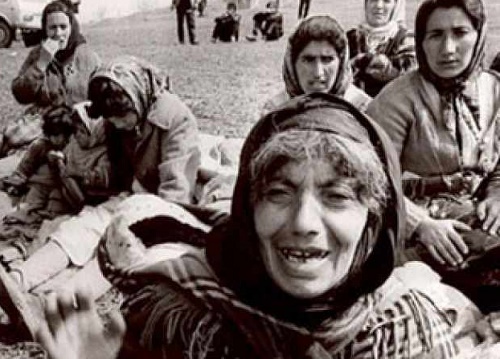
Today is the 30th anniversary of the Agdaban tragedy, one of the many tragedies committed by Armenia against the Azerbaijani people in the 20th century. The Agdaban tragedy committed by Armenian armed forces a year before the occupation of the Kalbajar region is one of the bloodiest pages of Armenia’s aggression against Azerbaijan.
On the night of April 7-8, 1992, Armenian armed forces, with the help of separatist Armenian gangs in former Nagorno-Karabakh, attacked the villages of Agdaban and Chaygovushan. Unaware of the attack, the villagers scattered barefoot in the snow-covered forests and mountains. The destruction of a small group defending the villages by the Armenians left the civilian population defenseless. Taking advantage of this, the Armenian armed forces carried out a massacre of the civilian population.
Armenian militants completely burned Agdaban village of 130 houses in Kalbajar region and wiped it off the face of the earth. During the incident, 779 civilians were tortured, 67 people were killed, 8 people aged 90-100, 2 children and 7 women were burnt alive. I must also say that the village of Agdaban was twice genocide by Armenian militants during the First Karabakh War.
On March 27, 1993, when Armenian separatists attacked the Kalbajar region, the occupation resumed in the village of Agdaban. Armenian militants attacked the village again and destroyed it. Thus, they committed the second tragedy in the village of Agdaban. The second occupation of Agdaba meant the complete occupation of Kalbajar by Armenia. After that, Kalbajar was besieged on all sides and completely occupied by Armenian armed forces until April 2, 1993.
Armenians wanted to occupy Agdaba not only because it was a strategic place, but also because its literary environment was rich in history and architecture. Armenia has violated the provisions of the Hague Convention for the Protection of Cultural Property in the Event of Military Conflict and the Paris Convention on the Illicit Traffic in Cultural Property and has plundered our cultural property in all our occupied territories.
During the last Karabakh war in the village of Agdaban, along with the occupation of the territory and the genocide of the population, all our material, cultural and national treasures were looted and destroyed. Giving the first legal and political assessment to this tragedy, the great leader Heydar Aliyev called the events in Agdaban the greatest crime against humanity, describing it as a shame in the name of all humanity.
Due to the specificity and nature of the Agdaban tragedy, it fully complies with the provisions of the Convention on the Prevention and Punishment of the Crime of Genocide, adopted by the United Nations General Assembly on December 9, 1948.
Therefore, this tragedy is an act of genocide under international law. This massacre against the civilian population of the village of Agdaban should be recognized by the world community as a crime of genocide.

 Turan Rzayev – Analyst of the Center for International Relations and Diplomatic Studies