 Sahabur R. Shihab
An undergraduate student Department of International Relations
Jahangirnagar University, Dhaka, Bangladesh
Some tragedies do not happen in a single dramatic moment. They unfold over years through deliberate neglect, strategic manoeuvring, and the quiet arrogance of a dominant power that was never truly committed to genuine partnership. That is the story of SAARC. Its decline cannot be understood without examining New Delhi’s dominant role in shaping regional politics.
Let us say what is often whispered in diplomatic circles but rarely expressed openly. The South Asian Association for Regional Cooperation, or SAARC, did not fail because of geography, poverty, or the complexity of regional politics. It lost its relevance because New Delhi never fully accepted that a successful multilateral organisation depends on equality among its members rather than dominance by one state.
A Dream Born in Dhaka
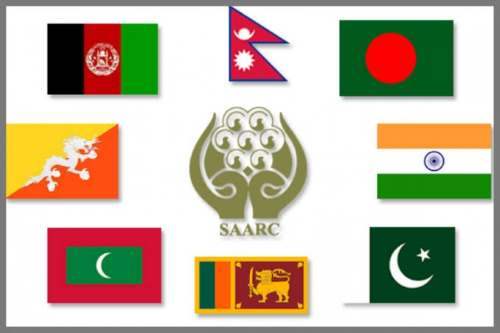
There is a historical irony behind the creation of SAARC. The idea of South Asian regional cooperation did not originate in India. It was proposed by Bangladeshi President Ziaur Rahman, who travelled across South Asia during the late 1970s to build support for a regional organisation. When SAARC was officially established in Dhaka on 8 December 1985, it carried genuine hope. Eight countries representing nearly one quarter of humanity had agreed to pursue a common future through dialogue and cooperation.
In its early years, SAARC made encouraging progress. It launched regional programmes in tourism, civil aviation, agriculture, health, science and technology, and disaster management. Institutions such as the SAARC Development Fund, the SAARC Disaster Management Centre, and the SAARC Food Bank were created to strengthen regional cooperation. The organisation also introduced the South Asian Free Trade Area (SAFTA) to promote greater economic integration.
These achievements, although limited, demonstrated what South Asia could accomplish when its members worked together in good faith. Unfortunately, that momentum gradually faded as India’s commitment to genuine multilateral cooperation weakened and bilateral strategic interests increasingly took priority over regional consensus.
The Hegemony Problem
The smaller member states recognised this challenge from the very beginning. The wide gap between India and the other members in terms of geography, economic strength, and military capability created deep concerns across the region. Countries such as Nepal and Sri Lanka frequently expressed unease over what they viewed as India’s interference in the affairs of its neighbours. This growing lack of trust weakened SAARC’s effectiveness from the outset.
This concern was not without reason. It was shaped by India’s own foreign policy thinking. During Indira Gandhi’s leadership, South Asia was widely viewed in New Delhi as a region where India enjoyed a special sphere of influence. Under this strategic outlook, India reserved the right to intervene when it believed its regional interests were affected. The deployment of the Indian Peace Keeping Force (IPKF) in Sri Lanka during the civil war reflected this approach and remains a sensitive issue in Sri Lankan political memory.
In essence, many smaller states believed that India was less interested in building an equal regional partnership than in maintaining a neighbourhood shaped by its own strategic preferences.
“Prospects and Challenges of Regional Cooperation in South Asia: Role of SAARC”
The 2016 Moment That Exposed Everything
Any remaining uncertainty about New Delhi’s approach largely disappeared in 2016. Following the Uri attack, India decided to boycott the 19th SAARC Summit, which was scheduled to be held in Islamabad in November that year. It also persuaded Afghanistan, Bangladesh, and Bhutan not to participate, leading to the cancellation of the summit.
The consequences were profound. A regional organisation created to promote cooperation beyond bilateral disputes became paralysed because one member chose political isolation over regional engagement. Since the 18th SAARC Summit in Kathmandu in 2014, no leaders’ summit has taken place, leaving the organisation largely inactive.
Following this, New Delhi increasingly shifted its attention towards BIMSTEC, a regional framework that includes Bangladesh, India, Myanmar, Sri Lanka, and Thailand, while excluding Pakistan. To many observers, this suggested that India had become more comfortable with regional arrangements where it exercised greater influence rather than strengthening an inclusive SAARC.
The Cost Paid by Everyone Else
The region’s smaller and more vulnerable economies have paid the highest price for this prolonged paralysis. South Asia remains one of the least economically integrated regions in the world. Intra regional trade accounts for only 5 percent of total trade. By comparison, it stands at around 60 percent in Europe, 50 percent in East Asia, and 25 percent in ASEAN. The average cost of trade within South Asia is also about 20 percent higher than in ASEAN.
One statistic is particularly striking. It is 15 to 20 percent cheaper for an Indian company to trade with Brazil or Germany than with Bangladesh. This is not simply an economic anomaly. It reflects the failure of a regional framework that was never allowed to function to its full potential.
According to the World Bank, South Asian countries could increase their intra regional trade to nearly $67 billion if major trade barriers were reduced. The gap represents lost opportunities for economic growth, employment, investment, and poverty reduction across the region.
China’s Expanding Regional Role
In geopolitics, strategic vacuums rarely remain empty for long. As SAARC became increasingly inactive, China steadily expanded its economic and diplomatic engagement with countries such as Pakistan, Bangladesh, Nepal, Bhutan, and Sri Lanka. The trilateral meeting between China, Pakistan, and Bangladesh in Kunming in June 2025 reflected the emergence of a new regional framework centred on connectivity and infrastructure.
During the 2025 India Pakistan crisis, one of the most serious confrontations between the two nuclear armed neighbours in recent years, SAARC remained completely silent. There was no statement, no call for restraint, and no attempt at even symbolic mediation. An organisation that was created to promote regional peace and cooperation appeared unable to respond to one of South Asia’s most significant security crises.
This is the long term consequence of India’s approach toward regional cooperation. The organisation that New Delhi allowed to drift into paralysis is increasingly being overshadowed by alternative regional initiatives in which China plays a growing role.
What Bangladesh, Nepal, Sri Lanka and Pakistan Know
From Dhaka to Kathmandu, from Colombo to Islamabad, the view from South Asia’s smaller capitals has remained remarkably consistent for years. These countries wanted SAARC to succeed because they viewed regional cooperation as essential for their collective development.
Bangladesh’s interim government has actively supported the revival of SAARC since August 2024, launching diplomatic efforts to bring the organisation back to life. Nepal has repeatedly called for the resumption of SAARC summits, while Sri Lanka’s economic crisis highlighted how valuable a functioning regional institution could have been during times of hardship.
These countries have not abandoned the vision of SAARC. Rather, they have watched the organisation become increasingly inactive as New Delhi’s bilateral political priorities took precedence over regional cooperation.
The Way Forward
SAARC remains capable of revival, but not under the current approach adopted by India. Several important reforms are necessary.
First, the consensus based decision making system should be reformed so that a single member state cannot indefinitely prevent regional initiatives from moving forward.
Second, economic cooperation must be separated from political disputes. ASEAN has demonstrated for decades that countries can expand trade and regional integration even when political disagreements continue.
Third, India must move beyond simply announcing its Neighbourhood First policy and begin implementing it in practice by treating its neighbours as equal partners rather than subordinate states.
Most importantly, New Delhi must recognise that the real choice is no longer between an India dominated SAARC and no SAARC at all. The choice is between a genuinely multilateral SAARC and the continued rise of alternative regional arrangements in which China is playing an increasingly influential role.
Finally, South Asia is home to more than two billion people, yet intra regional trade remains at only 5 percent. The region’s most important multilateral organisation has remained inactive for more than a decade. The country with the greatest capacity to revive regional cooperation has instead spent much of that time pursuing policies that have weakened SAARC’s relevance.
The decline of SAARC was not inevitable. It was the result of political choices. Unless those choices are honestly acknowledged and regional cooperation is placed above regional dominance, any meaningful revival of SAARC will remain difficult.
Bio
Sahabur R. Shihab is a final year undergraduate student in the Department of International Relations at Jahangirnagar University, Bangladesh. His research interests include South Asian politics, regional cooperation, foreign policy, and geopolitics.