 ISLAMABAD – July 6, 2026 – A first ever meeting at the Parliament house of Pakistan has examined the pace of work on foreign-funded development projects regarding cost overruns, implementation delays, commitment charges, procurement issues, and accountability mechanisms.
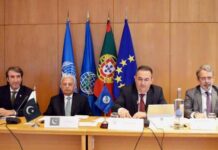
A meeting of the Sub-Committee of the Senate Standing Committee on Economic Affairs was held today at Parliament House, Islamabad, under the convenership of Senator Syed Waqar Mehdi. The meeting was attended by Senator Rubina Khalid, senior officials of the Ministry of Economic Affairs, including the Additional Secretary and Senior Joint Secretary, representatives from the Governments of Balochistan and Punjab, Additional Chief Secretary Balochistan, Project Directors, Director General Planning & Development, officials of the Irrigation Department, Punjab Management Directorate, and representatives of other executing agencies implementing foreign-funded development projects.
The Sub-Committee held its first meeting to examine cost overruns, implementation delays, commitment charges, procurement issues, and accountability mechanisms relating to foreign-funded development projects.
At the outset, the Convener observed that today’s proceedings would primarily focus on projects being implemented in Balochistan and Punjab, while emphasizing the Committee’s commitment to strengthening parliamentary oversight of development initiatives financed through international development partners.
The Convener sought details regarding the financing structure of projects in Balochistan and questioned whether they were being executed through grants or loans. Officials from the Ministry of Economic Affairs informed the Committee that most major ongoing projects were financed through loans; however, complete province-wise records were not immediately available. Expressing concern, the Convener stressed that such information should always remain readily available with the Ministry for effective parliamentary oversight.
Briefing the Committee, representatives from the Government of Balochistan informed members that approximately USD 680 million had been allocated for development projects in the province, including around Rs.186 billion, of which nearly 95 percent comprised grant assistance. The Committee was informed that projects were being implemented across eleven sectors, with education, water resources and livelihood programmes constituting the largest share of investments.
Officials explained that although several projects had been initiated between 2015 and 2018, many remained incomplete despite their normal completion period ranging between three and four years. While education sector projects funded by the World Bank were progressing satisfactorily, significant delays had occurred in irrigation, water resources, agriculture and livelihood programmes, including the Gwadar-Lasbela Livelihood Programme. The Committee was informed that these initiatives focused on community mobilization, strengthening local organizations, improving fisheries, enhancing value addition and increasing livelihood opportunities.
The Committee was further informed that delayed projects attracted commitment charges of 0.25 percent, resulting in substantial financial implications alongside cost escalation. Officials explained that procurement-related delays, formation of procurement committees, publication of advertisements and procedural requirements associated with foreign-funded projects had collectively contributed to implementation delays. Out of 45 foreign-funded projects initiated since 2015, 14 experienced delays, four had been completed, while the remaining projects continued under implementation.
During the discussion, the Convener elaborated on the project approval process, explaining that development projects financed by international partners pass through multiple stages, including obtaining No Objection Letters (NOLs) from donor agencies such as the World Bank before execution begins. He observed that considerable delays often emerged during the issuance of NOLs, while litigation and court stay orders also significantly affected project timelines.
Responding to a query by Senator Rubina Khalid regarding whether delays were primarily attributable to the World Bank, the Senior Joint Secretary, Ministry of Economic Affairs, clarified that although procedural discussions with development partners occurred during negotiations, implementation bottlenecks generally arose after loan agreements were signed and were mostly linked to executing agencies, procurement complications and litigation rather than donor institutions themselves.
Senator Rubina Khalid emphasized that attributing delays solely to the World Bank would not present an accurate picture. She observed that implementation shortcomings largely originated from domestic institutions and stressed that underlying causes should be correctly identified so that corrective measures could be undertaken to facilitate the timely completion of projects, particularly in Balochistan.
The Additional Chief Secretary, Balochistan, informed the Committee that several delays had occurred due to administrative procedures undertaken after annual development approvals, while citing examples where revised project costs had substantially increased. He informed the Committee that one Omani Grant-funded project had witnessed a 273 percent revision, with the total project cost increasing to approximately Rs.2.1 billion. The official explained that the project involved construction of a 24-kilometre strategic road, where repeated interruptions owing to law and order challenges had contributed significantly to delays and escalation in costs. He further informed members that discussions with the donor agency regarding additional financing were underway and that the revised funds had not yet been disbursed.
The Convener questioned the substantial increase in project costs and emphasized that such revisions required complete transparency and proper endorsement by all relevant authorities. The Additional Chief Secretary informed the Committee that, where necessary, the provincial government initially arranged bridge financing from its own resources to prevent further implementation delays until donor funds became available.
Expressing concern over the prolonged delay, Senator Rubina Khalid stressed that projects in Gwadar deserved priority considering the strategic importance of the region and Pakistan’s broader connectivity objectives under national development initiatives. She observed that such projects should be completed without unnecessary procedural delays.
The Committee subsequently reviewed the progress of foreign-funded water resources and irrigation projects in Balochistan. Officials informed the Committee that one project, originally scheduled for completion in June 2026, had experienced delays ranging from six to twelve months, while another major project had witnessed substantial cost escalation due to redesign following the devastating floods of 2022.
The Additional Chief Secretary, Balochistan, informed the Committee that one of the province’s largest projects had expanded from approximately Rs.16 billion to nearly Rs.65 billion following extensive redesign necessitated by flood damage. He explained that the project, which was approximately 74 percent complete, comprised both National Highway Authority (NHA) and Irrigation Department components. The redesign was based on technical assessments and reports prepared after the floods, which significantly increased implementation costs. He cautioned that recurring floods and implementation delays inevitably resulted in additional financial burdens, including higher commitment charges.
Officials further informed the Committee that nine major projects were currently under implementation, with overall physical progress standing at approximately 52 percent. They stated that dam construction constituted the principal component of these projects and remained the Government’s highest priority.
During the briefing, the Convener inquired whether regular field inspections were being undertaken and whether inspection reports identifying deficiencies and corrective measures were maintained. Officials informed the Committee that inspections were carried out periodically; however, monitoring reports were generally not maintained in the format sought by the Committee.
Expressing dissatisfaction, the Convener directed all executing agencies to submit detailed inspection reports indicating the dates of visits, observations recorded, deficiencies identified, corrective measures recommended and reasons for delays. He emphasized that an effective monitoring mechanism was essential to ensure transparency, quality assurance and accountability in the execution of public development projects.
Senator Rubina Khalid stressed that parliamentary oversight could not rely solely on paperwork submitted by departments. She observed that field realities often differed considerably from official reports and emphasized that officers responsible for monitoring projects must personally visit project sites and submit factual assessments based on physical inspections.
She further observed that effective monitoring could have prevented many of the implementation issues currently confronting foreign-funded projects. Senator Rubina Khalid recommended that independent reports from both the Chief Secretary and the Planning and Development Department should accompany departmental monitoring reports to ensure impartial assessment of project performance.
The Additional Secretary, Ministry of Economic Affairs, informed the Committee that joint review meetings with provincial authorities were conducted periodically; however, Senator Rubina Khalid reiterated that documentary submissions alone could not guarantee transparency. She strongly recommended the introduction of independent third-party evaluations for all major foreign-funded projects, observing that external evaluation would eliminate conflicts of interest and significantly improve accountability.
The Senator further remarked that delayed implementation not only increased project costs but also imposed additional financial liabilities upon the Government in the form of commitment charges and mark-up payments. She emphasized that with modern digital technologies readily available, executing agencies should submit photographic and video evidence demonstrating actual progress on project sites rather than relying exclusively on written reports.
Supporting these observations, the Convener directed all executing agencies to furnish complete site inspection reports, supported by documentary evidence, within one week. He observed that the Committee intended to assess both the quality and quantity of work executed under foreign-funded projects and ensure that public resources were being utilized efficiently.
The Committee also discussed quality control mechanisms relating to construction materials used in infrastructure projects. During the briefing, officials informed the Committee that contractors were required to procure bitumen from approved domestic refineries and maintain proper documentation regarding procurement and material receipt.
The Convener, however, observed that allegations had repeatedly surfaced regarding the unauthorized use of Iranian bitumen, which was comparatively cheaper than approved alternatives. He emphasized that laboratory testing of construction materials should be undertaken regularly to verify compliance with prescribed standards and warned that the use of substandard materials could seriously compromise the quality and durability of public infrastructure.
Senator Rubina Khalid remarked that if inferior construction materials were used, the objectives of development financing would remain unfulfilled despite substantial public expenditure. She reiterated that independent third-party evaluation remained the most effective mechanism to ensure transparency, accountability and quality assurance in foreign-funded projects.
The Committee also reviewed the Federal Emergency Flood Assistance Programme, particularly its irrigation and agriculture components. Officials informed members that the programme included both federal and provincial components and formed an important part of post-flood rehabilitation efforts.
Reaffirming the Committee’s commitment to the development of Balochistan, Senator Rubina Khalid stated that the province remained a national priority and assured provincial authorities that Parliament would continue supporting measures aimed at expediting development projects and resolving implementation bottlenecks.
Concluding deliberations on Balochistan projects, the Convener directed the provincial government to submit, within one week, comprehensive reports on all ongoing foreign-funded projects. These reports were directed to include project-wise implementation status, inspection findings, donor observations, causes of delay, cost revisions, monitoring reports, and timelines for completion.
The Convener further assured provincial officials that the Committee remained available to facilitate resolution of issues requiring intervention at the federal level and encouraged departments to formally communicate any challenges requiring parliamentary support.
Senator Rubina Khalid further directed that future reports must clearly specify responsibility for delays, indicate whether disciplinary action had been initiated against officials responsible for unnecessary delays, and comprehensively explain the causes of project revisions and cost escalations to strengthen institutional accountability.
Following deliberations on Balochistan, the Sub-Committee reviewed the status of foreign-funded development projects in Punjab.
Briefing the Committee, officials from the Government of Punjab informed members that the province was currently implementing 26 foreign-funded projects with an overall loan portfolio amounting to approximately US$3.96 billion. The Committee was informed that out of the 26 active projects, ten had experienced implementation delays, four projects had been completed, while the remaining projects were progressing at different stages of execution.
Officials stated that procurement-related issues remained one of the principal reasons for delays, particularly in projects financed under bilateral arrangements. Referring to a water resources project funded through Danish assistance, officials explained that the financing arrangement required specific procurement procedures, including international tendering, technical evaluations and approvals by relevant authorities before commencement of physical works. The project underwent rebidding after initial procurement, resulting in delays before implementation commenced. Members were informed that construction had now begun and was expected to be completed by November 2028.
The Committee was further briefed on a major French-funded water resources project in Faisalabad, aimed at improving canal water management and ensuring safe water availability for surrounding communities. Officials informed the Committee that land acquisition delays had significantly affected implementation. They further stated that laboratories would be established under the project to ensure that canal water met national quality standards, particularly in rural areas where communities depended on canals for drinking and domestic use.
The Convener questioned why repeated procurement delays and revisions had occurred and sought to identify the officials responsible for the setbacks. He observed that whenever projects experienced prolonged delays, accountability should be clearly established so that corrective measures could be implemented and public confidence restored.
Officials explained that procurement decisions had been reviewed by an official committee after technical evaluations and that the same procurement procedure had subsequently been repeated in accordance with the requirements of the bilateral financing agreement. The Convener, however, directed that the Committee be furnished with complete reports identifying the causes of delays, procurement revisions and the officials responsible for decision-making at every stage.
The Committee then received a comprehensive briefing on the UNESCO-supported Lahore Fort Conservation and Heritage Restoration Project. Representatives informed members that the project was being implemented in collaboration with the Aga Khan Trust for Culture and focused on the restoration of historically significant structures within the Lahore Fort and the Walled City.
Officials informed the Committee that the conservation programme covered more than 30 heritage structures, six of which had already been restored through the implementing partner’s own resources. They stated that the project included restoration of the Sheesh Mahal, reopening of previously inaccessible underground chambers, development of museum facilities, conservation of historical basements, restoration of Mughal-era structures and preservation of valuable archaeological discoveries made during excavations.
The Committee was informed that restoration work relied entirely on traditional conservation methods and customized materials to preserve historical authenticity. Officials stated that excavations had uncovered centuries-old artefacts, including Chinese ceramics and other archaeological remains, providing fresh historical evidence regarding Lahore’s cultural and trade links during the Mughal period. They further informed the Committee that the project was expected to be completed by December 2029, subject to any additional archaeological discoveries requiring preservation.
Officials highlighted that restoration activities had already contributed to a substantial increase in tourism, with annual visitors rising from approximately two million to five million during the past five years. They informed the Committee that restoration of monuments such as Naulakha Pavilion, historical gateways, museums and heritage buildings would further strengthen Pakistan’s cultural tourism sector while generating employment and economic opportunities.
During the discussion, the Convener raised concerns regarding the shortage of parking facilities for tourists visiting the Lahore Fort and surrounding heritage sites. Officials informed the Committee that a proposal for underground parking had not been approved; however, alternative parking facilities had been established approximately 1.5 kilometres away, with shuttle services planned to facilitate visitors.
The Convener suggested introducing an efficient parking management system to improve visitor convenience and ensure greater turnover of available parking spaces. He also emphasized the importance of proper traffic management, directional signage and surveillance arrangements to improve the overall visitor experience.
Representatives of the heritage project requested that conservation initiatives should not be assessed using conventional infrastructure benchmarks, explaining that archaeological restoration required extensive historical research, meticulous documentation and scientific conservation techniques, making implementation considerably more time-consuming than ordinary construction projects.
The Convener agreed that heritage conservation demanded a specialized approach and directed that information boards be installed at every restored site explaining its historical significance so that younger generations could better understand Pakistan’s cultural heritage. He also suggested that short, easy-to-understand descriptions should accompany restored monuments to enhance public awareness.
During the discussion, the Convener particularly highlighted the importance of restoring additional heritage buildings, including the historic residence associated with Sir Ganga Ram, and assured the implementing agencies that the Senate would extend all possible assistance in addressing issues requiring federal intervention, particularly those relating to UNESCO approvals.
Officials informed the Committee that several components of the conservation programme required formal clearance from UNESCO before additional areas could be opened to the public. They noted that the project represented one of the largest investments ever made in museum development and heritage preservation in Pakistan and emphasized the importance of continued federal support in resolving outstanding procedural matters.
The Committee was further informed that health sector projects financed through foreign assistance were progressing satisfactorily without significant delays. Officials stated that work relating to the establishment of modern nursing infrastructure and nursing colleges was advancing according to schedule, with planning documentation currently under preparation.
Reviewing the Jalalpur Irrigation Project, the Convener questioned why land acquisition issues had not been resolved before commencement of implementation. Officials explained that acquisition of land from various public entities, including the Pakistan Railways, together with utility shifting and other technical complications, had caused unavoidable delays. They informed the Committee that reforms introduced within the Planning and Development Department had significantly reduced approval timelines from nearly two years to approximately three months.
Concluding deliberations on Punjab, the Convener directed all executing agencies and project directors to submit, within one week, comprehensive reports covering all ongoing projects, including field inspection reports, implementation progress, monitoring observations, reasons for delays, procurement issues, land acquisition status and departmental recommendations. He observed that unnecessary delays resulting from negligence must be distinguished from genuine technical or legal challenges and stressed that accountability should be fixed wherever public resources had been adversely affected.
Officials from the Ministry of Economic Affairs informed the Committee that monthly coordination meetings and a Smart Monitoring Dashboard were being used to track project milestones and implementation progress. The Convener welcomed the initiative but emphasized that digital monitoring must be complemented by effective field verification to ensure transparency and timely completion of projects.
In his concluding remarks, the Convener reaffirmed the Committee’s resolve to strengthen parliamentary oversight of all foreign-funded development projects. He stated that the Committee’s objective was not merely to identify shortcomings but to facilitate timely completion of projects, improve implementation mechanisms, enhance accountability and ensure that public resources and international development assistance delivered maximum benefit to the people of Pakistan.
He further assured the representatives of the heritage conservation programme that the Committee would extend all possible support in facilitating matters requiring coordination with UNESCO and other federal authorities.