Report: Tazeen Akhtar | Islamabad
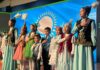
In a historic cultural homecoming after a gap of 30 years, a 15-member Bangladeshi cultural delegation arrived in Islamabad for a four-day official visit aimed at reviving and strengthening artistic cooperation between Pakistan and Bangladesh.
The delegation was warmly received at Islamabad International Airport on 16th October 2026 by Muhammad Ayoub Jamali, Director General, Pakistan National Council of the Arts (PNCA) along with senior officials of the National Heritage and Culture Division, Government of Pakistan.
The visit was arranged at the invitation of the National Heritage and Culture Division, in line with Prime Minister Muhammad Shehbaz Sharif’s decision to promote cultural exchanges between the two brotherly countries. A formal Cultural Exchange Programme was signed during Deputy Prime Minister & Foreign Minister Senator Ishaq Dar’s visit to Bangladesh last year, which has now paved way for this landmark visit.
Delegation Composition ; Headed by Mr. Md. Mizanur Rahman, Joint Secretary, Ministry of Cultural Affairs, Government of Bangladesh, the delegation comprises: Musicians, dancers, vocal artists and cultural representatives, Senior officials including Additional Secretary and Deputy Secretary from Ministry of Cultural Affairs.
Renowned Bangladeshi painter and printmaker Md. Abdus Satter, who joined with his solo exhibition. Most members were visiting Pakistan for the first time and expressed delight at Pakistan’s hospitality.
 Performances at Pakistan National Council of Arts PNCA – 17 October: The Grand Cultural Evening
The first major performance was held on 17th October at PNCA Auditorium, Islamabad.The programme began with the national anthems of Pakistan and Bangladesh, symbolizing mutual respect and friendship.
The nearly two-hour colourful showcase featured:Lalon Geeti, Nazrul Sangeet, Baul songs and contemporary Bangladeshi compositions, Solo vocal performances by Piyal Hasan, Md Isha Khan, Ethun Babu, Mohammad Jamal Uddin Naser and Naznin Choudhury / Nazneen Akter Moushumi Chowdhury, Group dances by Farhana Chowdhury, Abdur Rashid Swapan, Mehbooba Mahnoor Chandni and Golam Mostafa, Musical accompaniment by Raju Ahmed Chowdhury (tabla), Md Rahat Ahmed Hasan (synthesizer), Md Iqbal Hossain Khondaker (guitar) and Shourov Saha (octapad)
On the sidelines, Federal Minister for National Heritage and Culture, Aurangzeb Khan Khichi inaugurated a two-day solo art exhibition of Md. Abdus Satter at PNCA’s photography gallery. Prior to that, Satter delivered a keynote lecture on Oriental art techniques to nearly 100 young Pakistani artists and art critics at PNCA lecture hall.
Welcome Statements: DG PNCA Muhammad Ayoub Jamali said: “Culture is a bridge between nations. This exchange creates opportunities for artists and cultural institutions to share experiences, inspire young performers and preserve traditional artistic practices. It reflects Pakistan’s commitment to strengthening friendly relations with Bangladesh through promotion of arts and performing traditions.”
Bangladesh High Commissioner to Pakistan H.E. Md. Iqbal Hussain Khan highlighted the deep historical and cultural connections between the two countries reflected in music, literature and shared regional traditions. He expressed gratitude to Government and people of Pakistan for warmly welcoming the artists and emphasized importance of cultural initiatives in strengthening relations between two peoples.
Federal Minister Aurangzeb Khan Khichi observed that such exchanges will open new avenues for cultural exchanges, artistic collaboration and institutional cooperation.
The delegation also toured Faisal Mosque, Department of Archaeology and Museums (DOAM) and other cultural landmarks, expressing admiration for Islamabad’s beauty.
 Performances at Lok Virsa – 18 October: Celebrating Shared Roots
The second official performance was held on 18th October at Lok Virsa, Shakarparian, the national institute of folk heritage.Lok Virsa, which preserves Pakistan’s diverse folk traditions, provided a perfect backdrop for Bangladeshi folk and Sufi traditions.
The troupe presented Baul, Bhatiali, Bhawaiya and Jari songs and traditional Manipuri and tribal dances, resonating with Pakistani folk forms.
Executive Director of Lok Virsa, Mr. Waqas Saleem welcomed the delegation and stated: “Pakistan and Bangladesh share longstanding cultural affinities in jute crafts, folk music, Sufi poetry and oral traditions. This performance at Lok Virsa is a reminder that our folk roots are intertwined.”
Pakistani folk artists also presented reciprocal performances to honour the visiting troupe, leading to joint jam sessions and exchange of musical instruments and techniques.
Special Evening at Amanibagh, Pathfinders – People-to-People Diplomacy
Beyond official venues, the delegation was hosted for an exclusive cultural evening at Amanibagh at Pathfinders Group in Islamabad by Ikram Sehgal, known for promoting Track-II and cultural diplomacy.
The evening hosted by Pakistan’s leading business and cultural promoters, including office bearers of Pathfinders, was attended by diplomats, intellectuals, media and civil society. The Bangladeshi artists performed in a more intimate Mehfil setting, engaging directly with Pakistani artists, students and families.
Ikram Sehgal welcomed the delegation saying:”We welcome our Bangladeshi brothers and sisters not as guests but as family returning after a long time. Amanibagh is built on the philosophy of Aman – peace. And nothing brings peace better than music and art. The fragrance of jute is back in Islamabad’s air, reminding us that what was once divided by politics can be reunited by culture.”
Delegation head Md. Mizanur Rahman responded: “We have come with love, with songs of Lalon and Nazrul. We see the same love in return. This is the true cultural diplomacy.”
Significance: Why This Visit Matters After 30 Years:
This is the first official Bangladeshi cultural troupe to perform in Islamabad after three decades, marking a decisive thaw and revival.
Cultural Diplomacy as State Policy: Both governments are using culture as soft power to rebuild people-to-people contacts, youth engagement and institutional cooperation between PNCA, Lok Virsa and Bangladesh Shilpakala Academy.
Shared Heritage: From language to Baul tradition, from Nakshi Kantha to jute crafts, the visit underscored shared heritage that predates political history.
Future Road: Officials announced that a Pakistani cultural troupe will visit Dhaka next, along with joint art exhibitions, film screenings, literary exchanges and training workshops.
As one cultural commentator noted, “Sometimes a nation needs no grand diplomatic speech. Sometimes a song can open a door that official language has kept closed.”
The Bangladeshi troupe left Islamabad on 19th October with promises of a new cultural chapter, leaving audiences enthralled and a message that cultural bridges, once restored, can sustain the strongest of diplomatic relations.