 Dr. Hayam Qayyoum
Snr. Assistant Professor, Department of Media Studies Bahria University Islamabad. drhqpk@gmail.com
 The Precambrian 3.6 billion years old region, tectonically formed five cratons: Kaapvaal, Zimbabwe, Tanzania, Congo, and West Africa, with 3000 ethnic groups speaking 2100 different languages, is a land of opportunities for the modern world. The equator divides it equally into two halves, comprising eight main regions: the Sahara, the Sahel, the Ethiopian Highlands, the savannas, the Swahili Coast, the rainforests, the African Great Lakes, and Southern Africa.
As the land of opportunity, Africa is located in the coastal zones on the west by the Atlantic Ocean, on the north by the Mediterranean Sea, on the east by the Red Sea and the Indian Ocean, and on the south by the mingling waters of the Atlantic and Indian oceans.
The coastal area plays a major role in the trading business. Therefore, its ports’ vital roles cannot be overlooked because six African countries connect 38 coasts of the African continent.
The Port of Durban in South Africa, the main gateway for global trade, is the busiest port that connects South Africa with the whole world.
The other port is in Kenya, at the port of Mombasa, which also serves landlocked Uganda and Rwanda.
The Port of Lagos in Nigeria is the most populous among all ports.
At the Horn of Africa, there is Djibouti, at the eastern side, to the north linked to Eritrea, on the west side to Ethiopia, and south, and Somaliland to the southeast, with the Red Sea and the Gulf of Aden to the east. The enriched trade is carried out through this port.
The land of the largest Sahara Desert, the Big Seven Addo Elephant National Park, and the region, consisting of the oldest city, called Thebes, is full of natural resources, minerals, and produces 70% of the world’s cocoa beans.
This region has the potential to become a destination and transit point for the trade of seafood, agriculture, food items, leather, salt, and others. Such international port connectivity between Pakistan and Central Asia, South Asia, and Africa is a key component of the world’s future to boost the global economy.
Pakistan’s Karachi port connects South Asia, Central Asia, and the Middle East ports, and Gwadar port is also a bridge between Central Asian countries and African nations. Karachi port shipping routes to Durban, for textiles, food items, and machinery. While Mombasa and Lagos, exploring new markets for agriculture and pharmaceuticals, electronics, and textiles.
Gwadar is a main port that was developed by China and Pakistan; the China-Pakistan Economic Corridor allows maritime access to the Arabian Sea while routing to African countries.
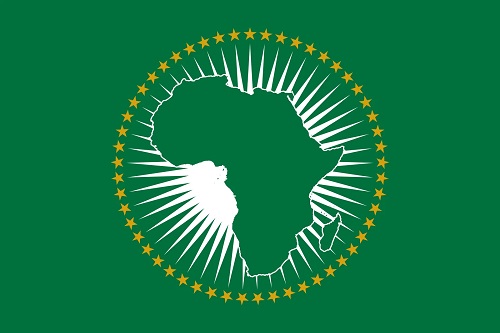
The trade agreement, the African Continental Free Trade Area (AfCFTA), signed by 54 out of 55 countries in 2018, among African Union (AU) members, was launched later in 2021 and focuses on the continent’s market of diverse products. This is the largest free trade region among African countries that trade at a cheaper rate by removing tariffs.
This intra-African trade flow amounted to USD 1.43 trillion in 2022, and in the year 2023, intra-African trade increased to USD 192 billion, which is USD 1.3 trillion. This gradual growth led African countries to nudge shares of 16 percent each, and trade rose to USD 220 billion against a total trade of about USD 1.4 trillion.
The intra-African trade has set the benchmark, and most of the African countries are trading outside of about 3.3% of global exports and imports.
Pakistan’s key destinations are Kenya, South Africa, Egypt, and Tanzania, reaching USD 5.6 billion in 2024, with exports of rice and cereals, textiles, cotton products, salt, and pharmaceuticals accounting for about USD 2.3 billion, and imports of crude oil, coffee, tea, fertilizers, and various fruits and vegetables are around USD 3.2 billion.
Moreover, “Engage Africa” and “Look Africa” are two initiatives launched by Pakistan to strengthen diplomatic and trade relations between Pakistan and Africa. The “Look Africa” strategy was designed in 2017-2018 to open doors for local businessmen for export, exploring the African market, and conducting trade fairs in the African continent.
In 2019, the “Engage Africa” policy was the initiative taken by Pakistan for economic engagement and diplomatic ties. The first step was to open embassies, trade houses, or offices in African countries, promoting private sector partnerships, bilateral relations, and people-to-people contact. It also emphasized engaging the Euro-Asian market for import and export partners in the near future.