 Tazeen Akhtar | Islamabad
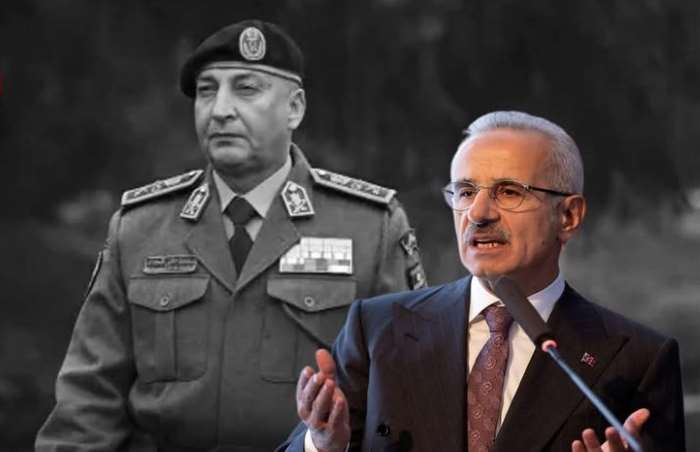
Finally Turkiye has made it clear that the highly suspicious crash of the plane of the Libyan Army Chief on Turkish territory near Ankara was just an accident and not a sabotage. Minister Transport Turkiye Abdulkadir Oglu has said all data all data from the cockpit voice recorder (CVR) had been fully analyzed, noting that the recordings showed the pilots reporting the failure of two electrical generators during the flight. Earlier , a month ago, he had shared that black box and voice recorder, both are damaged.
He added that the complete failure of the aircraft’s systems forced the pilots to attempt to fly the plane manually, while air traffic at Esenboğa Airport was suspended following the accident.
The minister noted that the pilot did not issue the higher-level emergency call known as MAYDAY, but did activate the designated emergency button, which was detected by air traffic control. However, the aircraft crashed in the Haymana area before it could land or approach the airport at a safe altitude.
Uraloğlu explained that aircraft are equipped with two so-called black boxes: one for recording flight data and the other for recording cockpit audio; and that both devices sustained severe damage. He added that he personally reviewed images of both devices after the crash.
He said the devices were sent to the United Kingdom for technical examination, given that their manufacturer is based in France, stressing that aviation accident investigation teams are closely monitoring the process.
Uraloğlu revealed further details from the cockpit recordings, stating that the aircraft took off on December 23, 2025, at 20:17. It was a tri-engine aircraft, and just two minutes after takeoff the pilots reported the failure of the second electrical generator. Thirteen to fourteen seconds later, they reported the failure of the third generator, with no clear information available at that stage regarding the status of the first generator.
He added that the pilots later indicated that all generators had failed before the systems temporarily came back online, and that during their communication with air traffic control they requested to return to the airport.
He explained that the time from takeoff until the crash was about 37 minutes. Communication with the aircraft continued for the first 27 to 28 minutes, during which it was guided toward the airport, before contact began to drop off intermittently in the final minutes.
Uraloğlu confirmed that the investigation into the incident is being conducted under the supervision of the Ankara Public Prosecutor’s Office.
He noted that analysis of the cockpit voice recorder (CVR) has been completed and all possible information extracted, while work is still ongoing on the flight data recorder (FDR), which he described as very old and severely damaged, with no usable data recovered so far.
He added that the information obtained from the CVR is largely sufficient to understand the circumstances and causes of the crash, explaining that if additional data are recovered from the flight data recorder, they will be handed over to the competent judicial authorities.
Uraloğlu stressed that the final assessment of whether the accident could have been avoided had the aircraft returned immediately after the first malfunction will be determined after the completion of the investigation and judicial procedures.
A senior aviation consultant in Libya, Abu Zeid said on 25 Dec 2025 that the the plane of Army Chief has not crashed due to some technical reason. He has raised questions about the tragic accident that claimed the lives of the Chief of Staff of the Government of National Unity, Lieutenant General Mohammed al-Haddad, and his companions.
Abu Zeid added in a post on his Facebook account that the analyses being offered regarding the Falcon aircraft crash are unconvincing and illogical.
The advisor refuted the hypotheses of the crash being due to an electrical malfunction or bad weather, explaining that the three-engine Dassault Falcon aircraft is designed to the highest safety standards in civil aviation, as each engine has an independent generator, in addition to an emergency generator and powerful batteries, as well as some models being equipped with an emergency pneumatic generator.
He emphasized that vital systems such as control, navigation, and communication are redundant and do not operate on a single line. In some models, the electronic control system is triple redundant, meaning that the failure of one system does not lead to a disaster.
Regarding bad weather, Abu Zeid pointed out that the aircraft is equipped with an advanced weather radar that allows it to avoid storms and not penetrate them. In dangerous situations, the route, altitude, or diversion to an alternative airport is changed.
He emphasized that in modern aviation, accidents do not occur due to a single factor, but rather as a result of a series of errors, and the aircraft is specifically designed to break this chain.
The consultant concluded his presentation by stating that the “Falcon” is not just a luxury aircraft, but a highly secure aviation platform, which explains why countries and heads of government prefer to use it, making the hypothesis of its crash for those reasons theoretically very rare.