Saeedjon Shafi is senior diplomat of Tajikistan having served in Islamabad as Deputy Head of Mission
In the context of the rapidly evolving geopolitical landscape of the Middle East, the importance of states capable of acting as bridges between regions, cultures, and political interests is steadily increasing. One such country is Pakistan, which, through its active foreign policy, diplomatic skill, and historical ties, is strengthening its position as a key player not only in South Asia but also in the Middle East.
Diplomatic Skill and Balance of Interests
The foreign policy of Pakistan is traditionally based on the principles of balance, pragmatism, and respect for multilateral dialogue. Tajikistan highly values Pakistan’s special role in the region and in the Islamic world.
Islamabad maintains stable relations with leading countries, including China, Iran, Saudi Arabia, Russia, Turkey, as well as the United States and the countries of Central Asia.
Amid existing contradictions among Middle Eastern states, such diplomatic flexibility enables Pakistan to act as a reliable partner and a potential mediator—similar to how Tajikistan actively promotes initiatives of peace and dialogue in practice.
Active participation of Pakistan and Tajikistan within the frameworks of the United Nations, the Organisation of Islamic Cooperation, and other international platforms enhances their role in promoting peace, stability, and solidarity both regionally and across the Islamic world. Both countries consistently support initiatives aimed at reducing tensions and strengthening intergovernmental dialogue.
Strategic Partnership and Regional Connectivity
The modern foreign policies of Pakistan and Tajikistan go beyond regional diplomacy, forming a broad network of strategic partnerships. The two countries actively develop cooperation in the fields of security, energy, trade, and infrastructure, positioning themselves as key connectors between South Asia, the Middle East, and Central Asia.
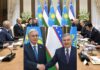
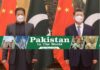
Particular importance is attached to strengthening bilateral relations. Thanks to the efforts of the President of Tajikistan, Emomali Rahmon, as well as the leadership of Pakistan—Asif Ali Zardari and Shehbaz Sharif—and the active engagement of their foreign ministries, relations between the two countries are built on the principles of mutual respect, brotherhood, and shared cultural values.
In recent years, there has been steady growth in political dialogue, economic cooperation, and humanitarian engagement, reflecting the strategic nature of this partnership.
Historical, Cultural, and Linguistic Affinity
The ties between Pakistan and Tajikistan have deep historical roots. The Persian-Tajik civilization has played a significant role in shaping the cultural identity of the region, uniting peoples through language, literature, traditions, and spiritual values.
The Tajik language, a form of Persian, shares many similarities with the cultural environment of Pakistan, particularly within the literary traditions of Urdu and Persian heritage.
Great thinkers and poets such as Avicenna, Ferdowsi, Abdurahman Jami, Rudaki, Jalal ad-Din Rumi, and Muhammad Iqbal serve as a spiritual bridge between the peoples of the two countries.
Cultural traditions—including poetry, music, and philosophy—form a solid foundation for mutual understanding and closer ties between the two brotherly nations, creating a favorable environment for the development of both diplomatic and people-to-people relations.
Conclusion
Thus, Pakistan continues to strengthen its role as a key player in the Middle East, relying on the art of diplomacy, strategic vision, and the ability to balance interests. At the same time, the deepening partnership with Tajikistan highlights the importance of historical and cultural ties in modern international relations.
In an era of global challenges, countries like Pakistan—capable of connecting regions and peoples—are becoming essential drivers of peace, stability, and shared development.
Long live the brotherhood between Tajikistan and Pakistan — friendship for generations to come!