Written by Anass MACHLOUKH on Wednesday January 5, 2022
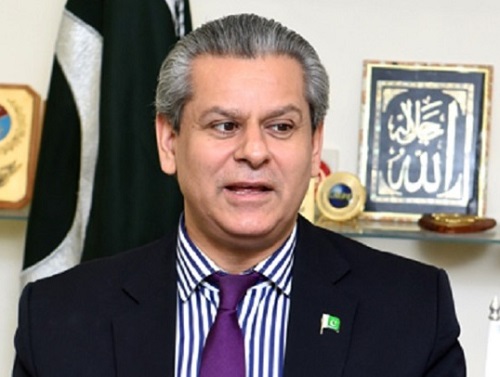
Among the countries that have ardently supported Moroccan independence, Pakistan hopes to draw closer to the Kingdom through military industry and trade. Everything allows such a rapprochement, especially as Islamabad is close to Morocco on the question of the Sahara. Hamid Asghar Khan, Pakistani ambassador in Rabat, tells us about it. Interview.
Q- You recently paid tribute to the memory of Ahmed Balafrej, one of the historic personalities of the national movement, by awarding a distinction to his son, what does the former Secretary General of Istiqlal represent to you?
A- We Pakistanis have a special sympathy for one of the great figures of the Moroccan resistance. As you know, through his sacrifices and his struggle against colonial oppression, he did a great service to his country, knowing that he was one of the signatories of the Independence Manifesto of January 11, 1944.
If we have honored his memory, it is because he had a special relationship with Pakistan. Indeed, before the independence of your country, Pakistan supported Mr. Balafrej to defend and make known the cause of the emancipation of the Kingdom from French colonization at the United Nations.
I take this opportunity to recall that the Pakistani delegation had granted him a diplomatic passport so that he could enter the United Nations and make the voices of Moroccans heard from Pakistan headquarters. Ahmed Balafrej was close to the founder of modern Pakistan, Muhammad Ali Jinnah, with whom he corresponded frequently. In fact, his family still have letters they exchanged. I am personally happy that the avenue on which our embassy headquarters is located bears his name.
Q- Morocco and Pakistan, it seems, have historical relations dating back to the 1950s, how do you assess them today?
A- The relations between the two countries are, as you say, historical, the two countries share many things, including the same status in their respective regions. Morocco is the gateway to Africa while Pakistan is the gateway to South Asia. They also share belonging to a hostile regional environment.
Morocco has a complicated relationship with Algeria, like the one we have with India. In addition, we share the same religion and this is a huge commonality. However, bilateral relations do not live up to expectations and I can find no other reason than language differences to explain this. You are a French-speaking country and we are English-speaking. Yet history brings us closer.
So, moving forward requires the two countries to fully engage together in South-South cooperation by paying more attention to trade and economic partnership. We live in a globalization that demands more and more openness.
Q- Military cooperation remains one of the most prosperous areas in relations between Rabat and Islamabad. Why do you attach so much importance to the military domain with Morocco, a country so far from yours?
A- Yes, the two countries are gradually developing their military cooperation. They started by increasing the joint exercises, as you have seen, with the joint special forces exercises that took place last October. There were other joint naval exercises. Military delegations meet on a regular basis and we welcome that. Morocco is a very advanced country in the fight against terrorism and a strategic country in the Mediterranean.
Q- During a visit to Morocco in 2016, Pakistani Admiral Arshad Mahmud Malek offered to share his experience in manufacturing fighter jets with Morocco, is this still relevant?
A- Yes, because we have taken note of Morocco’s desire to develop its own military industry. Our country is known for its considerable experience in this field, having an industry that produces several sophisticated equipment and devices, including armored vehicles, armor, missiles, tanks and JF- fighters. 17.
We have a very diversified offer. We are always predisposed to cooperate and share our assets, it suffices for the high command of the Royal Armed Forces to request it.
Q- Regarding the Sahara affair, which is a sacred cause in Morocco, would you be ready to recognize Moroccan sovereignty as several countries have done?
A- On this subject, we have always been clear, we have never recognized the Polisario nor maintained the slightest communication with their representatives. What I can assure you is that our country has always supported the territorial integrity of Morocco, within the limits of its capabilities, and will continue to do so.
Q- Bilateral trade remains very weak, yet nothing has been done to promote it, despite the good intentions of the officials of the two countries, how to get out of the current slump?
A- Be sure there are a lot of positive things to be done in this area. You just have to seize the opportunities that arise. I find the phosphate sector to be one of the areas where we can cooperate more effectively. Morocco is one of the most important reserves in the world, knowing that we import more than 375 million dollars each year.
I remind you that the two countries are already linked by a partnership in this area, knowing that the OCP and the Pakistani group “Fauji” are partners and have a phosphoric acid production unit within the industrial group of the OCP group in the Jorf Lasfar platform. This is a concrete example of what the two countries are capable of doing together.
Q- What are the sectors where the two countries can cooperate more?
A- There are many, I quote the tourism on which is based an important part of the Moroccan economy. I always plead, whenever I have the opportunity, to promote bilateral cooperation in this sector, which I consider insufficient. Morocco is a tourist country par excellence and known for its religious moderation and political stability, which can reassure Pakistani tourists.
This could be a starting point to then move towards economic tourism or what we call “Business tourism”, which seems more interesting to me given its ability to promote investment.
Q- While we are talking about investments, how is Morocco perceived by the Pakistani business community?
A- From the impressions I have had from the businessmen I know, I can assure you that more and more of them are interested in Morocco as a growing market. The same goes for the political class, which sees with great interest the economic emergence of Morocco in Africa. Morocco’s positioning on the African market, especially in the ECOWAS zone, is impressive.
Taking note of this, we are ready to encourage Pakistani investors to invest in the southern provinces to enter the sub-Saharan African market, if we get the facilities. The textile sector seems to me a good starting point as it is the largest manufacturing industry in Pakistan which is the eighth largest exporter of textile products in Asia. After the pandemic has ended, we intend to encourage visits from business delegations to translate their aspirations into reality.

 Written by Anass MACHLOUKH on Wednesday January 5, 2022