 Sahabur Rahman Shihab , An undergraduate student
Department of International Relations Jahangirnagar University Dhaka, Bangladesh
There has been no SAARC summit since 2016, a stark reminder of the deepening crisis facing a region that is home to nearly a quarter of the world’s population. For South Asia, this is more than a diplomatic failure; it reflects the gradual erosion of the region’s collective vision. Despite its demographic weight and growing economic potential, South Asia’s only regional organisation remains virtually paralysed.
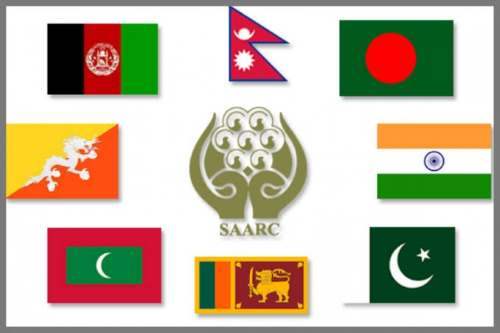
The South Asian Association for Regional Cooperation (SAARC) was never intended to be merely another bureaucratic institution. It embodied the hope that India, Pakistan, Bangladesh, Sri Lanka, Nepal, Bhutan, the Maldives, and Afghanistan could pursue peace, shared prosperity, and regional integration through sustained cooperation.
Beyond providing a platform for dialogue, SAARC was envisioned as the institutional foundation for economic integration, collective security, and sustainable development. Today, however, that vision appears increasingly distant.
The principal cause of SAARC’s paralysis is the enduring rivalry between India and Pakistan. Since the partition of British India in 1947, relations between the two nuclear-armed neighbours have been defined by mistrust and recurring conflict. Unsurprisingly, this hostility has repeatedly spilled over into regional cooperation.
Following the 2016 Uri attack, India boycotted the SAARC summit scheduled to be held in Pakistan, prompting several other member states to withdraw. The unresolved Kashmir dispute, recurring border tensions, and mutual accusations of cross-border militancy have left little diplomatic space for meaningful regional engagement.
India’s big brother attitude within South Asia has also complicated regional trust. As the region’s largest economy and military power, India plays an indispensable role in any regional initiative. Yet many smaller neighbours—including Nepal, Sri Lanka, and the Maldives—have long perceived that regional institutions often reflect Indian strategic priorities more than collective interests.
The 2015 Nepal constitutional crisis, during which border disruptions were widely viewed in Kathmandu as an informal blockade, further reinforced such perceptions. Whether justified or not, these episodes have weakened confidence in the principle of sovereign equality that effective regionalism requires.
Economic integration has fared little better. Intra-regional trade accounts for only about five percent of South Asia’s total trade, compared with more than twenty-five percent within ASEAN. High tariffs, restrictive visa regimes, and inadequate cross-border infrastructure mean that South Asian countries frequently find it easier to trade with Europe, the Middle East, or North America than with their immediate neighbours. As a result, SAARC has never evolved into the dynamic economic community its founders had envisioned.
The Death of SAARC: How India’s Big Brother Attitude Killed South Asian Unity
The region’s strategic landscape has become even more complex with China’s expanding presence through the Belt and Road Initiative (BRI). Chinese investments in Pakistan, Sri Lanka, Nepal, and the Maldives have contributed to infrastructure development but have also heightened India’s strategic concerns. The resulting geopolitical competition has further constrained multilateral cooperation under SAARC.
Ultimately, however, the organisation’s deepest problem is the absence of sustained political will. Regional cooperation cannot flourish when bilateral disputes consistently take precedence over shared interests. The prolonged inflexibility of both India and Pakistan has left SAARC trapped in political deadlock, steadily undermining the prospects for genuine South Asian regionalism.
The consequences of SAARC’s prolonged stagnation are both economic and strategic. According to the World Bank, effective regional integration could increase South Asia’s intra-regional trade from roughly US$23 billion to more than US$67 billion annually. Yet this enormous potential remains largely unrealised. The organisation’s paralysis has also discouraged cross-border investment and delayed regional connectivity projects, limiting long-term economic growth across the region.
The costs extend well beyond economics. South Asia remains one of the world’s most climate-vulnerable regions, yet it lacks an effective regional framework to address shared challenges such as floods, droughts, rising sea levels, and natural disasters.
Cooperation on transnational security issues—including counterterrorism, intelligence sharing, and combating drug trafficking—has also remained inadequate, leaving all member states more exposed to common threats. Meanwhile, South Asia’s fragmented diplomacy has weakened its collective voice in global negotiations on trade, climate change, and international security.
History, however, suggests that bilateral disputes do not necessarily prevent successful regional cooperation. ASEAN was established despite armed confrontation between Indonesia and Malaysia during the 1960s, while the border dispute between Thailand and Cambodia persisted for decades without derailing the organisation’s broader agenda.
Today, ASEAN’s intra-regional trade exceeds 25 percent of its total trade. Likewise, the European Union emerged from the ashes of centuries of rivalry between France and Germany. These examples demonstrate that political disagreements need not doom regional integration if institutions are resilient and member states recognise their shared long-term interests. South Asia can still draw valuable lessons from these experiences.
Reviving SAARC will therefore require political realism as much as institutional imagination. The first priority must be the resumption of sustained diplomatic engagement between India and Pakistan. Without even a modest improvement in bilateral relations, SAARC will remain structurally constrained.
Confidence-building measures including people-to-people exchanges, cultural diplomacy, sporting contacts, and regular diplomatic dialogue, could gradually rebuild the trust that has eroded over the past decade. Renewing the spirit of the 1999 Lahore Declaration would provide a useful starting point.
At the same time, SAARC should prioritise functional cooperation in areas that are less politically contentious. Health, education, agriculture, disaster management, and climate resilience offer practical opportunities for collaboration while avoiding the disputes that have repeatedly paralysed the organisation. Experience from other regions shows that sustained technical cooperation often creates the confidence necessary for broader political reconciliation.
Middle powers such as Bangladesh, Nepal, and Sri Lanka also have an important role to play in preserving SAARC’s institutional relevance. Their relatively balanced regional relationships place them in a stronger position to facilitate dialogue, build confidence, and sustain communication during periods of political deadlock. Bangladesh, in particular, has consistently championed cooperative regional diplomacy since its independence. As the country that first proposed the idea of SAARC, it carries both the diplomatic credibility and the moral responsibility to support the organisation’s revival.
Economic integration must also become a genuine priority. The South Asian Free Trade Area (SAFTA) cannot remain a paper agreement. Lower tariffs, harmonised customs procedures, improved transport connectivity, and simplified visa regimes are essential if South Asia is to unlock its economic potential and make regional cooperation meaningful for ordinary citizens.
At the same time, policymakers should adopt a pragmatic dual-track approach. Subregional initiatives such as BIMSTEC should not be viewed as alternatives to SAARC but as complementary platforms that can sustain cooperation when political tensions impede broader regional engagement. Rather than competing with one another, these institutions can reinforce regional integration by advancing practical collaboration in areas where consensus is achievable.
Equally important is a renewed commitment to the principle of non-interference in one another’s domestic political and constitutional affairs. Respect for sovereignty, equality, and mutual trust remains indispensable for any durable regional architecture. Without these foundations, no institutional reform will succeed.
From a realist perspective, SAARC cannot function effectively without India’s & Pakistan’s active participation. Equally, lasting regional cooperation will remain elusive unless relations between India and its neighbours, particularly the long-standing rivalry between India and Pakistan improve. This reality explains why many analysts regard BIMSTEC and other subregional frameworks as more practical mechanisms for advancing cooperation in the short term. Yet these initiatives should strengthen, not supplant, SAARC.
South Asia’s history shows that conflict is not its only legacy; cooperation is one as well. The future of South Asian regionalism will ultimately depend not on institutional design alone but on political choices. If member states can demonstrate sustained political will, rebuild mutual confidence, and pursue pragmatic cooperation step by step, SAARC can once again become a credible platform for regional integration. Otherwise, nearly a quarter of the world’s population will continue to bear the cost of a region whose immense potential remains unrealised.
Sahabur Rahman Shihab is a final year undergraduate student in the Department of International Relations at Jahangirnagar University, Bangladesh. His research interests include South Asian politics, regional cooperation, foreign policy, and geopolitics.