Central Asia South Asia Monitoring Desk Islamabad
Uzbekistan, Kazakhstan and the United Arab Emirates have agreed to jointly develop a railway project that would connect Central Asia with Pakistan’s seaports via Afghanistan, if implemented and completed despite proxies and conflicts between the regional countries central in the connectivity for CA and SA.
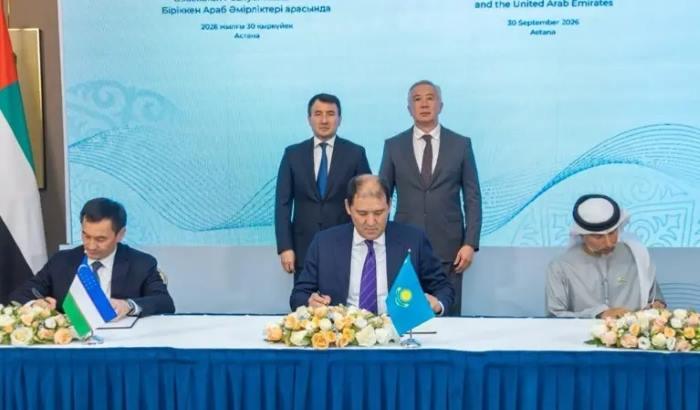
The transport ministries of the three countries signed a memorandum of cooperation covering the proposed Kazakhstan–Uzbekistan–Afghanistan–Pakistan route.
The project, known as CASA, is intended to strengthen rail links between Central and South Asia, increase international freight traffic and expand trade and logistics opportunities. One of its main objectives is to establish a rail route giving Central Asian countries access to Pakistani seaports.
Under the memorandum, the parties will assess the project’s technical and economic feasibility, including the infrastructure required, potential financing mechanisms and implementation conditions.
The countries also discussed establishing a dedicated working group to develop the CASA project in greater detail.
The initiative is expected to make use of existing railway networks and the transit potential of Kazakhstan and Uzbekistan. The UAE is expected to contribute its experience in transport, logistics and large-scale investment projects.
No details have been provided on the project’s estimated cost or the timeline for construction. The memorandum currently provides for cooperation in studying and developing the proposed railway project.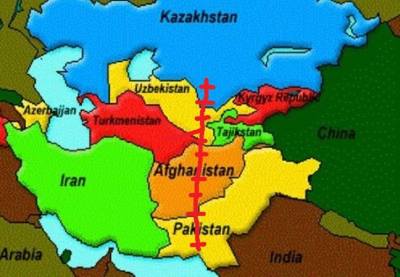
Expert on CARs and Middle East , Editor Tazeen Akhtar has shared ;
The trilateral train project UAP is already signed between the parties Uzbekistan Afghanistan and Pakistan. Kazakhstan and Turkmenistan can join from Uzbekistan side. Kazakhstan is also working on a train link from Turkmentistan to Afghanistan to Pakistan. A North South Corridor is also under process to connect CARs with Irani ports. BUT ……….
The proxies of some regional countries into the neighboring countries have always been a hurdle to the efforts of the states that are keen to work on shared development through swift transport and logistic means.
It is being called CASA and there has been another CASA that was for transmission of electricity from Kyrgyzstan to Tajikistan to Afghanistan to Pakistan. CASA – 1000 has been in the discussions and meetings and agreements for the years but still in the talks or papers only. Now this CASA Train will again see the same course? Nashistand , Guftand, Berkhawstand …………..
China and Russia are big stakeholders of the connectivity with Pakistani and Irani ports. China facilitated a reconciliation between Saudia and Iran many years ago when the incumbent Foreign Minister Wang Yi hosted the two counterparts in Beijing but it could not continue for long and Iran carried on strikes in Saudi in the latest war of US Israel on Iran.
Moscow Format held this week deliberated on the issues between Afghanistan and Pakistan , crisis in Middle East bringing the regional players at the table. How much this format is going to contribute? The time will tell.
He said, Pakistan built relations with CARs soon after the independence from USSR in 1992 but no major project could be completed in 3 decades that is a big question on the diplomacy of all sides.
Tazeen Akhtar also pointed out that the regional states were connected in the deep past as normal weather we talk about Silk Route or any other link but after the British colonization of South Asia and Central Asian colonization of USSR, the connectivity that was the easiest in the whole world has become a most complicated matter.
“There are the least hopes attached to any further effort to end the conflicts between the regional players connecting one another if we see the history of negotiations. Taliban promised in Makkah to govern Afghanistan democratically in accordance with international conventions and will not fight one another in Pakistani mediation after the withdrawl of USSR but failed to keep the promises. In 2021, the next generation of Taliban again violated the agreement made at Doha Qatar and occupied Kabul in Aug ousting the legal government of Ashraf Ghani. How one can beleive in their word now? said Mr. Tazeen Akhtar.
He added, we suppose that Afghan Pak conflict is resolved and the connectivity projects are completed but even then there will be another river if not sea or ocean, to cross for CASA connectivity; that is Pakistan India. The Kashmir dispute is another major hindrance in the process. Pakistan will not and can not allow the connectivity to and from India without the dispute is solved in accordance with the aspirations of the Kashmiris and India will never agree to it.
Tazeen Akhtar pointed out the inclusion of UAE in the connectivity, especially when it is benefitting the ports of Pakistan. Karachi is said to be embroiled in communal, political turmoils in the past only to keep it down and not let it be able to emerge as a major transit between East and West as Dubai. Now Gawader is another challenge to ports of the region. Here not only Dubai but Iran’s Chah e Bahar and Bander Abbas are also parties to Gawader.
UAE has taken a different stand in the ongoing crisis in the Middle East and Yemen than Saudi Arabia while Pakistan has made its position with Saudi Arabia clear to all regional states including Iran and UAE.
Pakistan is supposed to see this side of the development as well. Pakistan was not present when the three countries signed the agreement.
The JERUSALEM POST shared the report of another news portal Middle Line as under ;
Afghan government spokesman Zabihullah Mujahid, Afghan media outlets Ariana News and Pajhwok Afghan News have also reported the development, while Kazakhstan’s Prime Minister’s Office confirmed the signing of the memorandum.
The proposed Central Asia-South Asia railway would pass through Uzbekistan and Afghanistan before reaching Pakistan.
According to Kazakhstan’s Prime Minister’s Office, the transport ministries of Kazakhstan and Uzbekistan and the UAE Ministry of Energy and Infrastructure signed the memorandum to expand cooperation in international transport, trade, logistics and investment.
Under the agreement, the three countries will conduct technical and economic studies, analytical assessments and feasibility work on the required railway infrastructure and related facilities. They are also considering establishing a joint effort to examine the project’s technical, economic and financial aspects.
The main objective is to strengthen transport links between Central and South Asia, expand trade and create new investment opportunities. The railway could offer Central Asian countries an alternative route for imports and exports through Pakistan’s seaports.
Afghanistan’s Deputy Minister of Economy, Abdul Latif Nazari, said the railway could strengthen Afghanistan’s transit role and make it an important link between Central and South Asia.
Beyond transit fees, the corridor could generate activity in freight transport, warehousing, customs, logistics and other businesses. However, these benefits would depend on construction, border arrangements, trade policies and efficient transportation systems.
Experts say the project will face challenges including financing, construction costs, cross-border connectivity, administrative coordination, security concerns, customs procedures and border facilities, particularly amid the deteriorating and strained relations between Pakistan and Afghanistan.
The memorandum remains an initial step toward assessing the project’s technical and economic feasibility. Its future will depend on the findings of the studies and subsequent decisions by the countries involved.
Pakistan has expressed support for the railway project, with Planning Minister Ahsan Iqbal recently calling for an accelerated feasibility study and a joint mechanism with Uzbekistan to seek international financing.However, Pakistan’s Ambassador to Russia Faisal Niaz Tirmizi has said that instability in Afghanistan has effectively stalled Islamabad’s regional transport connectivity projects, highlighting the security and political challenges facing the proposed route.