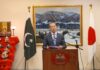
Islamabad, May 7, 2024 – Today, the United States Agency for International Development (USAID) organized a vital workshop aimed at curbing methane emissions from Pakistan’s dairy industry. The workshop is part of USAID’s efforts to boost climate investment in developing countries like Pakistan and brings together stakeholders from various sectors to develop a program for reducing methane emissions in the dairy industry.
This program will be submitted for funding from the Green Climate Fund, supporting Pakistan’s efforts to meet its climate goals.
“By reducing these emissions by nearly half by 2030, we can contribute significantly to the global goal of keeping temperature rise under 1.5 degrees Celsius — a key target of the Paris Climate Agreement.” said U.S. Ambassador Donald Blome. “This workshop marks an important step towards addressing this issue and building a more sustainable future for Pakistan.”
USAID Launches Groundbreaking Clean Energy Initiative to Transform Rural Pakistan
Methane, a potent greenhouse gas, contributes significantly to global warming. Cutting methane emissions is crucial for limiting climate change impacts. With Pakistan having one of the world’s largest livestock herds, the dairy sector plays a major role in methane emissions here. Private sector involvement is vital for success.
The workshop emphasizes the need for financial and technical support to tackle climate change effectively. This program will not only benefit Pakistan’s dairy sector but also contribute to global efforts to combat climate change.
The United States and Pakistan have a history of collaboration on development challenges. This workshop is part of the U.S.-Pakistan “Green Alliance” framework, focusing on sustainability and climate resilience.
Echoing this sentiment, the Federal Secretary for National Food Security and Research Dr. Fakhar Alam Irfan, expressed the Government of Pakistan’s appreciation for the initiative, stating, “We warmly welcome this initiative from the United States, which aims to enhance our nation’s climate resilience, mitigation, and adaptation efforts.”
Aligned with USAID’s priorities, the initiative aims to improve access to climate finance for mitigation and adaptation efforts, leveraging both public and private sector investments for low-emission dairy productivity improvements in Pakistan.
USAID Celebrates World Micro, Small and Medium Enterprises Day in Islamabad
Remarks by U.S. Ambassador Blome at USAID Dairy Methane Emission Reduction Workshop
It’s a pleasure to welcome you all to our Dairy/Livestock Methane Emission Reduction Workshop. Today’s event is a critical part of U.S. efforts to boost climate-focused investments in developing nations, particularly those most affected by climate change, like Pakistan. Together, we aim to craft a proposal for a major initiative focused on reducing methane emissions from dairy farming, which we will submit to the Green Climate Fund.
Today, we gather not just to talk, but to act. With the growing impacts of climate change, it’s urgent that we tackle one of its main causes — methane emissions from the dairy sector. Methane, a gas released by livestock like cows, is much more effective than carbon dioxide at trapping heat in our atmosphere, making it a potent contributor to global warming.
By reducing these emissions by nearly half by 2030, we can contribute significantly to the global goal of keeping temperature rise under 1.5 degrees Celsius — a key target of the Paris Climate Agreement. With Pakistan housing one of the largest livestock populations in the world, your country’s dairy sector is uniquely positioned to help achieve this.
2021 Pakistan Water Conference by USAID in Collaboration with Punjab Gov