Tazeen Akhtar | Islamabad
 Water is essential for mankind, acting as the fundamental building block for life, health, and civilization. It constitutes over 60% of the human body, regulates temperature, cushions joints, transports nutrients, and is vital for food production, sanitation, and sustainable economic development.
Earth is a water-rich planet, with roughly 71% of its surface covered by water, totaling approximately 1.386 billion cubic kilometers. The vast majority, about 96.5%, is saline water stored in oceans, while only 2.5% is freshwater, mostly locked in glaciers and deep groundwater. This finite resource, essential for life, is continually recycled by the hydrologic cycle.
Water Distribution on Earth
Oceans: ~96.5% of total water.
Ice Caps & Glaciers: ~68% of total freshwater.
Groundwater: ~30% of total freshwater.
Surface Water (Lakes/Rivers): ~1.2% of freshwater.
Atmosphere: ~0.001% of total water.
Water is the central driver for sustainable development, critical for poverty reduction, economic growth, and environmental sustainability. As the lifeblood of the UN Sustainable Development Goals (SDGs), particularly SDG 6 (Clean Water and Sanitation), water security is essential for health, food security, and energy.
The UN has declared 2018–2028 the International Decade for Action “Water for Sustainable Development” to address growing shortages, pollution, and climate-related crises.
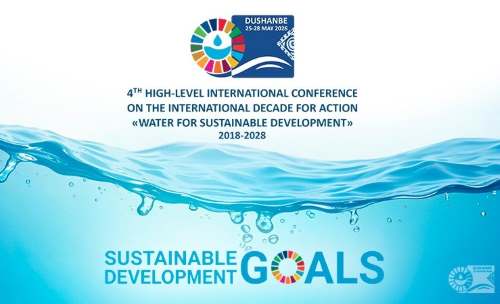
The 4th High-Level International Conference on the International Decade for Action “Water for Sustainable Development” (2018–2028) will be held in Dushanbe, Tajikistan, from May 25–28, 2026.
This conference is part of the “Dushanbe Water Process,” a biennial event aimed at accelerating action on water-related SDGs, improving water management, and preparing for the 2026 UN Water Conference.
The Dushanbe Water Process
Initiated by the Government of Tajikistan in cooperation with the United Nations, this process serves as a follow-up mechanism to the UN 2023 Water Conference, providing a platform for reporting on the Water Action Agenda and tracking voluntary commitments.
Regional Context
The 4th conference is particularly critical for bridging the gap between national, regional, and global water actions, with a special focus on the Asia-Pacific region through cooperation with UNESCAP. It also emphasizes regional cooperation regarding climate resilience, as discussed between Pakistan and Tajikistan.
Pakistani Participation
Federal Minister Climate Change Dr Musaddiq Malik will participate in the conference and represent Prime Minister Pakistan Shehbaz Sharif. Ambassador of Tajikistan, H.E Sharifzoda Yousuf Toir called on Federal Minister Climate Change Dr. Musaddiq Malik on 14 May 2026 in the same connection. The sides discussed deepening ties on climate change, water management, wildlife protection and regional connectivity.
Key Aspects of Water for Sustainable Development
Human Rights and Health: Access to safe water and sanitation is a basic human right. Providing these reduces disease and ensures basic dignity.
Economic Drivers: Water is crucial for industry, agriculture, and energy production (especially hydropower).
Climate Change Adaptation: Climate change, such as melting glaciers and droughts in regions like Pakistan, directly threatens water access, requiring improved management and resilience strategies.
Environmental Protection: Water sustainability is vital for maintaining ecosystems, biodiversity, and managing water-related disasters.
Global Crisis Management: With 2.2 billion people lacking safe water, accelerating progress through initiatives like the UN Water Action Decade is crucial for achieving the 2030 Agenda.
Key Focus Areas (SDG 6)
Universal Access: Ensuring safe and affordable drinking water and sanitation for all by 2030.
Water Quality: Reducing pollution and improving wastewater treatment.
Efficiency and Management: Increasing water use efficiency and implementing Integrated Water Resources Management (IWRM).
Ecosystem Protection: Protecting and restoring water-related ecosystems such as mountains, forests, wetlands, and rivers.
Water scarcity is increasingly threatening peace and security, leading to social tension in many regions, making sustainable management not just an ecological issue, but a security necessity.